


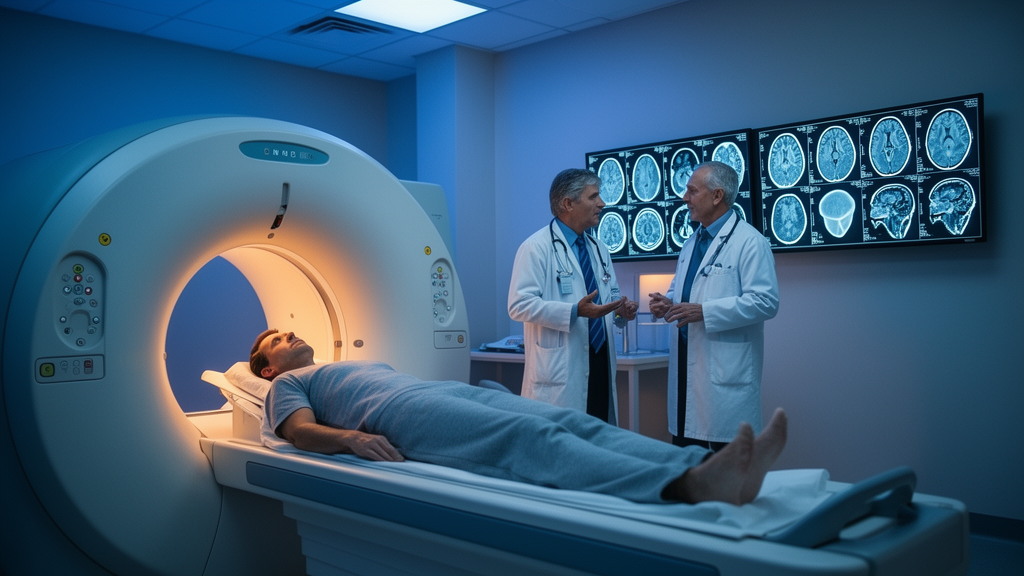
A new retrospective cohort study from China-Japan Friendship Hospital in Beijing suggests that ordinary structural magnetic resonance imaging (MRI) scans may hold the answer. By combining three measurable features of the olfactory pathway into a simple five-point score, the researchers found that patients could be sorted into risk groups with dramatically different recovery rates, ranging from 75 percent response in the lowest-risk group to just 5.3 percent in the highest-risk group.
The study, published in Frontiers in Neurology, focused on post-traumatic olfactory dysfunction, or PTOD, a condition that affects an estimated 7 to 22 percent of people who sustain head trauma. Beyond impairing food enjoyment and nutritional intake, the condition carries real safety risks, because patients may fail to detect environmental hazards such as gas leaks or smoke, and it can adversely affect psychosocial well-being. Recovery is notoriously unpredictable, because trauma can damage the olfactory system at multiple points: the olfactory nerve filaments as they pass through the cribriform plate, the olfactory bulbs themselves, or the cortical regions higher in the brain that interpret odor signals.
The research team enrolled 41 patients with PTOD, along with 41 healthy controls individually matched by sex and age within five years. All participants underwent high-resolution 3.0 Tesla MRI within a week of their initial consultation, using sequences optimized for visualizing the olfactory bulbs and surrounding structures. Olfactory function was measured with the standardized Sniffin’ Sticks test, which produces a composite Threshold-Discrimination-Identification (TDI) score. Treatment response was defined as an increase of at least 5.5 points in that score after olfactory training, a rehabilitation approach in which patients deliberately sniff a set of odorants several times daily.
The imaging protocol went well beyond a routine clinical read. Two neuroradiology-trained readers, blinded to outcomes, independently measured olfactory bulb volumes slice by slice, classified bulb shape as convex or non-convex, measured the depth of the olfactory sulcus, and scored bulb integrity as the proportion of visible slices showing intact structure. They also recorded structural lesions, such as encephalomalacia, hemosiderin deposition, or gliosis, in the orbital gyri, rectal gyri, and temporal lobes of each hemisphere. Inter-rater reliability exceeded 0.80 for all measures, indicating that these assessments can be reproduced consistently by trained observers.
Compared with healthy controls, patients with PTOD showed a significantly shallower left olfactory sulcus, with a mean difference of 1.08 millimeters, and a lower prevalence of convex olfactory bulb morphology in both hemispheres. Olfactory bulb volume differences emerged only in exploratory phase-based analyses: in patients assessed more than three months after trauma, left bulb volume was significantly lower than in controls, while right bulb volume did not differ significantly in the acute phase. The researchers caution that these cross-sectional subgroup findings may reflect temporal patterns of post-traumatic structural change, but longitudinal imaging would be needed to confirm how such changes evolve.
After a median follow-up of eight months, 16 of the 41 patients, or 39 percent, met the treatment-response criterion. To find which baseline features distinguished responders, the team entered eleven candidate variables into least absolute shrinkage and selection operator (LASSO) logistic regression, a penalized method designed to prevent overfitting in small datasets. Three features survived: left olfactory bulb integrity, injury to the left orbital gyrus, and injury to the right temporal lobe. The resulting model achieved an apparent area under the receiver operating characteristic curve (AUC) of 0.885, but more stringent full-pipeline internal validation, using nested cross-validation and 1,000 bootstrap resamples, yielded more conservative estimates of 0.733 and 0.725, a reminder that apparent performance in the development cohort typically overstates real-world accuracy.
The three-factor model was then converted into an integer-based risk score oriented toward predicting nonresponse: an impaired left olfactory bulb integrity score below one earned 1 point, left orbital gyrus injury earned 3 points, and right temporal lobe injury earned 1 point, for a total of 0 to 5. Patients scoring 0 to 2 were classified as low risk, those scoring 3 as intermediate risk, and those scoring 4 or 5 as high risk. Response rates fell progressively across these groups, from 75.0 percent (12 of 16) to 50.0 percent (3 of 6) to 5.3 percent (1 of 19), a difference that was statistically significant. In a sensitivity analysis adjusting for follow-up duration, the score remained significantly associated with response, with an odds ratio of 0.36 per point, while follow-up duration itself was not.
As a comparison, the researchers also tested a purely empirical scoring scheme based on fourteen side-specific visual findings that any radiologist could tally from conventional MRI, such as an unclear bulb boundary, bulb malacia, heterogeneous bulb signal, or injuries to the orbital gyri, rectal gyri, temporal lobes, and other brain regions. This simpler scheme also stratified patients significantly, with response rates of 64.7, 36.4, and 7.7 percent across its risk groups, and achieved a bootstrap bias-corrected AUC of 0.804. The three-factor score performed numerically better, with a bias-corrected AUC of 0.867, but the difference between the two systems did not reach statistical significance in the paired DeLong test (p = 0.079), and they agreed exactly in three-level risk classification for 75.6 percent of patients.
The authors are careful to frame these results as hypothesis-generating rather than practice-changing. The study was retrospective and single-center, recruited patients from a specialized olfactory clinic, and included only 16 responders relative to eleven candidate predictors, conditions that may limit model stability and generalizability. Adjunctive therapies, including mecobalamin, Ginkgo biloba extract, corticosteroids, and zinc sulfate, were prescribed at physician discretion, and adherence to olfactory training was not systematically documented, leaving room for residual confounding. Spontaneous recovery after trauma may also have contributed to some of the observed improvement. The asymmetric pattern of the selected predictors, with left-sided bulb and orbital gyrus involvement alongside right-sided temporal injury, may simply reflect the distribution of lesions in this particular cohort rather than true hemispheric specialization.
The empirical scoring scheme, which requires no specialized image-processing software, performed nearly as well as the LASSO-derived score, suggesting that careful visual inspection of conventional sequences already captures much of the prognostic signal. The researchers emphasize that prospective, multicenter external validation is required before any of these scores can be applied clinically, and they call for longitudinal imaging studies to track how structural changes along the olfactory pathway unfold after trauma. For now, the message is that the anatomy visible on a baseline scan, particularly the structural integrity of the olfactory bulb and the presence of cortical injuries, carries meaningful information about who is likely to benefit from olfactory training.
Subject of Research: MRI-based prognostic risk stratification for treatment response in post-traumatic olfactory dysfunction
Article Title: MRI-based prognostic factors and risk stratification for treatment response in post-traumatic olfactory dysfunction
Article References: Wang, Z., Li, Y., Luan, J., Chen, Y., Zhang, S., Zhang, R., Li, T., Wang, S., Yang, H., & Liu, J. (2026). MRI-based prognostic factors and risk stratification for treatment response in post-traumatic olfactory dysfunction. Frontiers in Neurology, 17, Article 1976254. https://doi.org/10.3389/fneur.2026.1976254
Image Credits: AI Generated
DOI: 10.3389/fneur.2026.1976254
Keywords: post-traumatic olfactory dysfunction, MRI, olfactory bulb, olfactory training, LASSO regression, risk score, traumatic brain injury, Sniffin' Sticks, prognosis, olfactory sulcus, orbitofrontal cortex, internal validation
News Source: Cassandra Pierce. (October 30, 2026). Research report: MRI-based prognostic factors and risk stratification for treatment response in post-traumatic olfactory dysfunction. Scienmag.



