


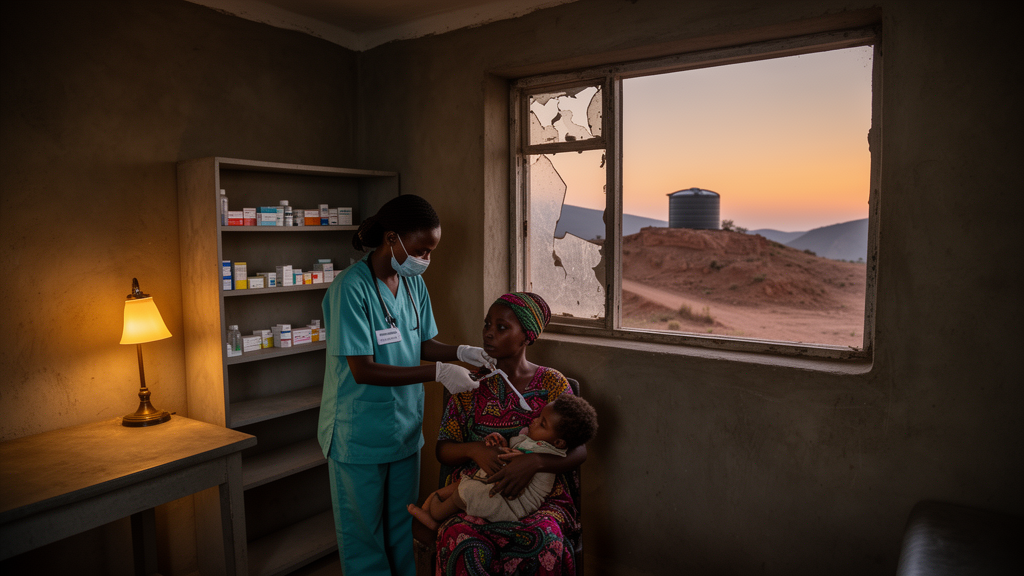
A systematic review published in the International Journal for Equity in Health has synthesized the empirical evidence on how the armed conflict in Tigray, Ethiopia, between 2020 and 2026 affected the region’s health system and the health of its population. Guided by the PRISMA 2020 reporting guideline, researchers searched seven databases, including Scopus, Web of Science, PubMed/MEDLINE, Embase, ScienceDirect, Google Scholar, and Emerald Insight, and screened 135 records. Of these, 31 studies met the inclusion criteria.
The evidence base was substantial in scale, although the review’s authors caution that some studies may have drawn on overlapping populations or datasets. Together, the included research covered 29,761 live births, 189,087 households, and 31 districts. Across this body of work, the review found substantial reductions in healthcare access and service utilization, extensive damage to health facilities, and interruptions in the supply of medicines, in workforce capacity, in chronic-disease care, in tuberculosis services, in maternal care, and in emergency services. Facility assessments included in the review reported very low levels of functionality among health facilities during the conflict period.
Mortality studies synthesized in the review reported an under-five mortality rate of 59 per 1,000 live births and a maternal mortality ratio of 840 per 100,000 live births. The review also documented additional evidence on conflict-period mortality, food insecurity and starvation-related deaths, gender-based violence, mental-health problems, deficiencies in water, sanitation and hygiene, and burdens of both communicable and non-communicable diseases. These findings describe an association between conflict-related disruption and adverse health-system and population-health outcomes rather than a proven causal effect, a limitation the authors attribute to the heterogeneous observational designs, retrospective reporting, and potential dataset overlap among the included studies.
Because substantial heterogeneity across the studies prevented quantitative pooling, the review conducted no meta-analysis or meta-regression, and no meta-regression statistics are reported. The findings therefore rest on a narrative synthesis of the included observational evidence, and the review’s conclusions should be read with that methodological constraint in mind.
Despite these limitations, the authors conclude that the evidence supports an integrated approach to recovery, one focused on restoring essential services, rebuilding health-system functionality, strengthening the health workforce, securing medicines, improving water, sanitation and hygiene, addressing nutrition, supporting mental health, and ensuring continuity of care. The review was published as an open-access article on 23 October 2026, and its clinical trial registration status is listed as not applicable, reflecting its design as a synthesis of existing observational research rather than an interventional study.
Subject of Research: The effects of the 2020–2026 armed conflict in Tigray, Ethiopia on health systems and population health outcomes
Article Title: Impact of armed conflict on health systems and population health outcomes in Tigray, Ethiopia: a systematic review (2020–2026)
Article References: Niguse, T., Alemu, Z. K., Kant, S., Mittal, S., & Hussen, J. (2026). Impact of armed conflict on health systems and population health outcomes in Tigray, Ethiopia: a systematic review (2020–2026). International Journal for Equity in Health. https://doi.org/10.1186/s12939-026-03083-8
Image Credits: AI Generated
DOI: 10.1186/s12939-026-03083-8
Keywords: Tigray, Ethiopia, armed conflict, health systems, systematic review, maternal mortality, under-five mortality, healthcare access, food insecurity, mental health, PRISMA, public health
News Source: Phoebe Ingram. (October 29, 2026). Research report: Impact of armed conflict on health systems and population health outcomes in Tigray, Ethiopia: a systematic review (2020–2026). Scienmag.



