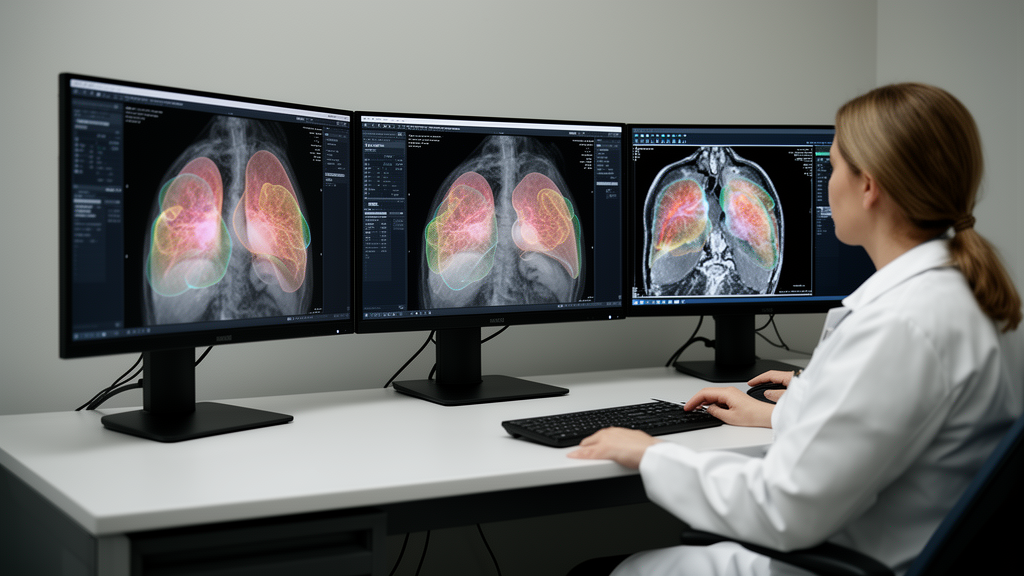
A systematic review of 11 breast-image clustering studies published from 2020 through 2025 found a technically diverse but sparsely validated research field. The studies collectively covered mammography, histopathology, dynamic contrast-enhanced MRI and ultrasound, yet mammography accounted for more than half of the included research. Most evaluations relied on accuracy, sensitivity and specificity rather than measures designed to characterize unsupervised results, and none of the studies included prospective validation.
The authors searched IEEE Xplore, PubMed/MEDLINE and Scopus under a PRISMA 2020 protocol for peer-reviewed primary studies published in English between January 2020 and December 2025. Eligibility required clustering to be applied directly to breast images and sufficient methodological detail to appraise the method, dataset and assessment metrics. The search identified 1,552 candidate records, of which 11 met the criteria.
One reviewer performed screening and deduplication in Rayyan and checked each candidate citation against its source record. QUADAS-2, adapted for unsupervised segmentation, was used to assess risk of bias, while the results were synthesized narratively because of differences among the included studies. Mammography was the dominant modality, appearing in six studies.
Histopathology and dynamic contrast-enhanced MRI were each examined in two studies, and ultrasound was represented by one. The algorithmic mix included fuzzy C-means or a variant in five studies, K-means or a variant in four, and other partitioning methods in two. Five studies used a metaheuristic optimizer, and three performed clustering in a learned feature space.
The authors therefore characterized the field as having evolved from centroid-based partitioning toward optimization-enhanced methods and deep-feature clustering. These counts describe the design of the small reviewed literature rather than demonstrating that one algorithmic approach performs better than another. Accuracy, sensitivity and specificity were the dominant metrics across the studies, indicating that most evaluations compared clustering results against reference labels associated with supervised or otherwise reference-based procedures.
Only two studies reported per-image computational cost, and two reported internal cluster-validity indices. No study reported a silhouette coefficient, inter-observer agreement or prospective validation. The review’s evidence does not supply a comparative ranking of algorithms or establish clinical effectiveness; it instead shows that assessment remained concentrated on agreement with supervised labels while additional measures of unsupervised performance were uncommon.
Several features limit the conclusions that can be drawn from the available evidence. The authors identified uneven reporting, reliance on a small number of publicly available datasets and the absence of prospective validation in demographically diverse populations as barriers to clinical translation. The review was not registered, and the eligible literature comprised only 11 studies, with mammography accounting for six and ultrasound for one.
The findings therefore characterize a limited and heterogeneous body of work, not the full potential of image clustering in breast cancer detection and diagnosis.
Subject of Research: Systematic review of image-clustering methods in breast cancer imaging from 2020 to 2025
Article Title: Image clustering for breast cancer detection and diagnosis: a systematic review of algorithms, imaging modalities, feature representations and reported performance (2020–2025)
Article References: Odili, J., & John, O. (2026). Image clustering for breast cancer detection and diagnosis: a systematic review of algorithms, imaging modalities, feature representations and reported performance (2020–2025). BMC Medical Imaging. https://doi.org/10.1186/s12880-026-02929-5
Image Credits: AI Generated
DOI: 10.1186/s12880-026-02929-5
Keywords: breast cancer, image clustering, mammography, histopathology, magnetic resonance imaging, ultrasound, unsupervised learning, fuzzy C-means, K-means, clinical validation, Image, clustering
News Source: Ophelia Keating. (October 21, 2026). Research report: Image clustering for breast cancer detection and diagnosis: a systematic review of algorithms, imaging modalities, feature representations and reported performance (2020–2025). Scienmag.