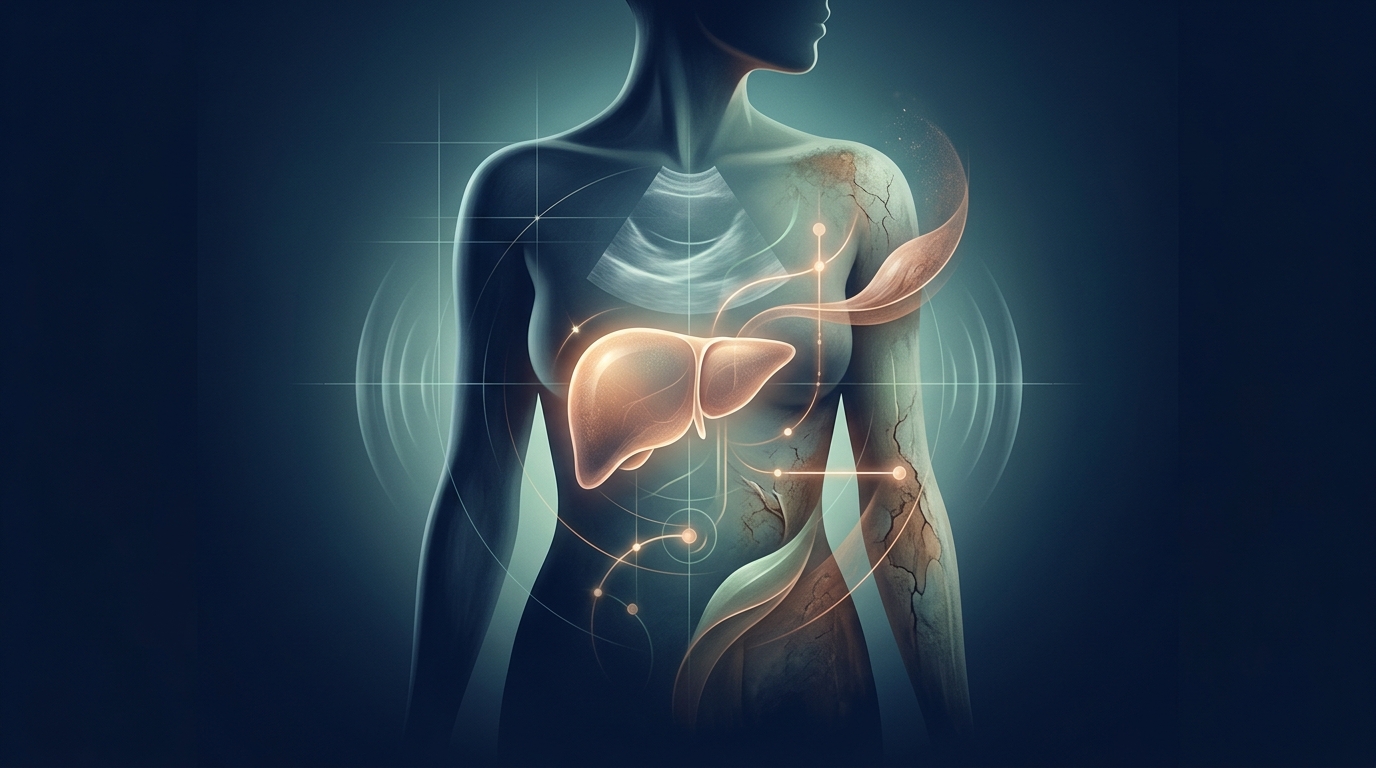
The study, published in the Journal of Cachexia, Sarcopenia and Muscle, analysed 153 patients with liver cirrhosis whose data came from two prospectively enrolled cohorts merged and retrospectively analysed. One cohort recruited hospitalized patients with decompensated cirrhosis and acute kidney injury between April 2022 and June 2024, while the other included outpatients and inpatients who underwent abdominal ultrasound between March 2020 and June 2022. Alcohol-related liver disease was the most common cause of cirrhosis at 49 percent, followed by viral hepatitis at 16 percent and metabolic dysfunction-associated steatotic liver disease at 13 percent.
During a median follow-up of 90 days, 46.4 percent of patients reached the composite end point of death or liver transplantation, with 41 deaths and 30 transplantations. Muscle ultrasound was performed in all patients using real-time B-mode imaging, with examiners measuring the extensor muscle thickness of the lower limb, including the rectus femoris and vastus intermedius muscles, in the frontal plane at the midpoint between the anterior superior iliac spine and the cranial edge of the patella. Patients lay supine because body position affects muscle dimensions, and measurements were taken on both sides with the mean value calculated.
The team used two sonographic indices. The feather thigh muscle thickness index, or fTMTI, represents the average bilateral thickness of the lower limb extensor muscles indexed to body height in millimetres per metre, measured without pressure from the ultrasound probe. The compression thigh muscle thickness index, or cTMTI, uses the same measurement but under compression with the ultrasound detector. Previously published gender-specific reference thresholds classified patients into low or high muscle mass categories: for men, an fTMTI of 21.5 mm/m and a cTMTI of 6.0 mm/m; for women, an fTMTI of 16.5 mm/m and a cTMTI of 8.1 mm/m.
Frailty was assessed with the Clinical Frailty Scale, which asks patients about their ability to manage daily life during the two weeks before examination and divides functioning into nine categories ranging from very fit to terminally ill. A score of 5 or higher defines frailty, while 4 or higher indicates at least prefrailty. The median CFS score in the cohort was 3, with an interquartile range of 2 to 4. Inpatients were notably sicker than outpatients, with a median MELD score of 23 versus 9, lower muscle indices, and higher frailty scores, all differences statistically significant.
Using the established thresholds, fTMTI carried a hazard ratio of 3.46 and cTMTI a hazard ratio of 1.70 for reaching the composite end point. The CFS showed a hazard ratio of 1.53 per point. But the picture changed dramatically in multivariable Cox regression models adjusted for MELD score and age. Low muscle mass defined by the established thresholds for cTMTI and fTMTI was no longer independently associated with poorer prognosis.
The researchers also derived optimized cut-offs for predicting death or transplantation within 90 days using receiver operating characteristic curves and Youden’s index. The discriminative performance of the sonographic indices was modest overall. The highest area under the curve was 0.73 for fTMTI in women, while the lowest was 0.67 for cTMTI in men. The optimized cut-offs were 15.20 mm/m for female fTMTI, 6.61 mm/m for female cTMTI, 14.02 mm/m for male fTMTI and 9.55 mm/m for male cTMTI.
Subgroup analyses in inpatients, the sicker portion of the cohort, reinforced the pattern. Low muscle mass defined by either established or optimized cut-offs was not associated with poorer prognosis in multivariable analyses. A sensitivity analysis treating mortality as the end point and liver transplantation as a competing event, using fine and grey subdistribution hazard models, further confirmed the finding: the CFS remained independently associated with mortality with a hazard ratio of 1.61, while neither established nor optimized sonographic thresholds were associated with mortality in any model.
The authors suggest that low muscle thickness of the leg may especially reflect systemic decompensation rather than serving as an independent driver of prognosis. Although sonographic sarcopenia assessment of the thigh may be useful as part of a broader frailty or nutritional evaluation, it might not add additional benefit in isolation to guide clinical decisions. It is also easily applicable at the bedside. The study has limitations: it was conducted at a single centre, used centre-specific thresholds not yet validated in large external cohorts, lacked validation in an independent cohort, and did not include complementary functional measures such as handgrip strength or the Liver Frailty Index. Because computed tomography scans were not readily available in all patients, the team could not compare the sonographic measurements with the skeletal muscle index in this cohort.
Subject of Research: Comparing the Clinical Frailty Scale with sonographic thigh muscle thickness measurements for predicting transplantation-free survival in patients with liver cirrhosis
Article Title: Frailty Rather Than Sonographic Muscle Measurement Predicts Outcome in Liver Cirrhosis
Article References: Kremer, W. M., Schwarz, A., Dumont, M.-C., Gairing, S. J., Sivanathan, V., Galle, P. R., Sprinzl, M. F., Schleicher, E. M., & Labenz, C. (2026). Frailty Rather Than Sonographic Muscle Measurement Predicts Outcome in Liver Cirrhosis. Journal of Cachexia, Sarcopenia and Muscle, 17(6), Article e70373. https://doi.org/10.1002/jcsm.70373
Image Credits: AI Generated
DOI: 10.1002/jcsm.70373
Keywords: liver cirrhosis, frailty, Clinical Frailty Scale, sarcopenia, muscle ultrasound, thigh muscle thickness, MELD score, liver transplantation, mortality prediction, decompensated cirrhosis, risk stratification, Rather
News Source: Beatrice Stafford. (November 4, 2026). Research report: Frailty Rather Than Sonographic Muscle Measurement Predicts Outcome in Liver Cirrhosis. Scienmag.