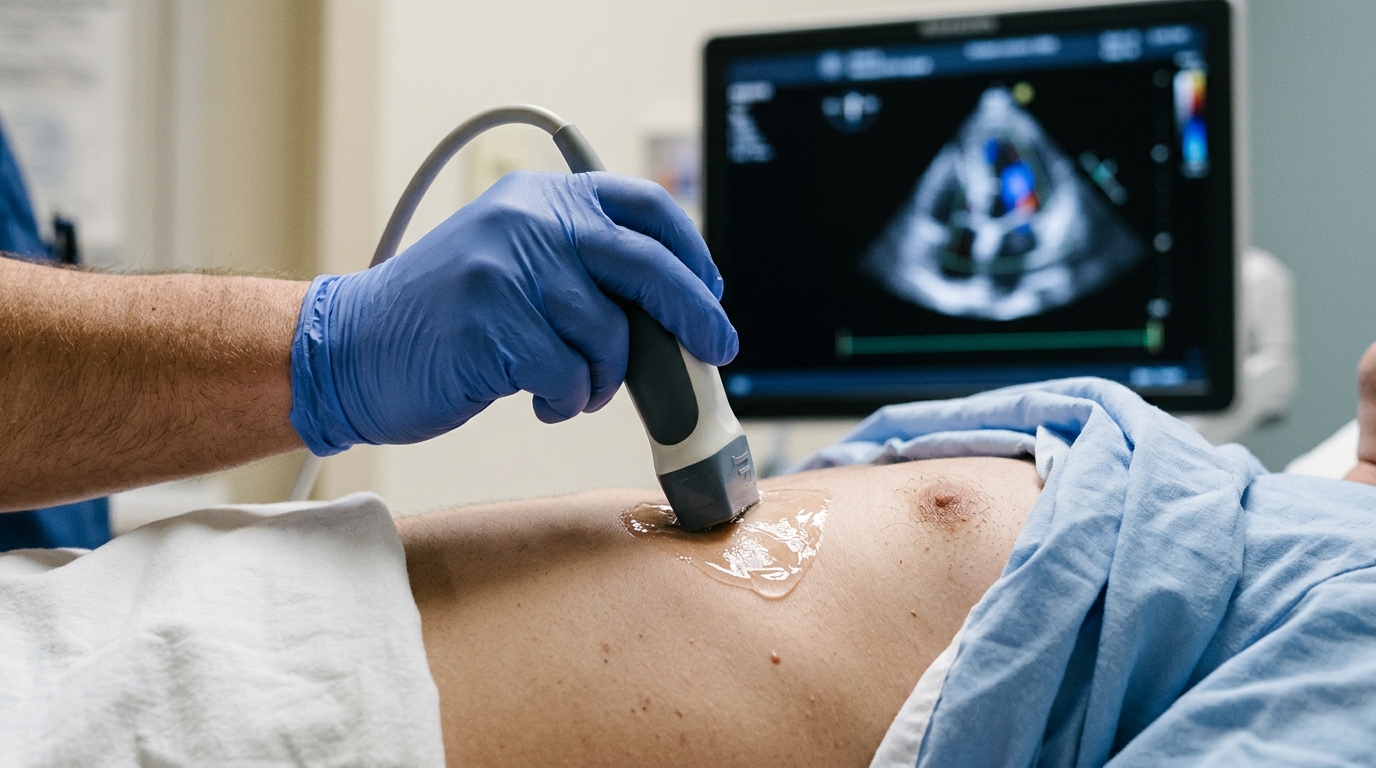
Conducting a repeat transthoracic echocardiogram within a five- to seven-day window following an initial examination markedly improves diagnostic sensitivity, specificity, and overall accuracy for detecting infective endocarditis in hospitalized patients suffering from native valve Staphylococcus aureus bacteremia. In a prospective single-center investigation tracking consecutive clinical admissions, clinicians established that while initial transthoracic examinations delivered robust preliminary insights, adding a standardized follow-up assessment within one week resolved diagnostic uncertainties and brought the overall negative predictive value to one hundred percent when compared directly against transesophageal echocardiography reference standards.
Staphylococcus aureus represents the leading causative pathogen behind infective endocarditis, carrying substantial clinical risks characterized by elevated patient morbidity, progressive valvular destruction, peripheral embolic complications, and high mortality rates. Medical guidelines emphasize that prompt identification of cardiac structural involvement is imperative to establish targeted antimicrobial coverage and forestall severe anatomical damage. Transthoracic echocardiography routinely serves as the frontline noninvasive imaging tool due to its rapid availability at the bedside; nevertheless, conventional single-scan protocols have historically demonstrated variable diagnostic sensitivity, compelling clinical teams to rely heavily on transesophageal imaging to definitively exclude intracardiac infection.
Although transesophageal echocardiography provides superior spatial and temporal resolution capable of detecting microscopic pathologies, structural perforations, perivalvular abscesses, and diminutive mobile vegetations, the modality entails notable procedural drawbacks. As a semi-invasive intervention requiring patient sedation, transesophageal assessment introduces definite procedural risks, requires specialized technical staff, and presents substantial logistical constraints within acute hospital environments. Clinical scoring instruments such as the VIRSTA model and international working group frameworks have recommended repeated imaging when initial findings remain indeterminate, yet prospective empirical data evaluating structured repeat transthoracic protocols across defined temporal windows have remained scarce.
To rigorously evaluate the additive diagnostic yield of an organized follow-up scanning protocol, investigators prospectively enrolled one hundred five consecutive patients admitted with verified Staphylococcus aureus bacteremia and prolonged fever between January 2017 and December 2019. Persistent fever was formally defined as a recorded body temperature of thirty-eight degrees Celsius or higher enduring beyond five days despite ongoing systemic antibiotic administration. Clinical suspicion of infective endocarditis was defined according to modified Duke criteria indicators, including ongoing bacteremic state, observed embolic phenomena, emergence of newly identified murmurs, or associated vascular and immunologic signs.
Strict inclusion criteria preserved diagnostic clarity by deliberately excluding individuals presenting with confounding intracardiac factors. Specifically, patients with previous episodes of infective endocarditis, prior surgical valve repair, prosthetic valve replacement, implanted cardiac devices such as permanent pacemakers, indwelling hemodialysis catheters, or technically inadequate echocardiographic acoustic windows were excluded from the trial. Among the one hundred five individuals comprising the analyzed cohort, forty participants were female, thirty-six reported active intravenous drug use, and sixty-four presented with an identifiable primary infectious focus, with a mean overall cohort age of fifty-two years.
Microbiological characterization revealed that methicillin-sensitive Staphylococcus aureus accounted for seventy-four cases, representing seventy point five percent of the overall study population, while thirty-one patients presented with methicillin-resistant strains. All participants received continuous parenteral antibiotic therapy tailored by clinical consensus involving infectious disease consultants, primary attending teams, and cardiologists, spanning an overall duration between one and eight weeks. Additionally, forty-seven patients produced a second confirmed positive blood culture within an average follow-up interval of twelve days following initial presentation.
Under the standardized imaging protocol executed on dedicated ultrasound systems, all subjects underwent an initial baseline transthoracic echocardiogram alongside a transesophageal examination within seven days, complemented by a repeat transthoracic examination performed between five and seven days after the primary scan. Acoustic evaluations systematically surveyed for characteristic vegetative masses—defined as oscillating, irregularly contoured echogenic densities adhering to valve leaflets, subvalvular structures, mural endocardium, or intracardiac tissue—as well as valvular destruction, leaflet perforation, fistulae, or abscess cavities, with dimensions cataloged along their maximal linear planes.
Independent image analysis conducted in a blinded manner by two experienced cardiologists demonstrated high diagnostic concordance, yielding an interobserver Cohen kappa statistic of zero point ninety-four, with discordant interpretations definitively adjudicated by a third expert reviewer. Definite infective endocarditis was confirmed via transesophageal gold-standard reference in sixteen patients, corresponding to an overall prevalence of fifteen point two percent. Identified anatomical sites comprised eight isolated tricuspid valve infections, four mitral valve involvements, three aortic valve lesions, and one concurrent dual-valve infection simultaneously engaging both mitral and tricuspid leaflets.
Baseline transthoracic echocardiography identified endocarditis with a sensitivity of ninety-three point eight percent, a specificity of eighty-seven point six percent, an overall diagnostic accuracy of eighty-eight point six percent, and an initial negative predictive value of ninety-eight point eight percent. Only one confirmed vegetative lesion evident on transesophageal imaging was missed during the primary transthoracic scan. The subsequent incorporation of findings from the second transthoracic assessment captured this previously undetected lesion, elevating cumulative diagnostic sensitivity to one hundred percent, increasing specificity to ninety-five point five percent, and raising overall accuracy to ninety-six point two percent.
Overall in-hospital mortality reached seven point six percent, encompassing two deaths among patients diagnosed with endocarditis and six deaths among patients without verified endocardial infection, alongside one patient who successfully survived in-hospital cardiac arrest. Subsequent clinical monitoring extending through three months following hospital discharge identified readmissions for recurrent bacteremia, acute renal failure, and severe hyperglycemia, but confirmed zero missed or recurrent endocarditis occurrences, illustrating that sequential transthoracic assessments reliably exclude evolving endocardial complications in selected native valve cohorts lacking prosthetic materials.
The diagnostic accuracy demonstrated in this prospective trial stands in stark contrast to several foundational investigations that previously evaluated transthoracic imaging in Staphylococcus aureus bacteremia. In an earlier prospective assessment of one hundred three bacteremic patients, Fowler and colleagues observed a transthoracic sensitivity of only thirty-two percent despite recording one hundred percent specificity. Similarly, Sekar and coworkers identified a pronounced diagnostic imbalance, reporting that transthoracic echocardiography achieved a sensitivity of merely twenty-four percent compared to ninety-four percent for transesophageal imaging, a statistically significant difference with a p-value below zero point zero zero one. The authors suggested that their substantially higher initial sensitivity of ninety-three point eight percent and specificity of eighty-seven point six percent arose primarily from stringent patient selection. Specifically, the trial excluded individuals with intracardiac hardware and those presenting with poor echocardiographic windows, explicitly defined as inadequate image quality preventing clear visualization of all cardiac valves and structures. Methodological timing, operator experience, and advancements in modern ultrasound technology further contributed to this elevated baseline diagnostic yield.
The findings reinforce and expand upon existing observational benchmarks regarding the exclusion of endocardial infection. Prior research by Van Hal and colleagues demonstrated that the negative predictive value of transthoracic echocardiography can exceed ninety-eight percent in patients exhibiting normal or trivial valvular regurgitation without embolic phenomena, particularly when imaging takes place five or more days after the bacteremia diagnosis. That pattern aligns directly with the ninety-eight point eight percent initial negative predictive value noted here, which subsequently reached one hundred percent after the repeat scan. Similarly, Lindner and associates previously documented eighty-three percent agreement between transthoracic and transesophageal modalities among interpretable examinations. Furthermore, earlier retrospective data indicated that obtaining second and third transthoracic echocardiograms yielded supplementary diagnostic information in approximately twenty-seven percent of suspected cases. International clinical guidelines have long recognized the conceptual value of repeat imaging when clinical suspicion remains elevated, yet they lacked robust empirical evidence defining a precise schedule, leaving this prospective protocol among the first to validate structured five- to seven-day rescanning.
Complementary evidence from Gomes and colleagues previously established that echocardiography achieves one hundred percent specificity, a positive predictive value of one hundred percent, and a negative predictive value of ninety-one percent in cohorts restricted to native valve endocarditis. Building on these parallel observations, the authors proposed a standardized diagnostic algorithm specifically tailored for hospitalized patients with suspected native valve infection. The research was conducted under formal ethical approval granted by the Lawson Research Institute, with informed consent obtained from all enrolled subjects. Statistical computations performed using Stata version 15 applied chi-square tests to determine sensitivity, specificity, positive predictive value, negative predictive value, positive and negative likelihood ratios, and overall diagnostic accuracy across both scanning stages. The authors also noted that while echocardiography remains the primary frontline imaging tool, multimodality approaches incorporating computed tomography and nuclear imaging are increasingly utilized in broader clinical practice, particularly when evaluating patients with prosthetic valves or indwelling intravascular catheters where ultrasound encounters known physical acoustic barriers.
The investigators emphasized several key limitations that bound their conclusions. The study was conducted at a single medical center with a relatively small sample size of one hundred five patients, where the low overall incidence of infective endocarditis (fifteen point two percent) naturally constrained the absolute volume of positive cases. Furthermore, excluding patients with prosthetic valves, cardiac devices, hemodialysis catheters, or prior endocarditis limits the applicability of these findings strictly to low-risk native valve presentations. Crucially, because every participant underwent confirmatory transesophageal echocardiography regardless of their transthoracic results, the trial did not assess whether repeated transthoracic imaging actually altered clinical decision-making in practice. Transesophageal imaging consequently remains the essential gold standard for detecting invasive complications such as abscesses and evaluating high-risk populations. The authors concluded that larger multicenter investigations comparing transthoracic-guided versus transesophageal-guided management pathways are necessary before this repeat scanning approach can formally replace invasive examinations.
Subject of Research: Diagnostic performance of repeat transthoracic echocardiography for infective endocarditis in Staphylococcus aureus bacteremia
Article Title: Additive value of repeat transthoracic echocardiography for excluding infective endocarditis in patients with Staphylococcus aureus bacteremia
Article References: Abazid, R. M., Smettei, O., Awadallah, S., Widyan, A., Wuzynski, N., Nabhan, M. H., Ibrahim, M. M., Hassanin, M., Mathew, A., De, S., Bagur, R., & Tzemos, N. (2026). Additive value of repeat transthoracic echocardiography for excluding infective endocarditis in patients with Staphylococcus aureus bacteremia. Journal of Cardiovascular Imaging, 34(1), Article 3. https://doi.org/10.1186/s44348-025-00061-6
Image Credits: AI Generated
DOI: 10.1186/s44348-025-00061-6
Keywords: transthoracic echocardiography, transesophageal echocardiography, infective endocarditis, Staphylococcus aureus bacteremia, cardiac imaging, echocardiographic diagnostics, bacteremia management, valvular vegetation, cardiovascular imaging, Duke criteria, methicillin-sensitive Staphylococcus aureus, methicillin-resistant Staphylococcus aureus, interobserver agreement, diagnostic accuracy, negative predictive value, cardiac ultrasound
News Source: Ophelia Keating. (November 19, 2026). Repeat Transthoracic Echocardiography Within One Week Enhances Infective Endocarditis Detection Accuracy. Scienmag.