Chronic wounds cause nearly 80,000 lower leg amputations annually in the U.S. alone and are associated with an increased likelihood of death.
While the body generally repairs acute wounds in a predictable series of steps, this process can be disrupted by trauma, medications, foreign objects, and systemic problems such as diabetes, malnutrition, and immune deficiencies.
When an acute wound fails to heal, it becomes a chronic problem.
“Effective strategies to improve chronic wound repair would impact both quality of life and mortality rates, but standard therapies continue to produce very limited healing incidences,” says the University of Delaware’s Millicent Sullivan.
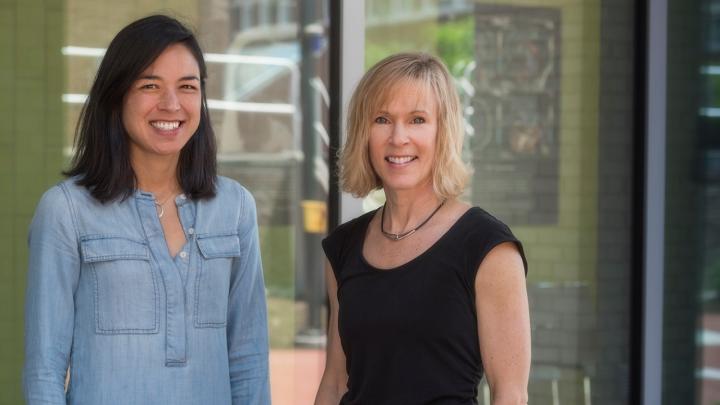
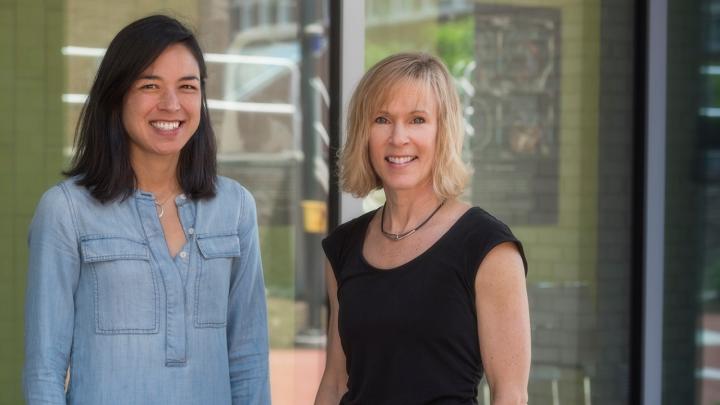
Sullivan and her colleague Kristi Kiick recently received a $1.4-million grant from the National Institutes of Health for research that could provide a new approach to the treatment of chronic wounds.
Combining their expertise in gene delivery and materials design, the two are collaborating with Dr. David Margolis in the Department of Dermatology at the University of Pennsylvania’s Perelman School of Medicine on the four-year project, “Collagen Turnover-Stimulated Gene Delivery to Enhance Chronic Wound Repair.”
Sullivan explains that promising therapeutic alternatives include the application of topical growth factors, combination wound dressings, or cellular scaffolds, which provide structural support for cell attachment and the tissue development that follows.
“However, even with these methods, the incidence of full wound closure remains strikingly low, and growth factor delivery methods fail to provide enough growth factor to stimulate the cells appropriately,” she says. “New strategies to promote efficient and localized production of growth factor by the cells involved in active tissue repair could overcome these issues.”
One of the most important aspects of healing is remodeling of the extracellular matrix (ECM), which provides the scaffolding for the cellular constituents in all tissues and organs. The strategy Sullivan and Kiick have proposed is to harness ECM remodeling to stimulate growth factor gene release and expression.
In particular, they are using peptide-based methods employed by Kiick to decorate nanostructures studied by Sullivan, with a target of localizing delivery vehicles directly in a wound. This can be accomplished by modifying the body’s collagen, a protein that provides strength and structure to the bones, muscles, skin, and tendons. These collagen-integrated nanostructures can then prompt growth factor expression in coordination with tissue repair kinetics.
“Our goal is to be able to ‘tune’ the duration of growth factor expression for periods ranging from a few days to several weeks and to coordinate this expression with the body’s needs,” Kiick says. “This tunability, or on-demand release and expression, should be ideally suited to the uncoordinated repair processes that are a hallmark of the chronic wound environment.”
The researchers hope their approach will ultimately be useful as a versatile biomaterials platform that is applicable to not only healing of chronic wounds but also a variety of other regenerative medicine applications.
###
About the researchers
Millie Sullivan is an associate professor in the Department of Chemical and Biomolecular Engineering.
Kristi Kiick is a professor with joint appointments in the Department of Materials Science and Engineering and the Department of Biomedical Engineering.
The two began to collaborate in 2011, when they were awarded funding through the University of Delaware Research Foundation (UDRF)’s strategic initiative grants program to explore the concept of designing DNA-modified collagen scaffolds for improving acute wound repair.
The strategic initiative grants program — established in 2008 to support research in the life and health sciences, energy and the environment — pairs early-career faculty with senior faculty mentors and provides seed money for promising research that will lead to larger proposals to such agencies as NIH and the National Science Foundation.
Media Contact
Peter Bothum
[email protected]
302-831-1418
@UDResearch
http://www.udel.edu
The post Repairing chronic wounds appeared first on Scienmag.