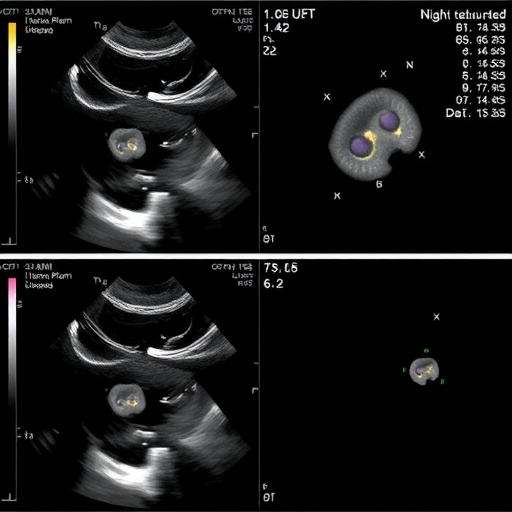
In a groundbreaking study poised to reshape neonatal care, researchers have uncovered a critical association between renal ultrasonography findings and urinary tract infection (UTI) in neonates admitted for unexplained hyperbilirubinemia. This revelation holds the promise of transforming diagnostic protocols for asymptomatic newborns presenting with elevated bilirubin levels, a clinical scenario that has long posed a diagnostic challenge. The implications extend far beyond immediate clinical practice, potentially improving long-term outcomes for vulnerable neonates.
Hyperbilirubinemia, characterized by an abnormal increase in bilirubin in the blood, is a common neonatal condition typically manifesting as jaundice. Despite its frequent occurrence, the etiology often remains elusive when conventional causes are ruled out. UTI, a frequent yet underappreciated culprit in this clinical context, often evades early detection due to the absence of hallmark symptoms in neonates. This research pivots on the nuanced relationship between covert urinary tract infections and renal ultrasonography alterations observed in this fragile population.
The investigative team employed an integrative approach combining clinical evaluation, laboratory testing, and advanced ultrasonographic imaging to dissect the multifaceted dimensions of unexplained neonatal hyperbilirubinemia. The study’s cohort comprised neonates hospitalized specifically for this condition, who exhibited no overt signs of infection. Renal ultrasonography, a noninvasive and widely accessible diagnostic tool, proved instrumental in illuminating underlying pathological changes within the urinary system that may antecede or accompany infection.
One of the study’s most compelling findings is the statistically significant correlation between abnormal ultrasonographic renal findings and culture-proven UTIs. These ultrasonographic anomalies, notable for alterations in echogenicity and structural irregularities, serve as subtle harbingers of infection. The diagnostic sensitivity afforded by these imaging changes could catalyze earlier identification and intervention, thereby mitigating the risk of renal scarring and other complications associated with delayed UTI diagnosis.
Clinically, the detection of UTI in neonates complicated by hyperbilirubinemia is notoriously challenging. Neonates frequently lack specific symptoms, and the conventional reliance on urinalysis and urine culture often suffers from logistical hurdles and delayed turnaround times. Renal ultrasonography, by contrast, offers immediate bedside insights that can facilitate prompt clinical decision-making. The study advocates for incorporating targeted renal imaging protocols into the initial workup of neonates with idiopathic hyperbilirubinemia.
This research also underscores the diagnostic and prognostic utility of correlating laboratory parameters—such as inflammatory markers and bilirubin levels—with imaging findings. Elevated inflammatory markers concomitant with suspicious ultrasonography enhance the predictive value for underlying UTIs. Such multidimensional assessment frameworks enrich clinical acumen and prioritize infants for further invasive diagnostics or empirical antimicrobial therapy.
From a technical perspective, the ultrasonographic criteria applied encompass an array of renal parenchymal and pelvicalyceal system assessments. Detailed evaluation of renal size, cortical thickness, echotexture, and the presence of dilations or anomalies contributed to a robust imaging database correlatable with microbiological results. This methodological rigor breathes new life into renal ultrasound’s role beyond structural assessment, advancing it into a nuanced functional screening modality for infection.
Furthermore, this study’s findings illuminate a hitherto underexplored pathophysiological nexus between neonatal hyperbilirubinemia and urinary tract pathology. The interplay implicates systemic inflammatory responses and subtle renal insult, which may potentiate bilirubin metabolism disturbances. Clarifying this link guides future research trajectories aiming to unravel complex neonatal biochemical cascades and identify novel biomarkers for early disease detection.
In parallel with these clinical insights, the investigation highlights the importance of multidisciplinary collaboration. Neonatologists, radiologists, and microbiologists contributed their specialized expertise to forge a comprehensive investigative framework capable of disentangling the often ambiguous clinical presentations of neonatal disease. This synergy reinforces the imperative for integrated diagnostic pathways, promoting precision medicine even at the earliest stages of life.
Looking ahead, the study advocates for the integration of routine renal ultrasonography in neonatal jaundice protocols worldwide. Given the modality’s safety profile and accessibility, it represents an ideal adjunct to existing diagnostic algorithms. Such integration could significantly reduce missed UTI diagnoses, optimize antibiotic stewardship, and alleviate healthcare burdens attributable to prolonged hospitalizations or recurrent urinary infections.
Moreover, this research invites a reevaluation of current guidelines governing neonatal jaundice management. International health bodies may consider revising recommendations to include renal imaging as part of the workup for unexplained hyperbilirubinemia. Implementing these changes would necessitate educational initiatives aimed at training practitioners in recognizing ultrasonographic signs suggestive of infection and interpreting these findings within a broader clinical context.
The potential global health impact is profound. UTIs in neonates, if untreated or overlooked, can precipitate severe sequelae including pyelonephritis, renal scarring, hypertension, and chronic kidney disease. Early identification facilitated by renal ultrasonography can interrupt this progression, safeguarding renal function and improving quality of life. This approach is particularly salient in resource-limited settings where delayed diagnosis contributes to disproportionate morbidity and mortality.
In the realm of biomedical innovation, this study stimulates the exploration of enhanced ultrasonographic technologies and artificial intelligence-driven image analytics to further refine diagnostic accuracy. Machine learning models trained on large datasets of neonatal renal images could one day enable automated recognition of subtle pathological changes, expediting diagnosis and standardizing care irrespective of operator expertise.
Finally, the findings incite reflection on the broader implications for neonatal infection surveillance. Incorporating renal ultrasonography as a screening tool could establish a new paradigm in neonatal infectious disease monitoring, emphasizing noninvasive yet sensitive detection strategies. Such paradigms embody the future of neonatal care—precise, personalized, and proactive.
Ultimately, the study by Sarı and Salihoğlu delineates a pivotal connection between renal ultrasonographic abnormalities and UTIs in neonates presenting with asymptomatic hyperbilirubinemia. By bridging imaging science and clinical neonatology, it charts a promising course towards enhanced diagnosis, timely treatment, and improved neonatal health outcomes globally.
Subject of Research: Association of renal ultrasonography findings with urinary tract infection in neonates presenting with unexplained hyperbilirubinemia.
Article Title: Renal ultrasonography findings are associated with urinary tract infection in neonates with asymptomatic hyperbilirubinemia.
Article References:
Sarı, E.E., Salihoğlu, Ö. Renal ultrasonography findings are associated with urinary tract infection in neonates with asymptomatic hyperbilirubinemia. J Perinatol (2026). https://doi.org/10.1038/s41372-026-02686-x
Image Credits: AI Generated
DOI: 13 April 2026
Tags: advanced ultrasonographic imaging in neonatologyclinical evaluation of neonatal jaundiceimpact of UTI on neonatal healthjaundice in asymptomatic neonateslaboratory testing for neonatal infectionsneonatal bilirubin level assessmentneonatal UTI without symptomsnoninvasive neonatal diagnostic techniquesrenal imaging for neonatal jaundicerenal ultrasound in neonatesunexplained neonatal hyperbilirubinemiaurinary tract infection diagnosis in newborns