William Frank Humphreys, known universally to colleagues as Bill, died on 28 February 2026 at the age of 81 after a short battle with mesothelioma, leaving behind a scientific legacy that fundamentally changed how biologists understand life beneath the driest inhabited continent on Earth. As former Senior Curator at the Western Australian Museum and Adjunct Professor at the University of Western Australia, Humphreys spent four decades documenting ecosystems that nobody believed could exist: thriving communities of ancient, blind, colourless animals living in groundwater beneath the deserts of the Australian arid zone. Before his work, groundwaters in this region were widely assumed to be biologically inert, little more than sterile reservoirs of salt and sand. His research demolished that assumption and revealed instead a hidden archipelago of subterranean ecosystems packed with relictual species whose lineages stretch back tens of millions of years, effectively placing Australia on the world map of subterranean biology.
His route into this field was anything but conventional. Born in Cheshire in the United Kingdom on 16 December 1944 and raised in Zimbabwe, Humphreys developed an early self-sufficiency that became legendary among his colleagues, exemplified by a solo hitch-hiking holiday across Africa at the age of just 17. He moved to Bangor in Wales in the mid-1960s to study science at the University of Wales, completing an Honours Bachelor of Science in 1968, and then travelled to Australia for doctoral research at the Australian National University in Canberra, graduating in 1973. It was there that his fascination with spiders took hold, producing several significant papers in Nature during the 1970s and 1980s on their eco-physiology. After postdoctoral work and a lectureship at Bath University in the United Kingdom, he returned to Australia in 1980 to take up a curatorship at the Western Australian Museum, and in the late 1980s he turned his attention to cave animals, the research programme he would pursue for the next 40 years.
That unconventional background proved to be a decisive strength. Rather than approaching subterranean life through the narrow lens of a single taxonomic speciality, Humphreys brought perspectives from mammal ecology, biological surveying and physiological research, which allowed him to see subterranean ecosystems as integrated systems rather than collections of curiosities. The result was not just a large body of taxonomic description but what collaborators describe as substantial value-adding: evolutionary analyses, conservation frameworks and assessments of economic significance built on top of the taxonomy. Over his career he published more than 320 articles, including 222 journal publications, 38 book chapters and six books, achieving an H-index of 60, and he was the taxonomic authority for 157 subterranean species, including 93 species of dytiscid diving beetles.
The taxonomic discoveries themselves stunned the global subterranean biology community. In the terrestrial caves of Cape Range and Barrow Island in Western Australia, Humphreys documented a cave fauna of 33 troglobiotic species across 26 genera. In the anchialine waters of Cape Range he revealed a stygobiotic fauna of 30 species in 20 genera, including two fish and ancient crustacean lineages such as the class Remipedia and the order Thermosbaenacea, groups previously unknown from the southern hemisphere. In the Pilbara, he and colleagues recorded the crustacean order Spelaeogriphaea, known beforehand from only two caves in South Africa and Brazil, alongside a rich stygofauna of phreodrilid oligochaete worms and crustaceans including amphipods, copepods, ostracods, phreatoicid isopods and syncarids.
Perhaps the most celebrated of his discoveries lay in the calcrete aquifers of central Western Australia, limestone groundwater bodies scattered beneath the arid interior. There, Humphreys and collaborating taxonomists identified an extraordinarily diverse fauna of dytiscid diving beetles now numbering around 100 species, together with amphipods, copepods, isopods, ostracods and parabathynellid syncarids. Working with national and international specialists, he set out to document the taxonomy of this entire fauna systematically rather than restricting himself to a single group, and to establish its scientific and conservation importance through cutting-edge evolutionary research. Significant subterranean faunas were also documented in the anchialine systems of Christmas Island, the freshwater karst of the Kimberley region, and the calcrete aquifers of the Ngalia Basin in the Northern Territory, the latter including bathynellid syncarids and phreatoicid isopods.
The evolutionary findings that flowed from this work were as consequential as the species lists themselves. Humphreys showed that the relictual character of these faunas is written into their phylogenetic relationships: caves in the Kimberley, the Pilbara, Cape Range and Christmas Island harbour species whose closest relatives live in geographically remote caves on either side of the North Atlantic, on Gondwanan fragments or on isolated seamounts, often pointing to ancient connections with the Tethys Ocean. The Cape Range cave fauna, now surrounded by desert, was revealed as a relict wet-forest litter fauna carrying both temperate and tropical affinities. Phylogenetic and population genetic analyses documented numerous independent colonisations of subterranean habitats from surface ancestors, and the diving beetle radiations displayed novel modes of speciation, including the possibility of sympatric speciation through ecological diversification within single calcrete aquifers. Crucially, these studies confirmed Humphreys’s own 2001 hypothesis that each calcrete aquifer in the arid zone contains its own distinct short-range endemic species, functioning like islands beneath the desert.
Beyond taxonomy, Humphreys pursued the ecology of groundwater and cave ecosystems with the same rigour. Much of his recent research focused on the anchialine ecosystem of the Cape Range peninsula and Barrow Island, and on the calcrete aquifer at Sturt Meadows in Western Australia, where he and colleagues established a valuable series of groundwater monitoring bores. The multidisciplinary programme at Sturt Meadows steadily advanced understanding of carbon flows, food web interactions and rainfall-driven cascade effects in calcrete aquifers. At Cape Range, he led fieldwork campaigns investigating the Bundera Sinkhole, the only continental anchialine system known in the southern hemisphere, generating recent publications on the diversity and function of its resident microbial communities. At Barrow Island, his research illuminated the ecological patterns shaping hypogean fauna and triggered enhanced protection for endangered subterranean biota.
The conservation implications of this science were profound, because many of the groundwater ecosystems Humphreys identified lie in regions of enormous importance to the mining industry, notably the Pilbara and Goldfields, where groundwater is a major operational resource and calcrete is used extensively in mineral processing and road construction. The discovery that individual aquifers harbour endemic species with tiny ranges, many representing ancient lineages previously unknown in Australia, carried major management consequences. Humphreys disseminated his findings through reports, including the 2006 State of the Environment Report on Emerging Issues in Groundwater Fauna, and through seminars aimed at regulators, leading directly to policy developments protecting groundwater fauna across Australia. In Western Australia, mining companies are now required by the Environment Protection Authority to identify stygofaunas near proposed mine sites, assess the effects of operations and prepare conservation action plans where fauna could be adversely affected, requirements grounded in the biodiversity and short-range endemism his research documented.
Humphreys also shaped the international community itself. He served as an editor and editorial board member of the journal Subterranean Biology, sat on the council of the International Society of Subterranean Biologists, and was its vice president from 2004 to 2008 and again from 2012 to 2014. He convened the 19th International Conference on Subterranean Biology in Fremantle, initiated and co-convened conferences on anchialine ecosystems, and gave multiple invited plenaries at international conferences, most recently in Cagliari, Sardinia, where he was awarded Honorary Membership of the society. For the last 12 years he served on the IUCN Species Survival Commission’s Cave Invertebrate Specialist group. In Australia, he received the Eureka Prize for excellence in taxonomy in 2008 and the Ivor Beatty Prize from Pacific Conservation Biology in 2020, and he spent nine years on the federal government’s Threatened Species Advisory committee while also serving on the Inaugural Ningaloo Coast World Heritage Advisory Committee and the Western Australian Environmental Protection Authority’s Subterranean Fauna Technical group.
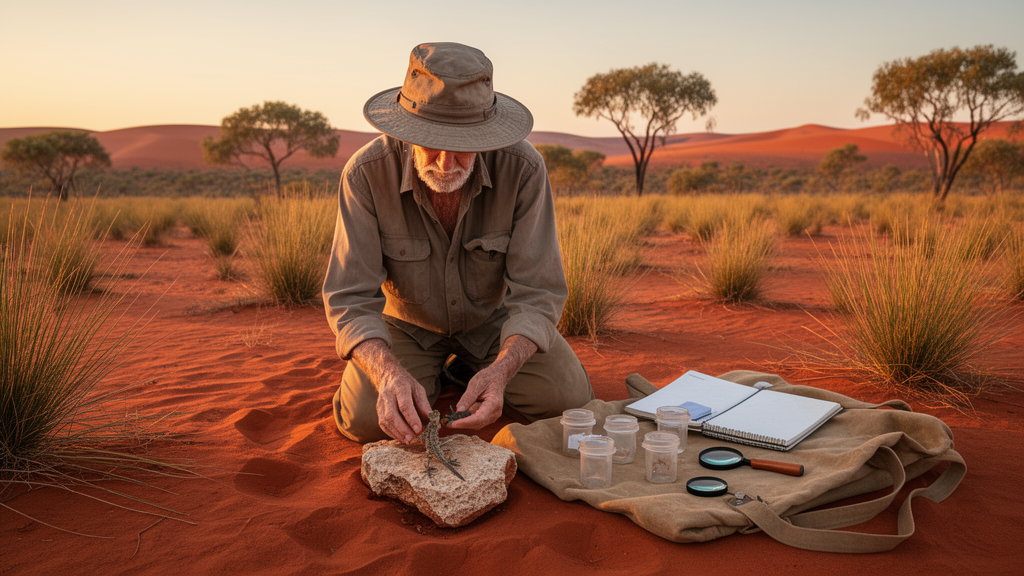
Colleagues remember a scientist of two registers: an intellectual gentleman in the laboratory and a practical Australian bushman in the field, climbing down dilapidated wells, roped to crusty old windmills, fossicking for elusive mineral exploration bores and rescuing venomous brown snakes and goannas from old town bores. His speed at sorting the day’s stygofauna catch, with a glass of red wine nearby, was legendary. He mentored early career researchers whose own programmes uncovered significant groundwater and cave diversity in New South Wales, South Australia and Tasmania, and his generosity with advice earned an outpouring of tributes from around the world after news of his death. Bill Humphreys is survived by his wife Rae, their daughters Miranda and Phoebe and their partners, and two recently born grandchildren, Jasper and Margot, whose family hopes they will come to rejoice in Australia’s varied ecosystems as much as he did.
Subject of Research: The life and scientific legacy of subterranean biologist William F. Humphreys
Article Title: In Memoriam – William (Bill) F. Humphreys: A lifetime of discovery (born December 16, 1944; died February 28, 2026)
Article References: Cooper, S. J. B., Saccò, M., Guzik, M. T., Austin, A. D., & Harvey, M. S. (2026). In Memoriam – William (Bill) F. Humphreys: A lifetime of discovery (born December 16, 1944; died February 28, 2026). Subterranean Biology, 57, 105-116. https://doi.org/10.3897/subtbiol.57.208540
Image Credits: AI Generated
DOI: 10.3897/subtbiol.57.208540
Keywords: subterranean biology, stygofauna, troglobites, calcrete aquifers, Western Australia, taxonomy, groundwater conservation, anchialine ecosystems, diving beetles, cave fauna, Western Australian Museum, obituary
News Source: Margaret Porter. (October 16, 2026). Remembering Bill Humphreys, the scientist who revealed Australia’s hidden desert life. Scienmag.