• HOME
  • NEWS
  • EXPLORE
    • CAREER
      • Companies
      • Jobs
    • EVENTS
    • iGEM
      • News
      • Team
    • PHOTOS
    • VIDEO
    • WIKI
  • BLOG
  • COMMUNITY
    • FACEBOOK
    • INSTAGRAM
    • TWITTER
Wednesday, September 2, 2026
BIOENGINEER.ORG
No Result
View All Result
  • Login
  • HOME
  • NEWS
  • EXPLORE
    • CAREER
      • Companies
      • Jobs
        • Lecturer
        • PhD Studentship
        • Postdoc
        • Research Assistant
    • EVENTS
    • iGEM
      • News
      • Team
    • PHOTOS
    • VIDEO
    • WIKI
  • BLOG
  • COMMUNITY
    • FACEBOOK
    • INSTAGRAM
    • TWITTER
  • HOME
  • NEWS
  • EXPLORE
    • CAREER
      • Companies
      • Jobs
        • Lecturer
        • PhD Studentship
        • Postdoc
        • Research Assistant
    • EVENTS
    • iGEM
      • News
      • Team
    • PHOTOS
    • VIDEO
    • WIKI
  • BLOG
  • COMMUNITY
    • FACEBOOK
    • INSTAGRAM
    • TWITTER
No Result
View All Result
Bioengineer.org
No Result
View All Result
Home NEWS Science News

Relocating bus stops would cut riders’ pollution exposure, UCLA study finds

Bioengineer by Bioengineer
November 7, 2017
in Science News
Reading Time: 2 mins read
0
Share on FacebookShare on TwitterShare on LinkedinShare on RedditShare on Telegram
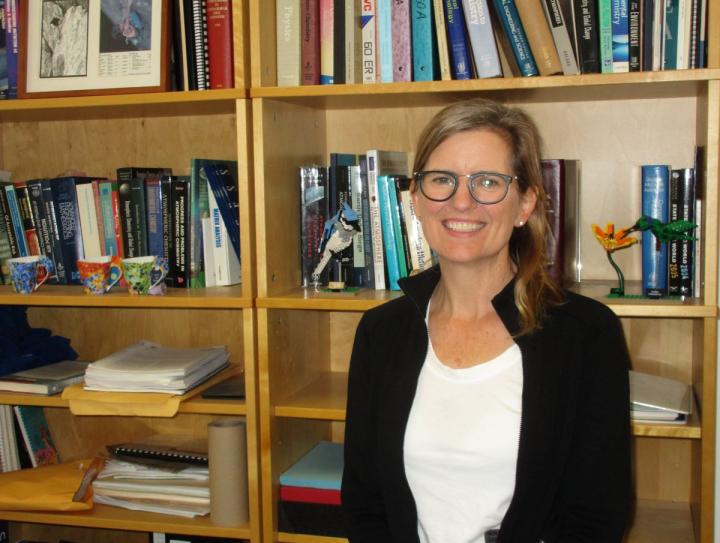
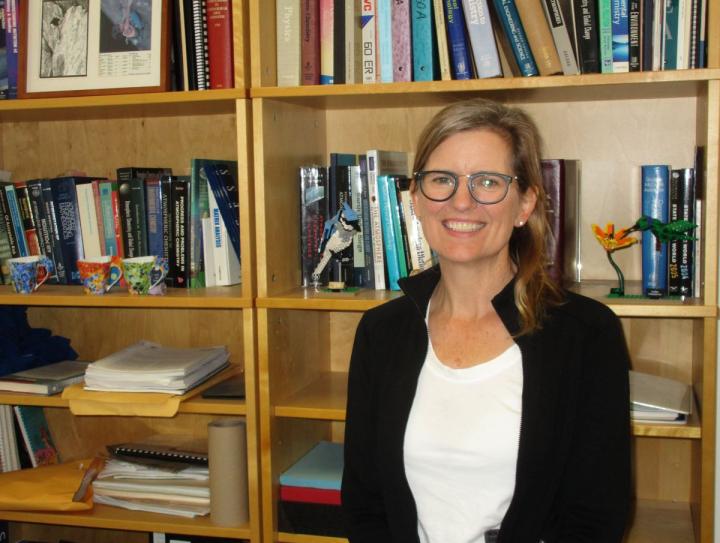
IMAGE

Credit: Stuart Wolpert/UCLA

Moving bus stops away from intersections would substantially reduce the amount of pollution bus riders are exposed to, UCLA scientists report today in the journal Environmental Pollution.

Research has shown that in many cities in the United States and internationally, bus riders frequently spend 15 to 25 minutes or more each way waiting for a bus.

"The wait often means spending time in some of the most polluted locations in cities, close to intersections where cars, trucks and buses are continually stopping and accelerating, spewing out high concentrations of noxious exhaust," said senior author Suzanne Paulson, UCLA professor of atmospheric sciences. "The exhaust contains gasses and large amounts of ultrafine particles that are essentially unregulated by the Environmental Protection Agency because the EPA regulates fine particles by weight, and these particles weigh so little," she said.

"Our measurements show that traffic-related pollutant concentrations peak near intersections and decrease sharply with distance," Paulson said. Bus riders' exposure to the pollutants would be significantly reduced by moving bus and light rail stops 120 feet from busy intersections, her research team reports.

The study was led by Wonsik Choi, a postdoctoral researcher in Paulson's laboratory, and funded by the National Science Foundation and the California Air Resources Board.

The researchers used a zero-emission vehicle equipped with specialized instruments to measure ultrafine particles and other tailpipe pollutants, such as nitrogen oxide and carbon monoxide. They made measurements in several neighborhoods in Los Angeles and surrounding areas, including downtown Los Angeles, Beverly Hills and the San Gabriel Valley. The research was conducted on 15 days from summer to late fall in 2013 and over four days in the summer of 2014.

The researchers drove back and forth across 10 intersections with traffic signals and nearby street blocks during mornings and afternoons, 1,744 times, taking measurements every second.

"We then combined and analyzed the data for each intersection to create high-resolution maps of pollutant concentrations along the blocks," said Choi, an assistant professor of environmental atmospheric sciences at South Korea's Pusan National University.

The researchers calculated the quantity of ultrafine particles and other traffic-related pollutants transit users would inhale if the stop was farther from the intersection.

"Except in areas with minimal traffic, we always found there would be a significant reduction," said Paulson, who is also a member of UCLA's Institute of the Environment and Sustainability. She noted that trash trucks and other large vehicles spew much more toxic fumes near intersections, when they are starting and stopping.

Traffic engineers believe that traffic flows better if bus stops are located after intersections. Better traffic flow can mean less stop-and-go, which will also improve air quality. In urban areas, moving the stops farther away reduces the amount of pollution transit users breathe, as long as the stop is not so far that it gets pollution from the next street, researchers said.

###

Media Contact

Stuart Wolpert
[email protected]
310-206-0511
@uclanewsroom

http://www.newsroom.ucla.edu

Share12Tweet8Share2ShareShareShare2

Related Posts

β-Sitosterol from Ipomoea carnea Jacq. As a promising anti-inflammatory agent: Evidence from in silico modeling and in vitro validation

β-Sitosterol from Ipomoea carnea Jacq. As a promising anti-inflammatory agent: Evidence from in silico modeling and in vitro validation

August 31, 2026
Design, fabrication and characterization of a wearable Fiber Bragg grating sensor for cardiorespiratory monitoring using finger plethysmography

Design, fabrication and characterization of a wearable Fiber Bragg grating sensor for cardiorespiratory monitoring using finger plethysmography

August 31, 2026

KAIST opens the era of industrial-scale microbial foods, proposing growth strategies for the next-generation protein market

August 31, 2026

Virologist awarded $2 million NIH grant to investigate how virus-infected cells live and die

August 31, 2026
Please login to join discussion

POPULAR NEWS

  • β-Sitosterol from Ipomoea carnea Jacq. As a promising anti-inflammatory agent: Evidence from in silico modeling and in vitro validation

    29 shares
    Share 12 Tweet 7
  • Design, fabrication and characterization of a wearable Fiber Bragg grating sensor for cardiorespiratory monitoring using finger plethysmography

    29 shares
    Share 12 Tweet 7
  • KAIST opens the era of industrial-scale microbial foods, proposing growth strategies for the next-generation protein market

    29 shares
    Share 12 Tweet 7
  • Virologist awarded $2 million NIH grant to investigate how virus-infected cells live and die

    29 shares
    Share 12 Tweet 7

About

We bring you the latest biotechnology news from best research centers and universities around the world. Check our website.

Follow us

Recent News

β-Sitosterol from Ipomoea carnea Jacq. As a promising anti-inflammatory agent: Evidence from in silico modeling and in vitro validation

Design, fabrication and characterization of a wearable Fiber Bragg grating sensor for cardiorespiratory monitoring using finger plethysmography

KAIST opens the era of industrial-scale microbial foods, proposing growth strategies for the next-generation protein market

Subscribe to Blog via Email

Success! An email was just sent to confirm your subscription. Please find the email now and click 'Confirm' to start subscribing.

Join 85 other subscribers
  • Contact Us

Bioengineer.org © Copyright 2023 All Rights Reserved.

Welcome Back!

Login to your account below

Forgotten Password?

Retrieve your password

Please enter your username or email address to reset your password.

Log In
No Result
View All Result
  • Homepages
    • Home Page 1
    • Home Page 2
  • News
  • National
  • Business
  • Health
  • Lifestyle
  • Science

Bioengineer.org © Copyright 2023 All Rights Reserved.