


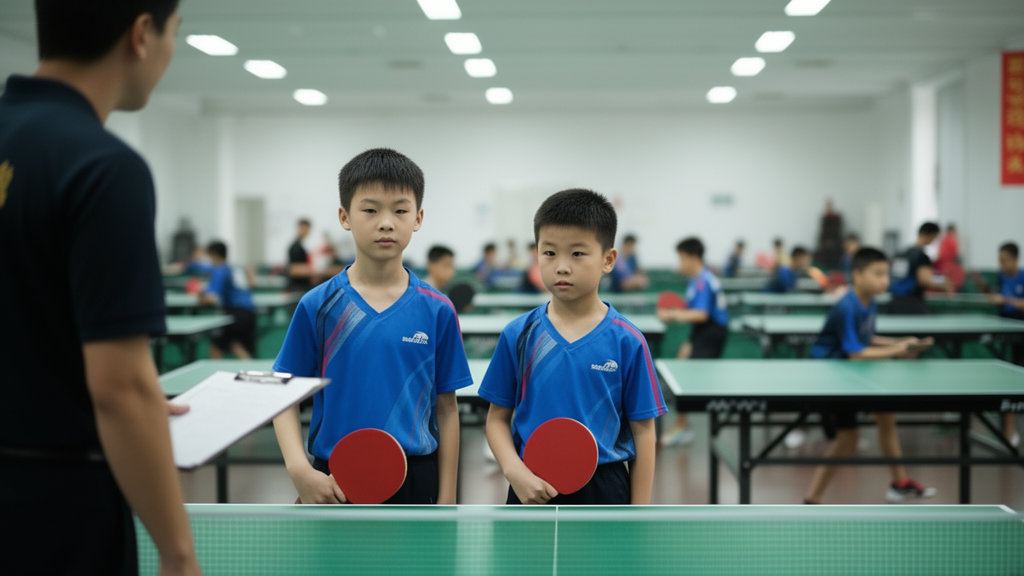
A cross-sectional study of Chinese youth table tennis players has found that the relative age effect, a well-known phenomenon in youth sport, is concentrated in high-level competition rather than appearing uniformly across all settings. Researchers analysed 1,322 athletes aged 12 to 15 years who competed in the 2024–2025 National Youth Table Tennis Championships and Liaoning Provincial Youth Table Tennis Competitions, classifying each athlete into one of four birth quarters and testing whether older athletes within an age group were over-represented.
The results showed a significant relative age effect in the national high-level sample, with athletes born in the first quarter of the selection year over-represented relative to those born in the fourth quarter. No significant effect was observed in the Liaoning provincial sample. This contrast suggests that the phenomenon in Chinese youth table tennis is tied to the intensity of selection: where competition filters athletes toward elite pathways, relatively older players within each age cohort appear to advance more often, while broader participation fields show no such skew.
The study, published in BMC Sports Science, Medicine and Rehabilitation, quantified the effect using chi-square analyses, with Cohen’s w and odds ratios estimating its magnitude. Analyses were stratified by competitive level, age group and sex. In the national sample, the relative age effect was evident across age groups but was stronger among younger athletes, indicating that the advantage of relative maturity within a cohort is most pronounced at the earliest stages of national-level competition.
Sex-stratified analyses added further nuance. The data suggested that the relative age effect emerged earlier in female players, while in males the effect was more pronounced in the older age groups. The authors note that these patterns mean the effect varies by both age and sex rather than operating identically across the youth population, which has implications for how talent identification systems interpret performance differences between players of the same chronological age.
The authors conclude that relative age and developmental status should be considered in talent identification for Chinese youth table tennis, particularly in high-level selection contexts where the effect was strongest.
Subject of Research: Relative age effect differences by competitive level, age and sex among Chinese youth table tennis players
Article Title: Competitive-level differences in the relative age effect among youth table tennis players in China
Article References: Wang, Y., Peng, C., Zhou, H., Zhang, H., Xin, C., & Mi, J. (2026). Competitive-level differences in the relative age effect among youth table tennis players in China. BMC Sports Science, Medicine and Rehabilitation. https://doi.org/10.1186/s13102-026-02160-3
Image Credits: AI Generated
DOI: 10.1186/s13102-026-02160-3
Keywords: relative age effect, table tennis, youth sport, talent identification, China, athlete selection, sports science, birth quarter, cross-sectional study, maturation, Competitive-level, differences
News Source: Ophelia Keating. (October 30, 2026). Relative Age Effect Shapes Youth Table Tennis Selection in China. Scienmag.



