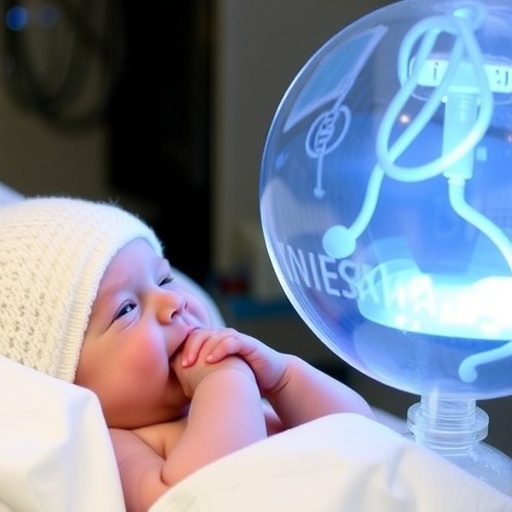
In a ground-breaking effort to refine the treatment landscape for neonatal hypoxia–ischemia (NHI), researchers have embarked on defining a more standardized and optimized protocol for therapeutic hypothermia, a widely used yet imperfect clinical intervention. Despite its status as the sole approved therapy in neonatal brain injury caused by oxygen deprivation, the efficacy of hypothermia remains inconsistent, partly due to variability in its application across preclinical studies. This inconsistency has posed significant challenges for researchers attempting to evaluate and compare emerging neuroprotective strategies reliably.
The research, conducted using the established Rice-Vannucci model in rats, aims not to question current clinical practices but to establish a rigorous and reproducible benchmark for preclinical therapeutic development. By honing the hypothermia protocol through careful experimental design, the study addresses a crucial bottleneck in translational neuroscience, offering a bridge between experimental findings and clinical application. The Rice-Vannucci model, a cornerstone in neonatal hypoxia-ischemia research, faithfully recreates the cascade of events following oxygen deprivation in the neonatal brain, making it an ideal platform for therapeutic investigations.
Therapeutic hypothermia works by reducing the brain’s metabolic demands and mitigating excitotoxicity, inflammation, and apoptosis, which are central to the pathogenesis of NHI. However, the timing, depth, and duration of cooling vary widely in literature, which profoundly affects outcomes. This variability can obfuscate the true benefits of hypothermia itself and complicate the assessment of adjunct neuroprotective agents. Standardizing these parameters is therefore imperative to advance the field and develop combined therapeutic approaches with greater efficacy.
The study meticulously tested different cooling regimens in neonatal rats subjected to induced hypoxia-ischemia. Researchers explored the critical windows for initiating hypothermia post-insult, varying cooling durations, and the optimal target body temperature. Their results underscored the importance of initiating cooling within a narrow therapeutic window, as delays significantly reduced neuroprotection. Furthermore, the duration of hypothermia was shown to require a delicate balance: insufficient cooling time yields suboptimal neuroprotection, whereas prolonged hypothermia may induce adverse systemic effects, highlighting the need for precision in treatment protocols.
One of the pivotal findings was identifying a precise therapeutic window wherein hypothermia exerts maximal neuroprotection without inducing deleterious side effects. The study confirmed that initiating cooling as soon as possible post-hypoxic insult, ideally within the first hour, dramatically improves neurological outcomes. This reinforces clinical observations but provides preclinical validation across parameters tailored for robust experimental comparability. Additionally, maintaining a controlled target temperature around 33–34°C was affirmed as optimal, balancing efficacy and safety.
Importantly, the researchers emphasize that while therapeutic hypothermia is beneficial, it does not fully prevent brain injury in many cases of neonatal hypoxia-ischemia. This limitation necessitates the ongoing search for adjuvant therapies to complement hypothermia. The optimized protocol established in this research sets a critical foundation for future investigations seeking to test neuroprotective agents in combination with hypothermia, thereby facilitating more accurate and translatable findings.
The work also considers the systemic effects of hypothermia, particularly how it can affect cardiovascular function and metabolic processes in neonatal subjects. Understanding these systemic responses is crucial because the neonatal brain does not exist in isolation; systemic stability underpins the success of any neuroprotective intervention. Through comprehensive physiological monitoring during hypothermia, the study delineates safety margins that should be adhered to in both preclinical and eventual clinical settings.
This research has broader implications beyond just neonatal hypoxia-ischemia. The approach to standardizing therapeutic hypothermia parameters can serve as a model for other neurological conditions where hypothermia is utilized or considered, such as traumatic brain injury and cardiac arrest. The rigor imposed by this study’s design and analysis could inspire similar standardizations, enhancing the reproducibility and translatability of experimental therapies in diverse neurological diseases.
Moreover, the authors underscore the importance of translational research frameworks that align preclinical protocols with clinical realities, enhancing the predictability of animal model findings. This alignment is critical, given that many neuroprotective interventions fail to demonstrate efficacy when moving from animal studies to human trials — a gap often attributed to methodological discrepancies in preclinical studies.
The standardized hypothermia protocol emerging from this research offers a vital tool to accelerate the discovery and validation of novel neuroprotective strategies. It sets a reproducible baseline against which therapeutic effects can be accurately gauged, improving confidence in the comparative effectiveness of new interventions. This could, in time, catalyze the development of combination therapies that surpass the partial efficacy of hypothermia alone.
The comprehensive experimental dataset generated also contributes to the mechanistic understanding of hypothermia’s neuroprotective effects, particularly its role in dampening neuroinflammation and preserving mitochondrial function post-insult. Such mechanistic insights are critical for guiding the rational design of adjunct treatments that may synergize with hypothermia’s beneficial effects.
Finally, the authors highlight the translational promise of their findings for clinical practice, where therapeutic hypothermia protocols vary internationally. While respecting established clinical guidelines, this preclinical work encourages a dialogue on harmonizing hypothermia parameters across institutions to optimize outcomes for neonates suffering from hypoxic brain injuries worldwide.
In conclusion, by setting a scientifically rigorous and standardized hypothermia protocol in a validated neonatal hypoxia-ischemia model, this study not only enhances the reliability and comparability of preclinical research but also paves the way toward improving clinical outcomes through optimized treatment paradigms. The work represents a meaningful step forward in neonatology and neuroprotection research, promising to inspire further innovation in the quest to protect vulnerable neonatal brains.
Subject of Research: Neonatal hypoxia-ischemia and optimization of therapeutic hypothermia in a rat preclinical model.
Article Title: Optimizing therapeutic hypothermia conditions in a translational preclinical model of neonatal hypoxia-ischemia in rats.
Article References:
Ibrahim, I.O., Goudeneche, P., Dayraut, L. et al. Optimizing therapeutic hypothermia conditions in a translational preclinical model of neonatal hypoxia-ischemia in rats. Pediatr Res (2026). https://doi.org/10.1038/s41390-026-05173-3
Image Credits: AI Generated
DOI: 30 June 2026
Tags: challenges in neonatal brain injury treatmentexperimental design for hypothermia studieshypothermia timing and duration in neonatal therapyimproving outcomesmitigating excitotoxicity and apoptosis in NHIneonatal hypoxia-ischemia treatment protocolsneuroprotection in neonatal oxygen deprivationoptimizing hypothermia therapy in neonatesRice-Vannucci model in neonatal brain researchstandardizing preclinical hypothermia studiestherapeutic hypothermia for neonatal brain injurytranslational neuroscience in neonatal care