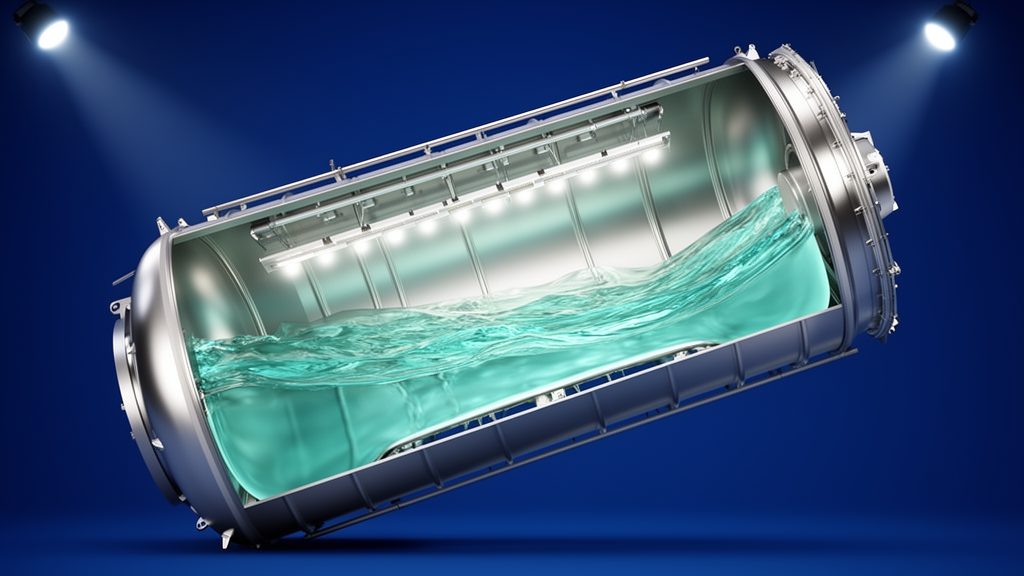
Aerospace engineering researchers have introduced a computational framework that combines isogeometric analysis, projection-based reduced-order modeling, and energy-conserving hyper-reduction to simulate the dynamic behavior of liquid sloshing in tanks under varying liquid fill levels. Liquid-propelled launch vehicles, satellite containers, aircraft, and helicopters experience substantial propellant motion during flight maneuvers and liftoff thrust phases. Tracking the natural vibration frequencies and dynamic pressure variations of liquids as tanks drain is critical for flight control systems, including attitude adjustment and the suppression of severe longitudinal instabilities such as the Pogo effect. Traditional numerical methods that resolve these fluid-structure interactions require dense computational meshes with vast numbers of degrees of freedom, creating high-dimensional models that demand prohibitive runtimes during iterative design assessments and real-time operational calculations.
To overcome the severe computational bottleneck of high-dimensional models, the authors developed a methodology that formulates the fluid dynamics over a parameterized reference configuration using isogeometric analysis. In conventional finite element methods, domain geometries are approximated with polygonal or polyhedral meshes, whereas isogeometric analysis directly adopts Non-Uniform Rational B-Splines, commonly known as NURBS, to simultaneously represent both the exact physical boundaries and the unknown scalar pressure fields. The governing physical model assumes an incompressible, inviscid, and homogeneous liquid undergoing irrotational motion, governed by Laplace’s equation in the interior domain, coupled with dynamic acceleration continuity conditions at the tank interface and a dynamic free-surface condition that incorporates gravitational acceleration. By defining a fictitious displacement field mapping the physical liquid configuration back to a static reference configuration, the formulation retains exact geometric fidelity across arbitrary liquid heights while confining mesh parametric variations to a compact set of initial control points.
Transforming the governing variational equations to a reference configuration introduces a significant mathematical complication because the inverse transpose of the deformation gradient enters the integral operators. This dependency renders the discretized matrices non-affine with respect to the liquid filling height parameter. In standard projection-based reduced-order modeling, an affine parameter dependence allows system operators to be decomposed into products of parameter-dependent scalar coefficients and precomputed parameter-independent matrices, permitting rapid online evaluations. In non-affine formulations, however, altering a geometric parameter typically forces the recomputation and re-assembly of operators across the full spatial mesh before projection onto a reduced subspace can occur. This requirement preserves high-dimensional operation counts during online evaluation and largely negates the computational acceleration expected from model order reduction.
The research team resolved this non-affine bottleneck by coupling a projection basis derived from Proper Orthogonal Decomposition with a hyper-reduction framework known as Energy-Conserving Sampling and Weighting. In the offline phase of the workflow, full-order high-dimensional simulations are performed over a training sequence using an implicit generalized-alpha time integration scheme to collect snapshot responses of the liquid pressure fluctuation field. Applying a singular value decomposition to this snapshot matrix yields an optimal, low-dimensional projection basis of orthogonal modes. By approximating the pressure field as a linear combination of these basis modes, the dynamic system of equations is projected into a reduced subspace of modest dimension, decreasing the size of the required linear system solves from tens of thousands of degrees of freedom down to a small set of modal coordinates.
While standard projection reduces the dimension of the algebraic equations to be solved at each time step, assembling the reduced stiffness, dynamic, and excitation operators would still require evaluating volume and surface integrals over the entire spatial domain. The authors adapted the Energy-Conserving Sampling and Weighting approach to the isogeometric analysis framework to address this issue. This method reformulates the integral evaluations as a reduced cubature problem, selecting a very small, optimized subset of integration elements and calculating strictly positive weighting factors by solving a sparse non-negative least-squares optimization problem. The algorithm enforces that the virtual work of the reduced operators closely approximates the virtual work of the full high-dimensional operators across the training data within an explicit energy tolerance, while guaranteeing that essential operator symmetry properties are strictly preserved.
To evaluate the performance, stability, and predictive fidelity of the integrated computational framework, the investigators applied the method to a horizontal cylindrical rigid tank partially filled with liquid, parameterized across fourteen distinct liquid filling heights. In the initial verification steps, the authors computed the linear sloshing eigenmodes and natural frequencies on both the current physical geometry and the mapped reference geometry. The resulting fundamental sloshing frequencies matched closely with published analytical solutions and experimental benchmark data, confirming that the reference domain transformation accurately represents both transverse and longitudinal vibration modes without loss of dynamic precision across varied filling ratios.
The generation of the projection basis utilized a training acceleration profile consisting of a transient step-type pulse applied along the transverse coordinate. This excitation signal deliberately activated a wide spectrum of liquid vibration modes across the parametric filling domain, providing a rich dataset of pressure snapshots. Singular value decomposition of the snapshot data revealed that the dominant portion of system energy is concentrated within the leading thirty modes. When evaluating modal convergence across increasingly refined meshes, ranging from coarse configurations with 125 elements up to fine meshes containing 8,000 elements, retaining thirty modes consistently yielded a global relative error below one percent relative to the high-dimensional reference solutions under harmonic validation excitations.
Applying Energy-Conserving Sampling and Weighting to the isogeometric discretization demonstrated that only a minor fraction of the total mesh elements needs to be integrated during online evaluations. For the finest mesh consisting of 8,000 elements, approximately five percent of the elements were activated to construct the volume and surface operators while satisfying an energy tolerance of ten to the power of negative six. As the tolerance parameter was systematically decreased from ten to the power of negative one to ten to the power of negative six, the global relative error in free-surface corner elevation continuously dropped until reaching a plateau matching the baseline error floor of the unreduced thirty-mode projection basis, confirming that the hyper-reduction process does not degrade the intrinsic accuracy of the underlying modal projection.
Timing benchmarks conducted over 240 simulation time steps highlighted substantial computational gains. High-dimensional models required extensive CPU assembly times, particularly for the volume integrals where high-order NURBS basis function derivatives must be computed at each Gauss integration point. A standard projection-based model without hyper-reduction achieved speed-up factors ranging from approximately 7 on coarse meshes to 46 on fine meshes, though operator assembly of full-order dimensions remained an online bottleneck. The implementation of Energy-Conserving Sampling and Weighting eliminated this constraint by restricting element evaluations exclusively to the active subset, accelerating the online simulation time by a factor of 5 to 10 compared to standard reduced-order models, all while maintaining high tracking fidelity for free-surface wave elevation and internal liquid pressure fluctuations.
The study also delineated key physical and methodological boundaries governing the current implementation. The mathematical formulation assumes linear sloshing in rigid cavities, treating the fluid as inviscid and incompressible without surface tension effects, which restricts direct applicability in microgravity regimes where capillary forces dominate or in naval systems where violent nonlinear sloshing occurs. Furthermore, the parametric framework was examined for a single geometric variable representing liquid filling height under unidirectional excitation. The researchers noted that extending the approach to multi-parameter geometries, structural elasticity coupling, structural acoustics, and advanced sampling schemes will require further investigation to prevent exponential scaling during offline snapshot training.
Subject of Research: Computational fluid dynamics and reduced-order modeling of parameterized liquid sloshing
Article Title: Projection-based reduced order model and hyper-reduction of linear sloshing with geometric parameters using isogeometric analysis
Article References: Hoareau, C., Deü, J. F., & Ohayon, R. (2025). Projection-based reduced order model and hyper-reduction of linear sloshing with geometric parameters using isogeometric analysis. Advanced Modeling and Simulation in Engineering Sciences, 12(1), Article 28. https://doi.org/10.1186/s40323-025-00307-4
Image Credits: AI Generated
DOI: 10.1186/s40323-025-00307-4
Keywords: liquid sloshing, reduced order modeling, isogeometric analysis, hyper reduction, fluid dynamics, aerospace engineering, proper orthogonal decomposition, computational mechanics, Projection-based, reduced, order, model
News Source: Denise Maddox. (November 13, 2026). Reduced Order Modeling Accelerates Liquid Sloshing Predictions in Aerospace Fuel Tanks. Scienmag.