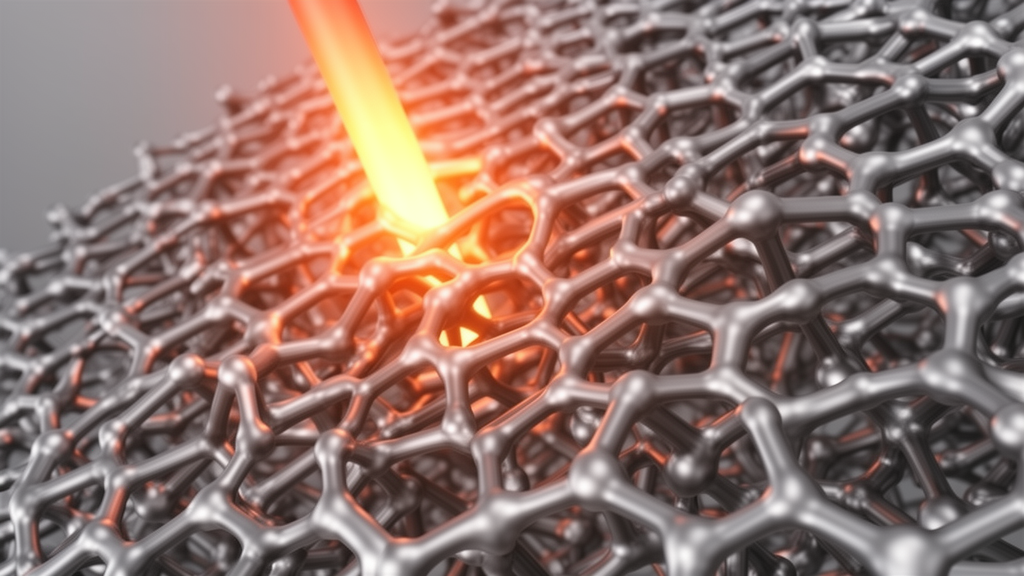
A new scientific review examines how structural modifications and protective coatings can prevent rapid oxidation failure in lightweight carbon foams designed for high-temperature thermal protection systems. Carbon foam provides valuable low thermal conductivity and strong thermal stability, yet its practical use in extreme thermal environments remains severely constrained when oxygen is present. Researchers reviewed the interconnected structural characteristics that dictate how these materials transfer heat and degrade under elevated temperatures.
The analysis clarifies how key morphological features govern both insulation efficiency and oxidation vulnerability. According to the published survey, characteristics such as material porosity, pore connectivity, ligament thickness, pore wall integrity, and the degree of carbon ordering directly dictate performance. These physical parameters determine how heat moves across the porous network while simultaneously influencing the ease with which oxidizing gases penetrate and attack the structural ligaments.
To counter this vulnerability, researchers categorized current oxidation protection technologies into matrix modification methods and external surface coating approaches. Matrix modifications focus on altering the internal skeleton of the foam through elemental doping, the incorporation of reactive particles, or the addition of reinforcing fibers and whiskers. These internal additions aim to reinforce the underlying carbon architecture against chemical breakdown and mechanical degradation during exposure.
Surface coating approaches evaluated in the review include glassy layers, carbide-based coatings, boride-based formulations, and complex multicomponent barrier systems. These applied layers serve as physical and chemical barriers that impede oxygen transport into the porous carbon network. The review notes that effective barriers must maintain adhesion and coverage across the porous geometry to prevent local oxidation failure.
The survey further distinguishes five fundamental protection mechanisms operating across these modified materials. Specifically, protective strategies function through intrinsic reactivity regulation, oxygen transport control, skeleton stabilization, protective phase formation, and active crack healing. By inhibiting reaction kinetics or sealing microscopic defects that develop at extreme temperatures, these mechanisms help preserve the structural framework of the foam.
Evaluating these systems requires assessing multiple coupled physical and thermal properties rather than oxidation resistance in isolation. The authors summarized how structural modifications impact mechanical properties, thermal insulation retention, density variation, coating integrity, and overall thermal cycle stability. Maintaining low density and high thermal insulation while introducing protective components remains an essential balance for thermal protection applications.
Looking forward, the review emphasizes that future engineering efforts must focus on developing conformal internal pore coatings, establishing standardized coupled testing methods, and creating scalable integrated matrix and coating designs. These targeted advancements are identified as essential steps to achieve structural reliability, robust oxidation resistance, and enduring thermal insulation performance during long-duration service in oxygen-containing environments.
Subject of Research: High-temperature oxidation protection and structural modification of carbon foams
Article Title: Carbon foams for high-temperature thermal protection: oxidation failure and structural modification
Article References: Guo, Y., Pan, H., Xie, Y., Yang, Y., Wang, H., Xiong, Y., Gou, M., Zhang, K., Gong, L., Liang, G., Li, K., & Wang, Y. (2026). Carbon foams for high-temperature thermal protection: oxidation failure and structural modification. Journal of Materials Science: Materials in Engineering. https://doi.org/10.1186/s40712-026-00607-6
Image Credits: AI Generated
DOI: 10.1186/s40712-026-00607-6
Keywords: carbon foam, thermal protection systems, oxidation failure, matrix modification, surface coatings, pore structure, thermal insulation, ligament thickness, pore connectivity, carbide based coatings, boride based coatings, elemental doping, reactive particles, crack healing, thermal cycle stability, high-temperature materials, skeleton stabilization, oxygen transport control
News Source: Denise Maddox. (November 18, 2026). Structural Modifications Shield High-Temperature Carbon Foams Against Rapid Oxidation Failure. Scienmag.