Schizophrenia has been treated for decades as a disorder of dopamine signaling, and the drugs that dominate its care are dopamine receptor antagonists. Those medications can quiet hallucinations and delusions, yet they leave the cognitive impairment, negative symptoms and functional decline that often define long-term outcome largely untouched. A new hypothesis paper published in Frontiers in Neuroscience argues that this therapeutic ceiling exists because treatment typically begins too late in a cascade of interacting brain changes, and it proposes that a different, measurable process—chronic oxidative stress—may offer an earlier and more modifiable point of entry.
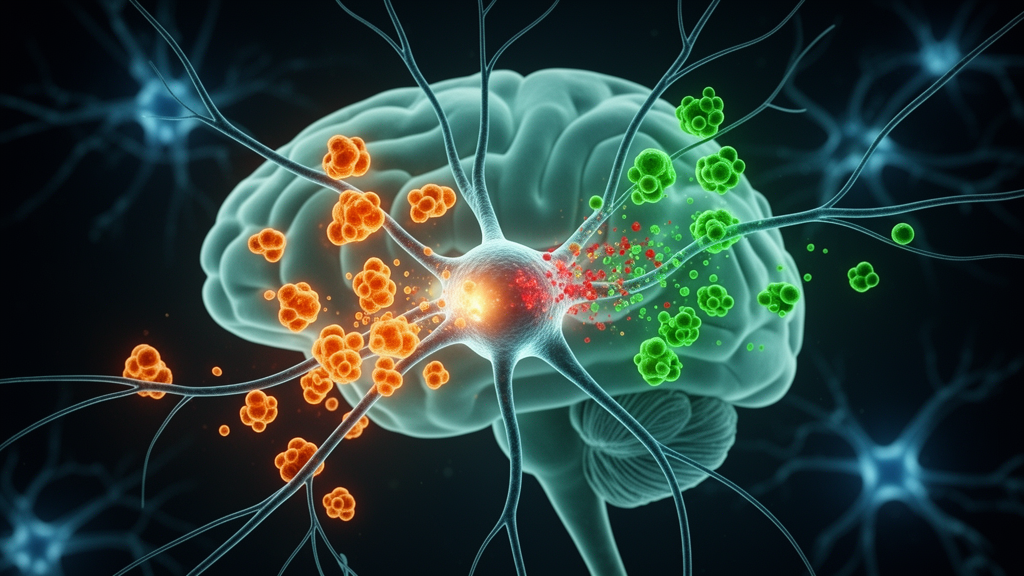
The authors, drawing on the clinical staging framework developed by Patrick McGorry and the neuroprogression framework articulated by Michael Berk, assemble a model in which redox compromise sits at the base of a self-reinforcing loop. Redox compromise, in this usage, refers to a chronic state of oxidative stress in which the production of reactive molecules outpaces the brain’s antioxidant defenses, most notably the depletion of glutathione, the nervous system’s principal endogenous antioxidant. That depletion is coupled to mitochondrial inefficiency, meaning that the cellular power plants which neurons depend on generate energy poorly and leak more damaging byproducts in the process, and to the inflammatory state that accompanies both. The result is a nervous system operating under sustained oxidative strain from an early point in the illness.
According to the proposed model, this redox strain feeds forward into a chain of downstream changes. It contributes to NMDA receptor hypofunction, a weakening of signaling through a class of glutamate receptors that are central to synaptic plasticity and to the coordination of neural circuits. Impaired NMDA signaling in turn compromises parvalbumin interneurons, the fast-spiking inhibitory cells that generate the gamma-band rhythms needed for coherent communication across brain regions. Disrupted interneuron function disturbs circuit connectivity, and this disconnection ultimately produces the dopaminergic phenotype—the altered dopamine signaling—that current antipsychotic drugs are built to suppress. The dopamine changes, in this framing, are the downstream face of the illness rather than its origin.
A crucial feature of the hypothesis is its deliberate symmetry. The authors are explicit that they are not claiming redox compromise comes first in every case. Animal studies show that blocking NMDA receptors pharmacologically itself generates oxidative stress, which means the loop runs in both directions and any element within it can initiate or amplify the others. What distinguishes redox compromise, in their argument, is not causal priority but clinical accessibility: unlike genetic risk or early neurodevelopment that cannot be revisited, oxidative stress, glutathione levels and mitochondrial function can be measured in living patients and modified with existing or near-existing interventions, potentially before the circuit changes that current treatment cannot reverse have taken hold.
The staging architecture translates this biology into intervention windows. In the McGorry framework, the earliest levels are treated here as risk strata rather than established disease stages, a distinction the authors stress because labeling at-risk individuals as ill carries its own harms. The clinical high-risk state, in which young people show attenuated psychotic symptoms and other warning signs, becomes the first window in which redox measures could guide who receives preventive care. Later windows correspond to first-episode psychosis and to the chronic phase, with the expectation that the modifiability of the underlying process narrows as neuroprogression advances.
One of the more striking pieces of supporting evidence comes from metabolism. Impaired glucose tolerance has been documented in first-episode patients who have never taken antipsychotics, a finding that neither the medications nor the chronicity of illness can explain. The authors present this as evidence that metabolic disturbance is a parallel expression of the same systemic process that drives oxidative stress in the brain, rather than a side effect of treatment. If the redox-metabolic-inflammatory state is systemic from the illness’s earliest clinical expression, then metabolic measures in antipsychotic-naive patients become another early, modifiable handle on the disease process.
The paper does not shy away from the counterevidence that contests its progressive framing. Antipsychotic exposure itself contributes to brain volume loss, which complicates any simple reading of progressive brain changes as the natural course of the illness. Cognitive impairment, often cited as evidence of neuroprogression, follows a largely stable course after onset rather than a steadily deteriorating one. The authors set these objections out together with the results that would require abandoning the framework entirely, a level of falsifiability that is unusual in hypothesis papers. The human evidence, they conclude, currently supports association and biological plausibility rather than a proven causal direction.
To make the framework testable, the authors organize the biomarker literature by stage and propose three specific predictions that a trial could refute. First, that biomarker-stratified prevention will outperform unselected prevention at the clinical high-risk stage, meaning that using redox measures to decide who receives intervention will beat offering the same intervention to everyone. Second, that two particular measures—glutathione concentrations in the medial prefrontal cortex, measurable with magnetic resonance spectroscopy, and deficits in mismatch negativity, an event-related brain potential that indexes the brain’s automatic prediction error response—will add predictive value beyond clinical assessment alone. Third, that removing the redox measures from a multimodal biomarker panel will worsen its prediction of transition to psychosis, a direct test of whether the redox component carries unique information.
The proposed test is concrete: a biomarker-stratified phase 2b trial with a formal power calculation, in which high-risk individuals are assigned to preventive intervention based on their biomarker profile rather than their clinical presentation alone. Such a trial would move the redox hypothesis from association to intervention, and its design anticipates refutation at every level. If the stratified approach fails, if the two candidate biomarkers add nothing beyond clinical assessment, or if the redox measures prove dispensable within a broader panel, the framework would need revision or abandonment.
The significance of the proposal lies in what it could change about the timing of care. Antipsychotics address the dopaminergic endpoint of the cascade and, in doing so, leave the cognitive and negative symptoms that most burden patients without an effective treatment. If redox compromise can indeed be measured and modified early, interventions aimed at restoring glutathione, improving mitochondrial function and calming inflammation could enter the care pathway at the high-risk stage, before circuit disconnection consolidates. The authors are careful to frame their account as a hypothesis rather than an established account, and the burden of proof now rests with the trial they propose. But the argument reframes schizophrenia’s familiar biology in a way that makes the earliest phase of the illness, for the first time in the dopamine era, a plausible target for prevention.
Subject of Research: Redox compromise as an early, modifiable entry point in schizophrenia and a staging framework for early intervention
Article Title: Redox compromise as an early, modifiable entry point in schizophrenia: a staging framework for early intervention
Article References: Lado, L. A., & Misir, A. (2026). Redox compromise as an early, modifiable entry point in schizophrenia: a staging framework for early intervention. Frontiers in Neuroscience, 20, Article 1941148. https://doi.org/10.3389/fnins.2026.1941148
Image Credits: AI Generated
DOI: 10.3389/fnins.2026.1941148
Keywords: schizophrenia, oxidative stress, glutathione, NMDA receptor hypofunction, parvalbumin interneurons, clinical staging, biomarkers, mismatch negativity, medial prefrontal cortex, neuroprogression, early intervention, dopamine
News Source: Cassandra Pierce. (October 15, 2026). Redox Imbalance May Mark an Early, Treatable Entry Point in Schizophrenia. Scienmag.