• HOME
  • NEWS
  • EXPLORE
    • CAREER
      • Companies
      • Jobs
    • EVENTS
    • iGEM
      • News
      • Team
    • PHOTOS
    • VIDEO
    • WIKI
  • BLOG
  • COMMUNITY
    • FACEBOOK
    • INSTAGRAM
    • TWITTER
Sunday, August 2, 2026
BIOENGINEER.ORG
No Result
View All Result
  • Login
  • HOME
  • NEWS
  • EXPLORE
    • CAREER
      • Companies
      • Jobs
        • Lecturer
        • PhD Studentship
        • Postdoc
        • Research Assistant
    • EVENTS
    • iGEM
      • News
      • Team
    • PHOTOS
    • VIDEO
    • WIKI
  • BLOG
  • COMMUNITY
    • FACEBOOK
    • INSTAGRAM
    • TWITTER
  • HOME
  • NEWS
  • EXPLORE
    • CAREER
      • Companies
      • Jobs
        • Lecturer
        • PhD Studentship
        • Postdoc
        • Research Assistant
    • EVENTS
    • iGEM
      • News
      • Team
    • PHOTOS
    • VIDEO
    • WIKI
  • BLOG
  • COMMUNITY
    • FACEBOOK
    • INSTAGRAM
    • TWITTER
No Result
View All Result
Bioengineer.org
No Result
View All Result
Home NEWS Science News Biology

Red tide fossils point to Jurassic sea flood

Bioengineer by Bioengineer
June 5, 2018
in Biology
Reading Time: 2 mins read
0
Share on FacebookShare on TwitterShare on LinkedinShare on RedditShare on Telegram
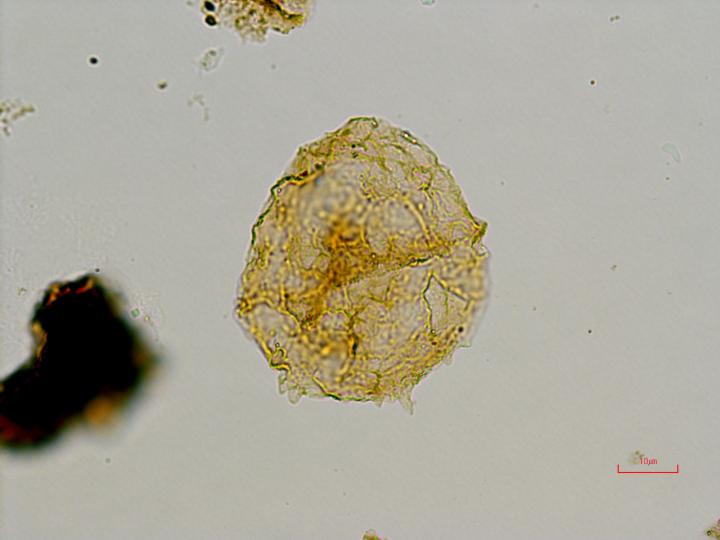
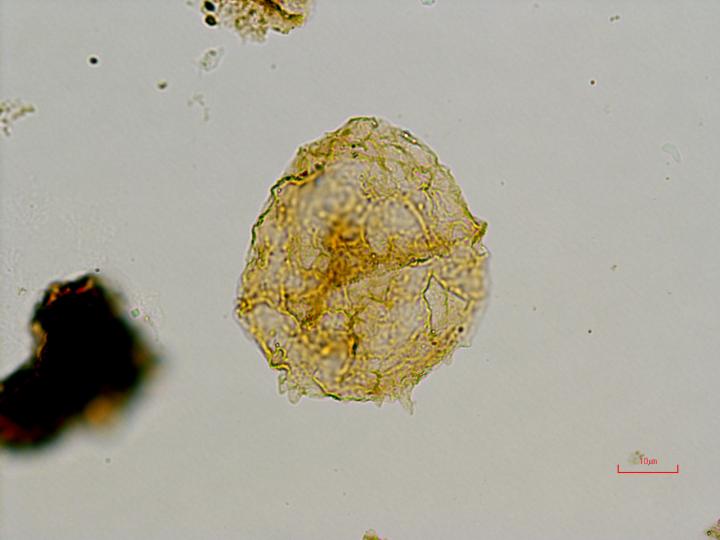
IMAGE

Credit: Carmine Wainman, University of Adelaide

Dinosaur-age fossilised remains of tiny organisms normally found in the sea have been discovered in inland, arid Australia – suggesting the area was, for a short time at least, inundated by sea water 40 million years before Australia's large inland sea existed.

The fossils are the egg-like cysts of microorganisms known as dinoflagellates, best known for producing red tides or algal blooms that can turn the sea water blood red. The cysts rest on the sea floor before hatching new dinoflagellates.

Researchers at the University of Adelaide, in collaboration with geological consultancy MGPalaeo, discovered these microfossils in Jurassic rocks of south-western Queensland, near the town of Roma.

Described in the journal Palynology, the fossils have been dated to the late Jurassic period, 148 million years ago. This is a time when Australia was joined to Antarctica, and where dinosaurs roamed across ancient rivers, floodplains and swamps.

"We have plenty of evidence from the 110 million-year-old vast inland Eromanga Sea, which covered a large swathe of central, eastern Australia during the Cretaceous period (following on from the Jurassic)," says Dr Carmine Wainman, Postdoctoral Fellow in the University of Adelaide's Australian School of Petroleum.

"We've seen the opalised fossils sold in Adelaide's Rundle Mall, and the spectacular ancient marine reptiles on display in the South Australian Museum – all from the later Cretaceous period.

"However, this new microfossil evidence from the same region suggests there was a short-lived precursor to this sea 40 million years earlier."

Dr Wainman believes these microfossils must have been brought inland by an incursion of sea water and then evolved quickly to adapt to the freshwater or brackish conditions as the sea waters slowly receded.

"There is no other feasible explanation for how they managed to reach the interior of the Australian continent when the ancient coastline was thousands of kilometres away," Dr Wainman says.

"It was probably a result of rising sea levels during a time of greenhouse conditions before the establishment of the Eromanga Sea. With further investigations, we may find more of these microorganisms or even fossilised marine reptiles that uncover untold secrets about how this part of the world looked in the Jurassic."

###

Media Contact:

Dr Carmine Wainman, Postdoctoral Fellow, Australian School of Petroleum, University of Adelaide. Phone: +61 8 8313 8038, Mobile: +61 (0)411 876 173, [email protected]

Robyn Mills, Media Officer, University of Adelaide. Phone: +61 (0)8 8313 6341, Mobile: +61 (0)410 689 084, [email protected]

Media Contact

Dr Carmine Wainman
[email protected]
61-041-187-6173
@UniofAdelaide

http://www.adelaide.edu.au

Related Journal Article

http://dx.doi.org/10.1080/01916122.2018.1451785

Share13Tweet8Share2ShareShareShare2

Related Posts

Nationwide Study Tracks Hepatitis B Reactivation and Liver Dysfunction During Infliximab Treatment

Nationwide Study Tracks Hepatitis B Reactivation and Liver Dysfunction During Infliximab Treatment

August 1, 2026
Imaging Reveals How Brain–Body Interactions Shape Systemic Disease

Imaging Reveals How Brain–Body Interactions Shape Systemic Disease

August 1, 2026

Targeting Vascular–Musculoskeletal Links May Treat Sarcopenia and Osteoporosis

August 1, 2026

Supergene solves evolutionary mystery by controlling mirror-image flower development

August 1, 2026
Please login to join discussion

POPULAR NEWS

  • Study explores long-term care residents’ experiences transitioning to emergency departments

    29 shares
    Share 12 Tweet 7
  • KAIST develops treatment targeting cancer cachexia, a debilitating wasting syndrome

    29 shares
    Share 12 Tweet 7
  • What Long-Term Evidence Reveals About Hypoglycemia in Late-Preterm Infants

    29 shares
    Share 12 Tweet 7
  • Dietary Diversity Linked to Frailty and Prefrailty in Japan’s Hisayama Population

    29 shares
    Share 12 Tweet 7

About

We bring you the latest biotechnology news from best research centers and universities around the world. Check our website.

Follow us

Recent News

Study explores long-term care residents’ experiences transitioning to emergency departments

KAIST develops treatment targeting cancer cachexia, a debilitating wasting syndrome

What Long-Term Evidence Reveals About Hypoglycemia in Late-Preterm Infants

Subscribe to Blog via Email

Enter your email address to subscribe to this blog and receive notifications of new posts by email.

Join 85 other subscribers
  • Contact Us

Bioengineer.org © Copyright 2023 All Rights Reserved.

Welcome Back!

Login to your account below

Forgotten Password?

Retrieve your password

Please enter your username or email address to reset your password.

Log In
No Result
View All Result
  • Homepages
    • Home Page 1
    • Home Page 2
  • News
  • National
  • Business
  • Health
  • Lifestyle
  • Science

Bioengineer.org © Copyright 2023 All Rights Reserved.