• HOME
  • NEWS
  • EXPLORE
    • CAREER
      • Companies
      • Jobs
    • EVENTS
    • iGEM
      • News
      • Team
    • PHOTOS
    • VIDEO
    • WIKI
  • BLOG
  • COMMUNITY
    • FACEBOOK
    • INSTAGRAM
    • TWITTER
Monday, December 29, 2025
BIOENGINEER.ORG
No Result
View All Result
  • Login
  • HOME
  • NEWS
  • EXPLORE
    • CAREER
      • Companies
      • Jobs
        • Lecturer
        • PhD Studentship
        • Postdoc
        • Research Assistant
    • EVENTS
    • iGEM
      • News
      • Team
    • PHOTOS
    • VIDEO
    • WIKI
  • BLOG
  • COMMUNITY
    • FACEBOOK
    • INSTAGRAM
    • TWITTER
  • HOME
  • NEWS
  • EXPLORE
    • CAREER
      • Companies
      • Jobs
        • Lecturer
        • PhD Studentship
        • Postdoc
        • Research Assistant
    • EVENTS
    • iGEM
      • News
      • Team
    • PHOTOS
    • VIDEO
    • WIKI
  • BLOG
  • COMMUNITY
    • FACEBOOK
    • INSTAGRAM
    • TWITTER
No Result
View All Result
Bioengineer.org
No Result
View All Result
Home NEWS Science News

Recipe for success — interaction proteomics become a household item

Bioengineer by Bioengineer
August 11, 2020
in Science News
Reading Time: 2 mins read
0
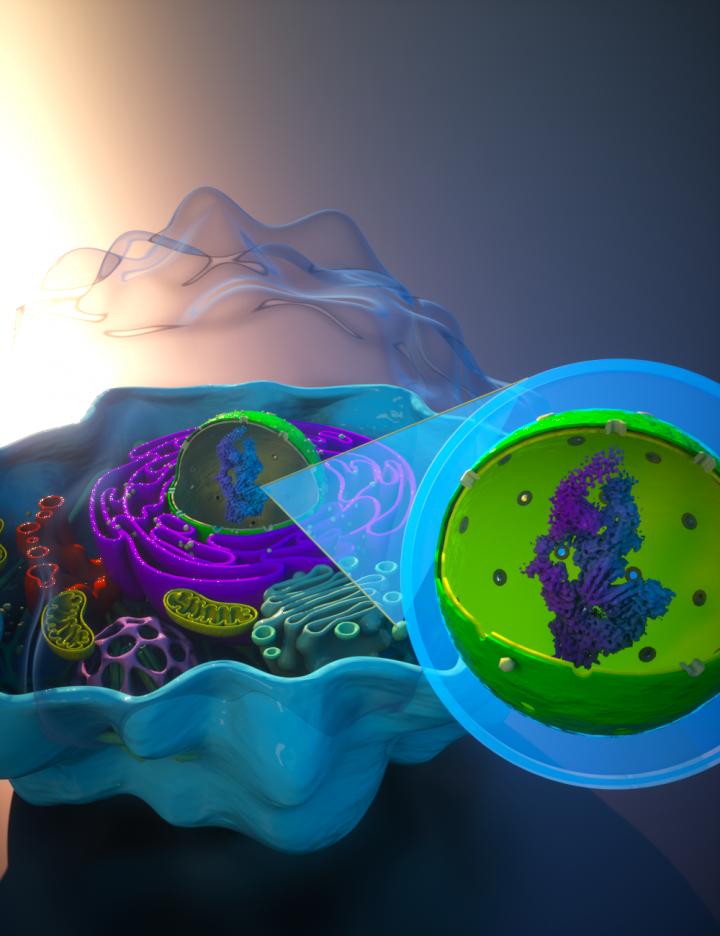
IMAGE
Share on FacebookShare on TwitterShare on LinkedinShare on RedditShare on Telegram

IMAGE

Credit: Ella Maru Studio

Proteins in human cells do not function in isolation and their interactions with other proteins define their cellular functions. Therefore, detailed understanding of protein-protein interactions (PPIs) is the key for deciphering regulation of cellular networks and pathways, in both health and disease.

In a study published in the of September issue (advanced online 10th of August) of Nature Protocols, a research team led by Research Director Markku Varjosalo from the Institute of biotechnology & HiLIFE, University of Helsinki, introduces an optimised and integrated interaction proteomics protocol (named MAC-tag technology). The protocol combines two state-of-the art methods affinity purification – mass spectrometry (AP-MS) and proximity-dependent biotin identification (BioID to allow rapid identification of protein-protein interactions and more.

The MAC-tag technology allows an easy way to probe the molecular level localisation of protein of interest (an accompanying online resource of MS microscopy is available at http://www.proteomics.fi). The developed MAC-tag and the integrated approach will empower, not only the interaction proteomics community, but also cell/molecular/structural biologists, with an experimentally proven integrated workflow for mapping in detail the physical and functional interactions and the molecular context of proteins.

“The MAC-tag technology stems from long-term efforts on developing new systems biology tools for systematically studying the molecular interactions of proteins. The identification of protein-protein interactions and their changes in disease settings, such as cancer, has proven in our hands a powerful tool and has allowed us to find exact molecular mechanisms underlying these diseases. In principle, our protocol can be used in so many different ways that we probably have not even envisioned half of them.” Dr. Varjosalo states.

The MAC-tag technology is currently in use by Dr. Varjosalo and his consortia of virologists, medicinal chemists and other ‘omics’ researchers in search for novel druggable host proteins as therapeutic targets to inhibit the SARS-CoV-2 infection and therefore to fight Covid-19.

###

Media Contact
Markku Varjosalo
[email protected]

Original Source

https://www.helsinki.fi/en/news/life-science-news/recipe-for-success-interaction-proteomics-become-a-household-item

Related Journal Article

http://dx.doi.org/10.1038/s41596-020-0365-x

Tags: BiologyBiomedical/Environmental/Chemical EngineeringBiotechnologyCell BiologyMolecular Biology
Share12Tweet8Share2ShareShareShare2

Related Posts

Enhancing Nursing through Active-Emphatic Listening Research

December 29, 2025

Incidental Appendectomy Outcomes in Pediatric Intussusception

December 29, 2025

Gender and Sex Influence Clinical Outcomes: A Review

December 29, 2025

DEC1 Upregulation Drives Silica-Induced Pulmonary Fibrosis

December 29, 2025
Please login to join discussion

POPULAR NEWS

  • Robotic Waist Tether for Research Into Metabolic Cost of Walking

    NSF funds machine-learning research at UNO and UNL to study energy requirements of walking in older adults

    71 shares
    Share 28 Tweet 18
  • Exploring Audiology Accessibility in Johannesburg, South Africa

    51 shares
    Share 20 Tweet 13
  • Nurses’ Views on Online Learning: Effects on Performance

    70 shares
    Share 28 Tweet 18
  • SARS-CoV-2 Subvariants Affect Outcomes in Elderly Hip Fractures

    44 shares
    Share 18 Tweet 11
>

About

We bring you the latest biotechnology news from best research centers and universities around the world. Check our website.

Follow us

Recent News

Enhancing Nursing through Active-Emphatic Listening Research

Incidental Appendectomy Outcomes in Pediatric Intussusception

Gender and Sex Influence Clinical Outcomes: A Review

Subscribe to Blog via Email

Enter your email address to subscribe to this blog and receive notifications of new posts by email.

Join 71 other subscribers
  • Contact Us

Bioengineer.org © Copyright 2023 All Rights Reserved.

Welcome Back!

Login to your account below

Forgotten Password?

Retrieve your password

Please enter your username or email address to reset your password.

Log In
No Result
View All Result
  • Homepages
    • Home Page 1
    • Home Page 2
  • News
  • National
  • Business
  • Health
  • Lifestyle
  • Science

Bioengineer.org © Copyright 2023 All Rights Reserved.