• HOME
  • NEWS
  • EXPLORE
    • CAREER
      • Companies
      • Jobs
    • EVENTS
    • iGEM
      • News
      • Team
    • PHOTOS
    • VIDEO
    • WIKI
  • BLOG
  • COMMUNITY
    • FACEBOOK
    • INSTAGRAM
    • TWITTER
Wednesday, August 12, 2026
BIOENGINEER.ORG
No Result
View All Result
  • Login
  • HOME
  • NEWS
  • EXPLORE
    • CAREER
      • Companies
      • Jobs
        • Lecturer
        • PhD Studentship
        • Postdoc
        • Research Assistant
    • EVENTS
    • iGEM
      • News
      • Team
    • PHOTOS
    • VIDEO
    • WIKI
  • BLOG
  • COMMUNITY
    • FACEBOOK
    • INSTAGRAM
    • TWITTER
  • HOME
  • NEWS
  • EXPLORE
    • CAREER
      • Companies
      • Jobs
        • Lecturer
        • PhD Studentship
        • Postdoc
        • Research Assistant
    • EVENTS
    • iGEM
      • News
      • Team
    • PHOTOS
    • VIDEO
    • WIKI
  • BLOG
  • COMMUNITY
    • FACEBOOK
    • INSTAGRAM
    • TWITTER
No Result
View All Result
Bioengineer.org
No Result
View All Result
Home NEWS Science News

Ready for takeoff

Bioengineer by Bioengineer
November 29, 2016
in Science News
Reading Time: 2 mins read
0
Share on FacebookShare on TwitterShare on LinkedinShare on RedditShare on Telegram
IMAGE

Credit: Inderscience Publishers

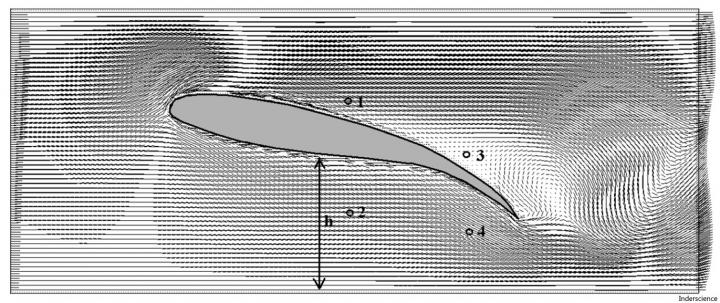
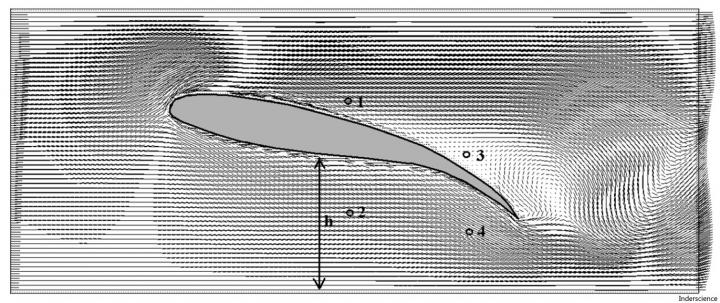
Nervous flyers and crew alike would prefer jet airliners not to vibrate so much at take off. Research published in the International Journal of Aerodynamics points to blue skies thinking that might explain the phenomenon and find ways to reduce the safety and image problems associated with this troubling aircraft noise.

Engineer Stanislaw Raczynski of the Universidad Panamericana, in Mexico City, Mexico, has used a gas flow simulation tool to follow the way in which low acoustic oscillations develop on the underside of an aircraft's wings as it gains speed ready for takeoff. Aside from being noisy and worrying to some passengers, there is a serious engineering issue that can arise if the oscillations match the resonant frequency of the wings or fuselage. Raczynski's simulations point to specific vibration patterns, their amplitude and frequency, that arise under certain conditions. Perhaps of greatest concern is that he has identified several low, sub-acoustic frequencies (so-called infrasound as opposed to ultrasound which is above the audible frequency range). Such oscillations can produce forces of up to several hundred kilograms per square meter of wing area.

"The air movement around the wing produces several infrasound frequencies, explains Raczynski, "Those oscillations may not be strong enough to cause damage but these frequencies can enter into resonance with the fuselage andproduce quite strong effects." He adds, that, "During takeoff, such infrasound frequencies may also coincide with the natural frequency of the air column between the wing and the ground which could multiply the effect."

While there are numerous design features in place in modern aircraft to reduce audible noise and some vibration, these low frequency oscillations are more worrying from a structural engineering point of view. "Model parameters used in simulations are always charged with some degree of uncertainty," adds Raczynski. "Perhaps, more useful is the qualitative outcome of the simulations, rather than the quantitative results given that the problem is closely connected to aircraft safety". He concludes that deeper investigations should be carried out to aid the design of new aircraft and avoid accidents.

###

Raczynski, S. (2016) 'Why a jetliner vibrates during takeoff: simulating air oscillations under the wing', Int. J. Aerodynamics, Vol. 5, No. 2, pp.125-132.

Media Contact

Albert Ang
[email protected]
@inderscience

http://www.inderscience.com

############

Story Source: Materials provided by Scienmag

Share12Tweet8Share2ShareShareShare2

Related Posts

Traumatic Brain Injury Outcomes in a Low-Resource Setting

August 12, 2026
Entropy theory offers new view of critical illness beyond organ dysfunction

Entropy theory offers new view of critical illness beyond organ dysfunction

August 12, 2026

Chinese Medical Journal review examines AI’s role in inflammatory bowel disease management

August 12, 2026

Can Miniature Organs Predict How Breast Tumors Respond to Treatment?

August 12, 2026
Please login to join discussion

POPULAR NEWS

  • Traumatic Brain Injury Outcomes in a Low-Resource Setting

    29 shares
    Share 12 Tweet 7
  • Entropy theory offers new view of critical illness beyond organ dysfunction

    29 shares
    Share 12 Tweet 7
  • Chinese Medical Journal review examines AI’s role in inflammatory bowel disease management

    29 shares
    Share 12 Tweet 7
  • Can Miniature Organs Predict How Breast Tumors Respond to Treatment?

    29 shares
    Share 12 Tweet 7

About

We bring you the latest biotechnology news from best research centers and universities around the world. Check our website.

Follow us

Recent News

Traumatic Brain Injury Outcomes in a Low-Resource Setting

Entropy theory offers new view of critical illness beyond organ dysfunction

Chinese Medical Journal review examines AI’s role in inflammatory bowel disease management

Subscribe to Blog via Email

Enter your email address to subscribe to this blog and receive notifications of new posts by email.

Join 86 other subscribers
  • Contact Us

Bioengineer.org © Copyright 2023 All Rights Reserved.

Welcome Back!

Login to your account below

Forgotten Password?

Retrieve your password

Please enter your username or email address to reset your password.

Log In
No Result
View All Result
  • Homepages
    • Home Page 1
    • Home Page 2
  • News
  • National
  • Business
  • Health
  • Lifestyle
  • Science

Bioengineer.org © Copyright 2023 All Rights Reserved.