• HOME
  • NEWS
  • EXPLORE
    • CAREER
      • Companies
      • Jobs
    • EVENTS
    • iGEM
      • News
      • Team
    • PHOTOS
    • VIDEO
    • WIKI
  • BLOG
  • COMMUNITY
    • FACEBOOK
    • INSTAGRAM
    • TWITTER
Monday, November 16, 2026
BIOENGINEER.ORG
No Result
View All Result
  • Login
  • HOME
  • NEWS
  • EXPLORE
    • CAREER
      • Companies
      • Jobs
        • Lecturer
        • PhD Studentship
        • Postdoc
        • Research Assistant
    • EVENTS
    • iGEM
      • News
      • Team
    • PHOTOS
    • VIDEO
    • WIKI
  • BLOG
  • COMMUNITY
    • FACEBOOK
    • INSTAGRAM
    • TWITTER
No Result
View All Result
Bioengineer.org
No Result
View All Result
Home NEWS Science News Health

RBD Status Classifies Parkinson’s Disease Subtypes in Small Cohort

by
November 7, 2026
in Health
Reading Time: 2 mins read
0
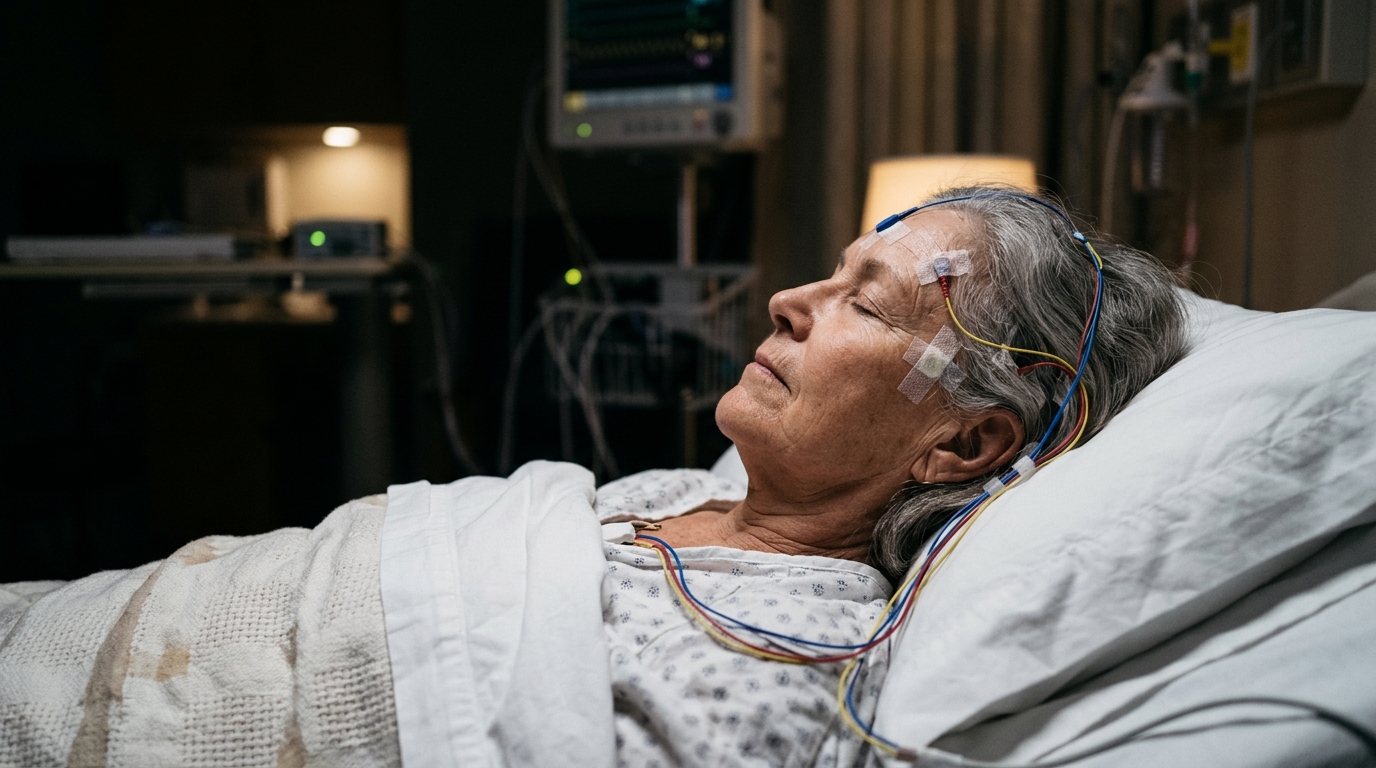
RBD Status Classifies Parkinson's Disease Subtypes in Small Cohort

RBD Status Classifies Parkinson's Disease Subtypes in Small Cohort

Share on FacebookShare on TwitterShare on LinkedinShare on RedditShare on Telegram

Researchers including Kaat Colman, Ilse De Volder, and Femke Dijkstra have examined the applicability of the brain-first and body-first hypothesis in individual patients with early Parkinson’s disease. Published in npj Parkinson’s Disease, the study investigates whether commonly used clinical and imaging features can effectively classify individual patients into these two distinct disease trajectories. The brain-first model suggests disease originates centrally before spreading peripherally, while the body-first model involves early peripheral pathology, such as abnormal cardiac sympathetic imaging and brainstem-related REM-sleep behavior disorder. Substantial criticism has recently been raised about this dichotomous model, largely derived from group-level data, and its applicability to individual patients remains unclear.

The study focused on a small cohort of 20 patients with early Parkinson’s disease, defined as those within two years of diagnosis. The researchers utilized 123I-MIBG scintigraphy as the reference standard to determine the subtype of disease initiation. By applying this reference standard, the team aimed to evaluate the accuracy of various clinical and imaging features in predicting the correct subtype for each individual patient.

The primary finding of the investigation indicates that probable REM-sleep behavior disorder status was the strongest individual-level classification marker. In this specific cohort, RBD status correctly classified 85% of the patients into their respective brain-first or body-first subtypes. This result suggests that RBD is associated with MIBG-defined body-first Parkinson’s disease. The high accuracy of this clinical marker highlights its potential utility in clinical settings, as it may represent a promising and low-cost method for differentiating disease trajectories in early stages.

In contrast, other clinical and imaging features performed poorly as individual-level classifiers. The study found substantial overlap between the two subtypes, suggesting that the disease may exist on a continuum rather than in strictly distinct categories.

Subject of Research: Individual-level classification of Parkinson's disease subtypes using clinical and imaging markers

Article Title: Brain-first body-first model translated to individual-level characterization in Parkinson’s disease: multimodal imaging and clinical approach

Article References: Colman, K., De Volder, I., Ceyssens, S., Verbraecken, J., Viaene, M., Oertel, W., Janzen, A., Pijpers, A., Crosiers, D., & Dijkstra, F. (2026). Brain-first body-first model translated to individual-level characterization in Parkinson’s disease: multimodal imaging and clinical approach. npj Parkinson's Disease. https://doi.org/10.1038/s41531-026-01611-5

Image Credits: AI Generated

DOI: 10.1038/s41531-026-01611-5

Keywords: Parkinson's disease, brain-first model, body-first model, REM-sleep behavior disorder, MIBG scintigraphy, neuroimaging, clinical classification, early diagnosis, Brain-first, body-first, model, translated

News Source: Cassandra Pierce. (November 7, 2026). RBD Status Classifies Parkinson’s Disease Subtypes in Small Cohort. Scienmag.


Tags: body-firstbody-first modelBrain-firstbrain-first modelClinical Classificationearly diagnosisMIBG scintigraphymodelneuroimagingParkinson’s diseaseREM sleep behavior disordertranslated
Share12Tweet7Share2ShareShareShare1

Related Posts

Audio Codecs Alter Speech Acoustics Without Impairing Emotion Recognition in Cochlear Implants

Audio Codecs Alter Speech Acoustics Without Impairing Emotion Recognition in Cochlear Implants

November 16, 2026
Autistic Children With Cochlear Implants Show Broadly Comparable Developmental Outcomes

Autistic Children With Cochlear Implants Show Broadly Comparable Developmental Outcomes

November 16, 2026

Internal Body States Shape Fear Memory Retrieval and Extinction Renewal

November 16, 2026

Salivary Microbial Profiles Link Obstructive Sleep Apnea to Cognitive Impairment Risks

November 16, 2026

POPULAR NEWS

  • Audio Codecs Alter Speech Acoustics Without Impairing Emotion Recognition in Cochlear Implants

    Audio Codecs Alter Speech Acoustics Without Impairing Emotion Recognition in Cochlear Implants

    29 shares
    Share 12 Tweet 7
  • Autistic Children With Cochlear Implants Show Broadly Comparable Developmental Outcomes

    29 shares
    Share 12 Tweet 7
  • Internal Body States Shape Fear Memory Retrieval and Extinction Renewal

    29 shares
    Share 12 Tweet 7
  • Salivary Microbial Profiles Link Obstructive Sleep Apnea to Cognitive Impairment Risks

    29 shares
    Share 12 Tweet 7

About

We bring you the latest biotechnology news from best research centers and universities around the world. Check our website.

Follow us

Recent News

Audio Codecs Alter Speech Acoustics Without Impairing Emotion Recognition in Cochlear Implants

Autistic Children With Cochlear Implants Show Broadly Comparable Developmental Outcomes

Internal Body States Shape Fear Memory Retrieval and Extinction Renewal

Subscribe to Blog via Email

Enter your email address to subscribe to this blog and receive notifications of new posts by email.

Join 88 other subscribers
  • Contact Us

Bioengineer.org © Copyright 2023 All Rights Reserved.

Welcome Back!

Login to your account below

Forgotten Password?

Retrieve your password

Please enter your username or email address to reset your password.

Log In
No Result
View All Result
  • Homepages
    • Home Page 1
    • Home Page 2
  • News
  • National
  • Business
  • Health
  • Lifestyle
  • Science

Bioengineer.org © Copyright 2023 All Rights Reserved.