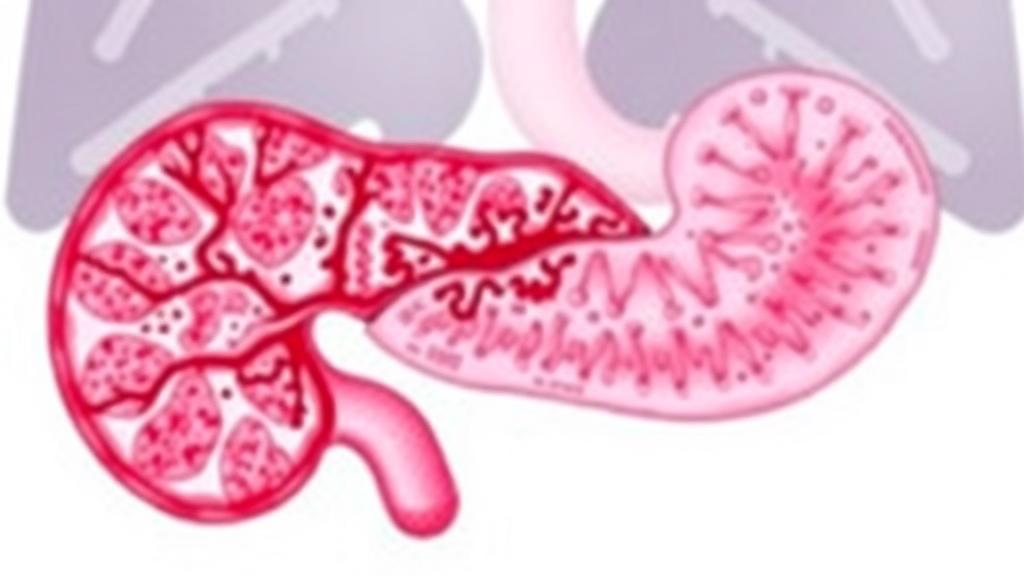
Deep in the pancreas, a tumor can sometimes defy the tidy categories that pathologists rely on. A case report published in Pathology and Oncology Research describes one such neoplasm: a pancreatic amphicrine-like carcinoma (ALC) with acinar differentiation, an exceptionally rare tumor in which the very same cancer cells display both exocrine and endocrine features. Comprehensive genomic profiling of this tumor revealed a KANK4::RAF1 gene fusion that, according to the authors, has not previously been reported in this tumor type, expanding the molecular spectrum of one of the pancreas’s most enigmatic malignancies.
The distinction between amphicrine-like carcinoma and mixed neuroendocrine-non-neuroendocrine neoplasms (MiNENs) is more than academic. MiNENs consist of two morphologically distinct tumor populations, each with its own identity, whereas ALCs demonstrate dual differentiation within the same neoplastic cells or within a diffusely admixed population. The current WHO Classification of Tumours, 6th edition, recognizes amphicrine differentiation as a distinct pathological phenomenon and emphasizes the importance of integrating morphology with immunohistochemical findings to establish the diagnosis. Getting this classification right matters because the two entities can behave differently and may call for different therapeutic strategies.
The case began with a 52-year-old woman referred to Kantonsspital Winterthur in Switzerland with several months of persistent upper abdominal pain, bloating, and unintentional weight loss. Her symptoms had initially improved with pantoprazole therapy but subsequently worsened. Laboratory investigations showed anemia, with reduced hemoglobin of 116 g/L, mean corpuscular volume of 62 fL, and mean corpuscular hemoglobin of 21 pg, alongside elevated liver enzymes including AST of 57 U/L, ALT of 96 U/L, GGT of 235 U/L, and alkaline phosphatase of 151 U/L. Tumor markers were largely unremarkable, with only a mild elevation in neuron-specific enolase at 15.2 μg/L, while CA 19-9, CEA, and chromogranin A remained within normal ranges.
Contrast-enhanced computed tomography revealed a mass located between the pancreatic head and the first portion of the duodenum, with an additional lesion suggestive of an enlarged lymph node cranial to the pancreatic head between the portal vein and inferior vena cava. A suspected liver metastasis in segment III and a nonspecific pulmonary nodule in the right lower lobe were also noted. Subsequent 18F-FDG PET/CT demonstrated increased metabolic activity in the pancreaticoduodenal region, with a large hypermetabolic mass measuring 2.3 by 4.8 centimeters between the portal vein and inferior vena cava, several smaller metabolically active peripancreatic lymph nodes, a left supraclavicular lymph node, multiple pulmonary nodules in both lungs, and a liver lesion in segment III all showing increased tracer uptake. Magnetic resonance imaging of the liver confirmed a highly suspicious lesion in segment II and identified three additional small lesions consistent with metastatic disease.
Endoscopic ultrasound-guided fine-needle aspiration was performed on the pancreatic mass and the portocaval lymph node, and a liver biopsy was obtained from the segment III lesion. The aspirates showed malignant cells consistent with a poorly differentiated carcinoma, forming complex cellular clusters of monomorphic to pleomorphic cells with predominantly medium-sized hyperchromatic nuclei, occasional prominent nucleoli, and foamy cytoplasm. Immunocytochemistry demonstrated strong CK19 positivity, membranous and cytoplasmic beta-catenin expression without nuclear localization, weak diffuse synaptophysin expression, focal trypsin positivity, and negative SOX11 staining.
Histopathological examination revealed a solid poorly differentiated carcinoma with a proliferative index approaching 90 percent, as measured by Ki-67 staining. Immunohistochemical analysis showed strong diffuse expression of synaptophysin, partial expression of trypsin and chromogranin A, absence of CDX2, loss of p53 expression, retained ATRX expression, and expression of BCL10 in tumor cells. The tumor showed marked mitotic activity, with up to 10 mitoses per high-power field. Based on the initial findings, including evidence of both acinar and neuroendocrine differentiation, the tumor was first diagnosed as a mixed acinar-neuroendocrine carcinoma. Detailed evaluation, however, demonstrated overlapping acinar and neuroendocrine differentiation throughout the tumor, with expression of acinar markers trypsin and BCL10 together with neuroendocrine markers synaptophysin and chromogranin A, without evidence of two spatially distinct components. According to current diagnostic criteria, the tumor was therefore reclassified as pancreatic amphicrine-like carcinoma with acinar differentiation.
Comprehensive genomic profiling using next-generation sequencing with the FoundationOne CDx platform identified several alterations, including the RAF1 fusion, IRF2 loss, PBRM1 exon 30 loss, SMAD4 L533P, and TP53 Q52*. Genomic analysis demonstrated microsatellite stability and a tumor mutational burden of 5 mutations per megabase. Testing of predictive biomarkers by immunohistochemistry showed no evidence of mismatch repair deficiency. The KANK4::RAF1 fusion represents the principal molecular feature of this case. RAF1 rearrangements have been described in a subset of pancreatic acinar cell carcinomas and are considered recurrent genomic events in that tumor type. These rearrangements are thought to promote constitutive activation of the MAPK signaling pathway through disruption of normal RAF1 regulatory mechanisms while preserving the C-terminal RAF1 kinase domain. In this case, the identified fusion was predicted to retain the RAF1 kinase domain, providing a biologically plausible mechanism for activation of RAF1-dependent downstream signaling.
First-line palliative chemotherapy with FOLFIRINOX, a regimen combining folinic acid, 5-fluorouracil, irinotecan, and oxaliplatin, was initiated because it is considered effective against both tumor components. After four cycles, the patient developed a marked elevation in liver transaminases. Endoscopic retrograde cholangiopancreatography demonstrated obstruction of the distal common bile duct caused by the pancreatic head mass, with associated dilation of the intrahepatic and extrahepatic bile ducts. A papillotomy was performed and a covered metal stent was placed, leading to normalization of liver enzyme levels. Restaging computed tomography after four cycles showed disease progression, with an increase in hepatic, pulmonary, and lymph node metastases. In light of the rapid progression, a predominance of the neuroendocrine carcinoma component was suspected, and second-line palliative chemotherapy with carboplatin and etoposide was initiated. After three cycles, the primary pancreatic tumor and liver metastases remained stable, but pulmonary and lymph node metastases continued to progress. Due to persistent upper abdominal pain refractory to analgesics, CT-guided percutaneous neurolysis of the coeliac plexus with alcohol was performed.
Given the presence of a RAF1 fusion and emerging evidence from published case reports, third-line palliative treatment with trametinib, a MEK inhibitor, was initiated. RAF1 fusion proteins may activate downstream MAPK signaling through RAF-MEK-ERK pathway stimulation, providing a biological rationale for therapeutic inhibition of this pathway. However, therapy had to be discontinued after only one month because of significant treatment-related toxicity, including diarrhea, nausea, fatigue, and cutaneous adverse effects. The short duration of exposure precluded meaningful assessment of treatment efficacy, meaning this case neither supports nor refutes the effectiveness of MEK inhibition in RAF1-rearranged pancreatic neoplasms. Nevertheless, together with emerging reports of responses to MAPK pathway inhibitors in selected pancreatic acinar carcinomas, the case illustrates the potential clinical relevance of identifying actionable genomic alterations in rare pancreatic tumors. Following treatment discontinuation, the focus of care shifted to best supportive care, and the patient died 14 months after the initial diagnosis. No autopsy was performed.
The authors emphasize that pancreatic neoplasms exhibiting combined acinar and neuroendocrine differentiation are exceptionally rare and remain diagnostically challenging. Additional pathogenic alterations involving TP53, SMAD4, PBRM1, and IRF2 were detected, and although alterations in these genes have been implicated in tumor progression, chromatin remodeling, and immune regulation in various malignancies, their specific contribution to the biology of pancreatic ALC with acinar differentiation remains uncertain. Given the single-case nature of this report, no conclusions regarding their biological significance, prognostic relevance, or potential impact on treatment response can be drawn. The identification of the rare KANK4::RAF1 fusion broadens the molecular landscape of these uncommon tumors and supports consideration of comprehensive genomic profiling in the diagnostic evaluation of rare pancreatic neoplasms, since such profiling may reveal potentially actionable molecular alterations even in tumor entities for which established targeted treatment strategies are currently lacking.
Subject of Research: A rare pancreatic amphicrine-like carcinoma with acinar differentiation harboring a KANK4::RAF1 gene fusion
Article Title: Case Report: Pancreatic amphicrine-like carcinoma with acinar differentiation harboring a KANK4-RAF1 gene fusion
Article References: Kammerer, S., Bode, P., Schreiber, H., & Ortega Sanchez, G. (2026). Case Report: Pancreatic amphicrine-like carcinoma with acinar differentiation harboring a KANK4-RAF1 gene fusion. Pathology & Oncology Research, 32, Article 1612537. https://doi.org/10.3389/pore.2026.1612537
Image Credits: AI Generated
DOI: 10.3389/pore.2026.1612537
Keywords: pancreatic cancer, amphicrine-like carcinoma, KANK4-RAF1 fusion, RAF1 rearrangement, acinar differentiation, MiNEN, trametinib, comprehensive genomic profiling, MAPK pathway, rare tumors, Case, Report
News Source: Nathaniel Bowman. (October 15, 2026). Rare Pancreatic Tumor With Dual Identity Harbors Never-Before-Seen KANK4-RAF1 Gene Fusion. Scienmag.