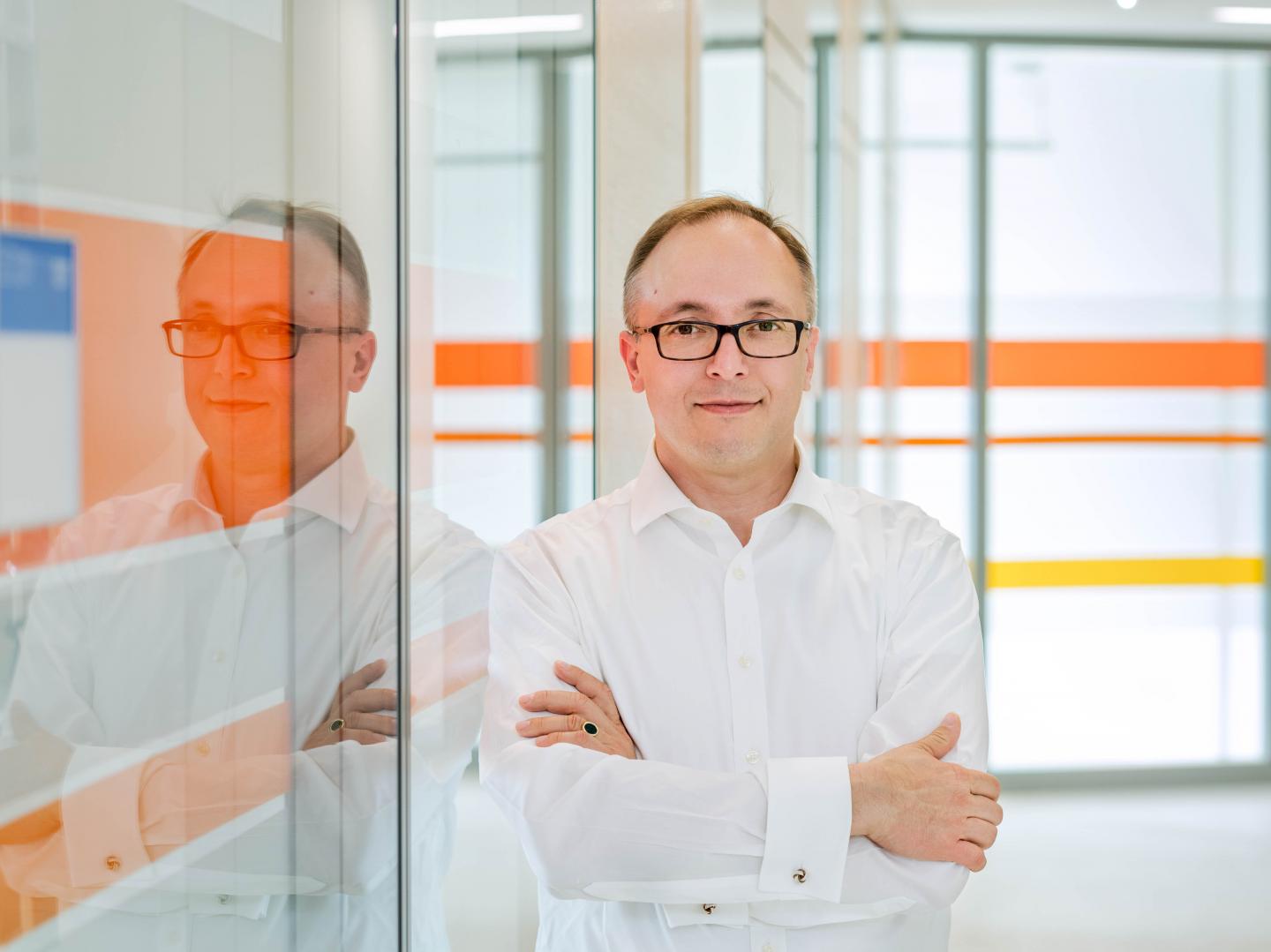
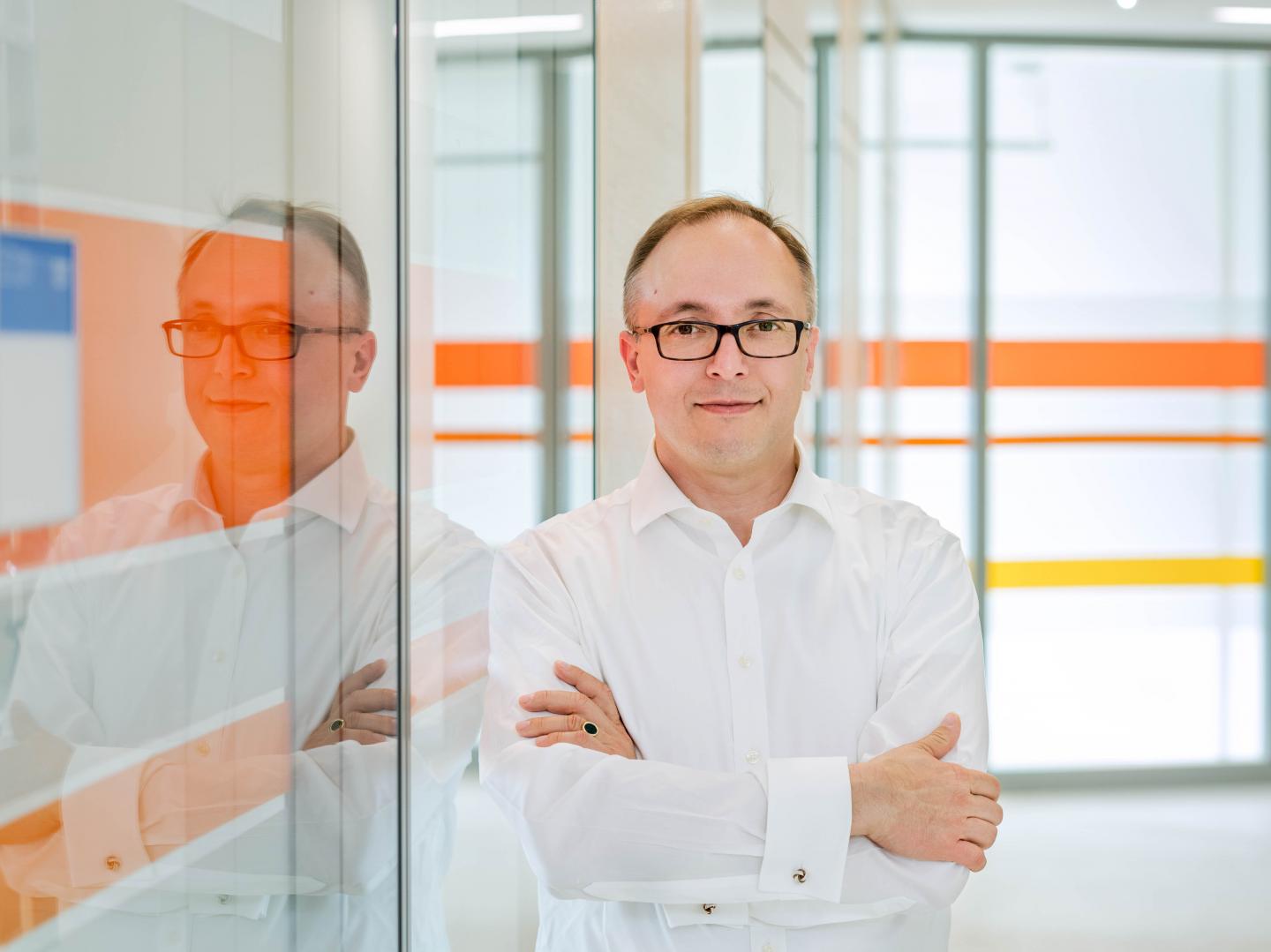
Credit: Andreas Heddergott / Technical University of Munich
Diagnosing malaria has been a very time-consuming and error-prone process up to now. Together with his Dutch colleague Jan van den Boogaart, Professor Oliver Hayden from the Technical University of Munich (TUM) has now developed an automated rapid blood test that provides an accurate diagnosis in almost 100 percent of cases. The researchers were presented with the European Inventor Award, which honors outstanding inventors from Europe and the rest of the world, for the development of the new method on 15 June.
According to the World Health Organization (WHO), malaria claimed the lives of approximately 430,000 people throughout the world in 2015. A major problem associated with this infectious tropical disease is the difficulty in obtaining a fast and reliable diagnosis. Up to now it was diagnosed mainly by means of the microscopic detection of pathogens in the blood by medical technicians – an inaccurate and time-consuming method. The new rapid test developed by Prof Oliver Hayden, holder of the Heinz Nixdorf Chair for Biomedical Electronics, and Jan van den Boogaart from Siemens Healthineers uses a combination of 30 different blood values that can be determined using an automated process.
The researchers carried out a statistical evaluation of the blood parameters of healthy subjects and malaria patients. Based on this they were able to identify a set of 30 blood values which presented quantifiable deviations from the norm in people suffering from the disease. The two researchers then developed an algorithm that can be programmed into blood analysis devices already used in laboratories and clinics so that they recognize the malaria "data fingerprint". The new method enables the diagnosis of the disease with 97 percent accuracy. Van den Boogaart and Hayden aim to develop the detection method further for use with other diseases in the future.
About Oliver Hayden
Professor Oliver Hayden was appointed to the TUM's Heinz Nixdorf Chair for Biomedical Electronics on 1 June 2017. He was previously Head of In-Vitro Diagnostics and Bioscience with Siemens Healthineers in Germany. Having completed his doctorate in biochemistry in Vienna in 1999, he carried out post-doctoral research in the field of nanotechnology at Harvard University. He also completed a Master of Business Administration at Julius-Maximilians-Universität Würzburg in 2011. He has already received numerous awards, including the Young Investigator Award of the Gesellschaft Österreichischer Chemiker (Society of Austrian Chemists). His research is focused on the boundaries between sensor technology, microfluidics and material science for the purpose of studying cell functionality.
About the award
The European Inventor Award has been presented to outstanding inventors in Europe and the rest of the world since 2006. It honors people who have made an extraordinary contribution to social development, technological progress and economic growth through their inventions. The winners are presented with a trophy in the shape of a sail. It is awarded for the categories: industry, research, small and medium-sized enterprises (SMEs), non-EPO countries and lifetime achievement. The winners are selected by an expert team from the European Patent Office and a jury of international experts from the fields of business, science, academia and research.
###
Contact
Prof. Oliver Hayden
Heinz Nixdorf Chair for Biomedical Electronics
Technical University of Munich
Email: [email protected]
Tel.: +49 (89) 289-23325 (press office)
Further information
European Inventor Award website
https://www.epo.org/learning-events/european-inventor.html
Prof. Oliver Hayden
https://www.professoren.tum.de/en/hayden-oliver/
Heinz Nixdorf Chair for Biomedical Electronics
http://www.lme.ei.tum.de/startseite/
Media Contact
Dr. Vera Siegler
[email protected]
49-892-892-3325
@TU_Muenchen
http://www.tum.de
Original Source
https://www.tum.de/en/about-tum/news/press-releases/detail/article/33973/