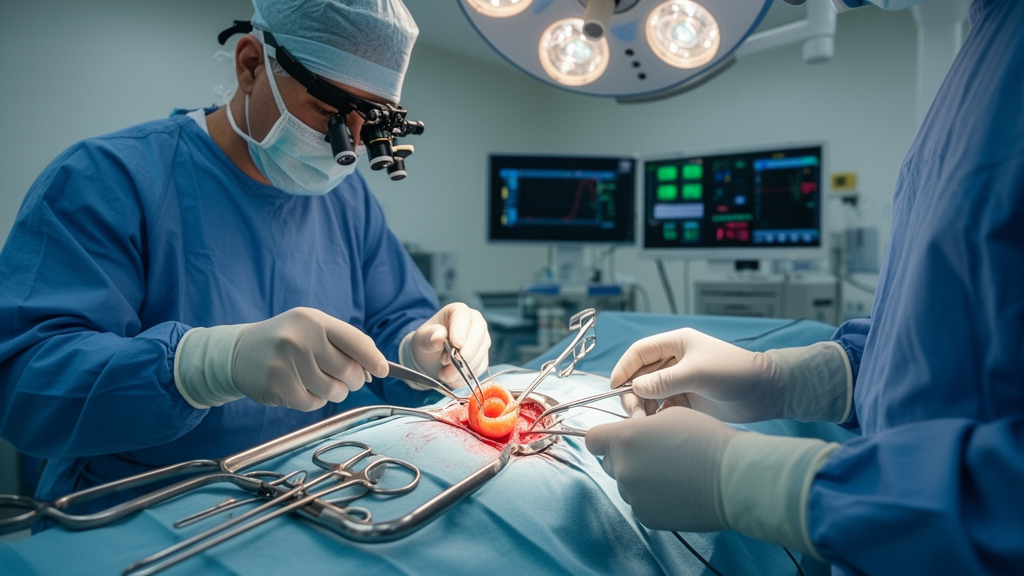
In a consecutive single-centre observational study of 70 patients undergoing isolated aortic valve replacement through right anterior thoracotomy with the Edwards Intuity Elite rapid-deployment bioprosthesis, the surgical approach demonstrated feasible early hemodynamic performance accompanied by a median postoperative mean gradient of 8.0 mmHg.
The clinical series evaluated an operative technique where published evidence remains limited to three dedicated single-centre series. The study analyzed a consecutive single-centre cohort without comparator groups.
The treated cohort comprised a low-risk surgical population with a median age of 71.0 years and a median EuroSCORE II of 1.0 percent. Intraoperative measurements recorded a median cardiopulmonary bypass time of 103.5 minutes, with an interquartile range of 84 to 115 minutes, alongside a median aortic cross-clamp duration of 61.0 minutes, with an interquartile range of 54 to 75 minutes.
Postoperative rhythm outcomes showed that permanent pacemaker implantation for third-degree atrioventricular block occurred in 6 patients, corresponding to 8.6 percent of the cohort with a 95 percent confidence interval of 3.2 to 17.7 percent. In exploratory event-versus-no-event testing, older age was significantly associated with permanent pacemaker placement, with a median age of 75.5 years in affected individuals compared to 71.0 years in unaffected patients (p = 0.038). New-onset postoperative atrial fibrillation developed in 7 patients, representing 10.0 percent of the cohort with a 95 percent confidence interval of 4.1 to 19.5 percent, although exploratory analyses identified no statistically significant associations between atrial fibrillation and measured clinical variables or operative times.
In-hospital mortality was 1.4 percent, representing a single death caused by femoral cannulation-site hemorrhage, with a 95 percent confidence interval of 0.0 to 7.7 percent, while no postoperative strokes occurred. Echocardiography identified no cases of moderate or severe paravalvular leak, and implanted valve size showed a weak inverse correlation with the postoperative mean gradient (Spearman rho = -0.26, p = 0.032). Transfusion of packed red blood cells was required in 63 patients, representing 91.3 percent of the 69 evaluable cases with a 95 percent confidence interval of 82.0 to 96.7 percent, reoperation for bleeding occurred in 3 patients (4.3 percent; 95 percent confidence interval, 0.9 to 12.0 percent), and patients experienced a median postoperative hospital stay of 6.0 days.
The authors noted that the observed frequencies of pacemaker placement, atrial fibrillation, blood transfusion, reoperation, and vascular access-site complications provide descriptive real-world estimates rather than comparative proof of benefit over traditional sternotomy or conventional sutured valves. Because the investigation recorded only 6 pacemaker implantations and 7 atrial fibrillation events, the limited statistical power precluded definitive conclusions regarding predictive factors, highlighting the need for larger prospective multicentre studies with formal comparator cohorts and systematic echocardiographic follow-up.
Subject of Research: Perioperative outcomes of aortic valve replacement via right anterior thoracotomy using a rapid-deployment bioprosthesis
Article Title: Perioperative outcomes after aortic valve replacement via right anterior mini-thoracotomy with a rapid-deployment valve: a consecutive single-centre series
Article References: Jaworski, Ł., Jarmoszewicz, K., Burysz, M., Batkiewicz, S., Kowalówka, A. R., & Kuteń, M. (2026). Perioperative outcomes after aortic valve replacement via right anterior mini-thoracotomy with a rapid-deployment valve: a consecutive single-centre series. Frontiers in Cardiovascular Medicine, 13, Article 1970611. https://doi.org/10.3389/fcvm.2026.1970611
Image Credits: AI Generated
DOI: 10.3389/fcvm.2026.1970611
Keywords: aortic valve replacement, right anterior thoracotomy, Edwards Intuity Elite, rapid-deployment bioprosthesis, minimally invasive cardiac surgery, permanent pacemaker implantation, postoperative atrial fibrillation, atrioventricular block, femoral cannulation, hemodynamic performance, transvalvular pressure gradient, paravalvular leak, cardiopulmonary bypass time, aortic cross-clamp time, red blood cell transfusion, surgical bleeding, in-hospital mortality, EuroSCORE II
News Source: Ophelia Keating. (November 16, 2026). Rapid-Deployment Aortic Valve Replacement via Mini-Thoracotomy Yields Low Discharge Gradients. Scienmag.