• HOME
  • NEWS
  • EXPLORE
    • CAREER
      • Companies
      • Jobs
    • EVENTS
    • iGEM
      • News
      • Team
    • PHOTOS
    • VIDEO
    • WIKI
  • BLOG
  • COMMUNITY
    • FACEBOOK
    • INSTAGRAM
    • TWITTER
Monday, November 16, 2026
BIOENGINEER.ORG
No Result
View All Result
  • Login
  • HOME
  • NEWS
  • EXPLORE
    • CAREER
      • Companies
      • Jobs
        • Lecturer
        • PhD Studentship
        • Postdoc
        • Research Assistant
    • EVENTS
    • iGEM
      • News
      • Team
    • PHOTOS
    • VIDEO
    • WIKI
  • BLOG
  • COMMUNITY
    • FACEBOOK
    • INSTAGRAM
    • TWITTER
No Result
View All Result
Bioengineer.org
No Result
View All Result
Home NEWS Science News Biology

RAD51 Protein Filaments Accommodate Parallel G-Quadruplex Structures to Support Recombination

by
November 16, 2026
in Biology
Reading Time: 2 mins read
0
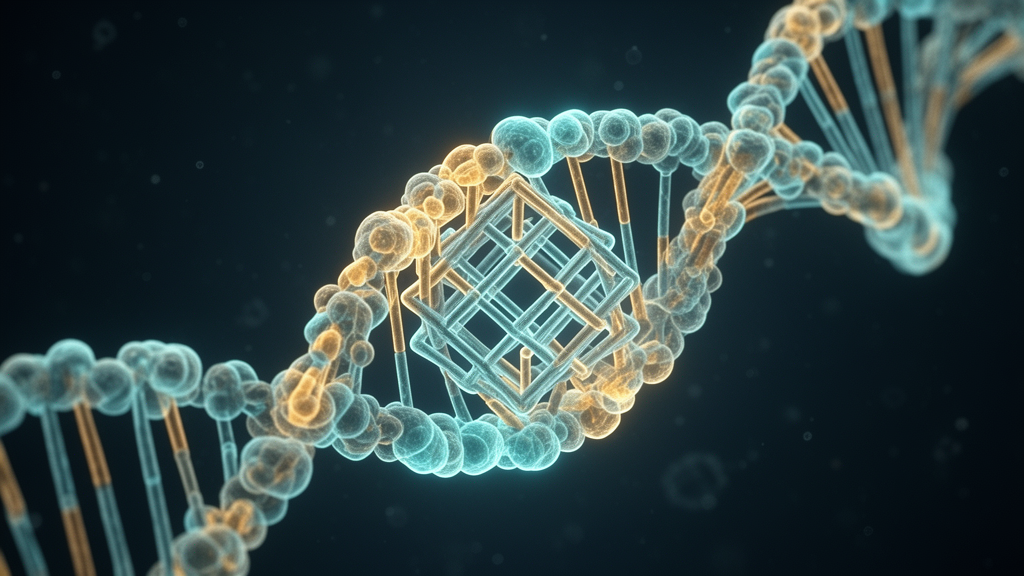
RAD51 Protein Filaments Accommodate Parallel G-Quadruplex Structures to Support Recombination

RAD51 Protein Filaments Accommodate Parallel G-Quadruplex Structures to Support Recombination

Share on FacebookShare on TwitterShare on LinkedinShare on RedditShare on Telegram

The recombinase enzyme RAD51 selectively binds parallel G-quadruplex DNA structures and integrates them into specialized nucleoprotein filaments that support homologous recombination, according to a study published in Nature Structural and Molecular Biology. G-quadruplexes represent noncanonical secondary nucleic acid structures capable of inducing cellular replication stress. While RAD51 is widely recognized as an essential factor in double-strand break repair and replication fork stabilization, its specific mechanistic involvement in G-quadruplex metabolism had previously remained poorly defined.

Structural and biophysical investigations demonstrated that the architecture of the RAD51–G4 complex differs markedly from the canonical nucleoprotein filament formed on single-stranded DNA. Although the overall process of G-quadruplex incorporation proceeds through an assembly pathway analogous to that of standard single-stranded DNA filaments, the physical configuration of the resulting complex displays distinct structural characteristics.

Detailed molecular characterization revealed that RAD51 accommodates folded G-quadruplexes through dynamic, multivalent contacts within the filament lattice.

Functional assays showed that the folded structures facilitate RAD51-mediated homology search and catalyze strand invasion steps.

Cellular experiments reinforced these biophysical conclusions by demonstrating the physiological consequences of depleting RAD51 in living cells. In the absence of RAD51, cells exhibited significant accumulation of folded G-quadruplexes and suffered exacerbated replication stress when exposed to G-quadruplex-stabilizing conditions. Furthermore, this elevated stress response coincided with a pronounced buildup of postreplicative single-stranded DNA gaps, showing that impaired RAD51 activity compromises the timely processing and protection of replication intermediates at quadruplex-forming loci.

The cellular recruitment of the recombinase was further supported by the formation of RAD51 foci dependent on the primase-polymerase PRIMPOL. Based on these observations, the authors proposed that RAD51 stabilizes and preserves folded quadruplexes situated within postreplicative gaps to facilitate error-free repair through template-switch recombination. Collectively, the study uncovers an essential, previously unrecognized mechanism whereby RAD51 nucleoprotein filaments safeguard genomic stability across challenging G4-rich chromosome regions.

Subject of Research: RAD51 filament accommodation of G-quadruplex DNA structures in recombination

Article Title: RAD51 filaments accommodate G-quadruplexes to promote recombination

Article References: Bednarova Pospisilova, M., Kubicek, K., Prokop, Z., Stadlbauer, P., Sommerova, L., Nikulenkov, F., Spirek, M., Zuev, A., Dobrovolna, J., Skehel, M., Sponer, J., Chapman, J. R., & Krejci, L. (2026). RAD51 filaments accommodate G-quadruplexes to promote recombination. Nature Structural & Molecular Biology. https://doi.org/10.1038/s41594-026-01915-3

Image Credits: AI Generated

DOI: 10.1038/s41594-026-01915-3

Keywords: RAD51, G-quadruplexes, homologous recombination, nucleoprotein filaments, parallel G4 structures, replication stress, single-stranded DNA, PRIMPOL, template-switch recombination, genome stability, double-strand break repair, replication fork stabilization, postreplicative ssDNA gaps, homology search, strand invasion, multivalent interactions, structure-guided mutants

News Source: Drew Townsend. (November 16, 2026). RAD51 Protein Filaments Accommodate Parallel G-Quadruplex Structures to Support Recombination. Scienmag.

Tags: double-strand break repairG-quadruplexesgenome stabilityhomologous recombinationhomology searchmultivalent interactionsnucleoprotein filamentsparallel G4 structurespostreplicative ssDNA gapsPRIMPOLRAD51replication fork stabilizationReplication stresssingle-stranded DNAstrand invasionstructure-guided mutantstemplate-switch recombination
Share12Tweet7Share2ShareShareShare1

Related Posts

Freshwater Restoration Shows Higher Microbial Carbon Fixation in Yellow River Delta Wetlands

Freshwater Restoration Shows Higher Microbial Carbon Fixation in Yellow River Delta Wetlands

November 16, 2026
Mitochondrial Damage and Ferroptosis Interlock to Drive Bone Loss in Osteoporosis

Mitochondrial Damage and Ferroptosis Interlock to Drive Bone Loss in Osteoporosis

November 16, 2026

Mine-Adapted Bacteria Enhance Nutrient Uptake and Growth in Maize and Tomato

November 16, 2026

Global Metagenomic Analysis Unveils Vast Diversity of Ultra-Small Bacteria Phages

November 16, 2026

POPULAR NEWS

  • Freshwater Restoration Shows Higher Microbial Carbon Fixation in Yellow River Delta Wetlands

    Freshwater Restoration Shows Higher Microbial Carbon Fixation in Yellow River Delta Wetlands

    29 shares
    Share 12 Tweet 7
  • Clear-Cutting Loblolly Pine Shifts Ecosystem Carbon and Water Balance for Years

    29 shares
    Share 12 Tweet 7
  • Mitochondrial Damage and Ferroptosis Interlock to Drive Bone Loss in Osteoporosis

    29 shares
    Share 12 Tweet 7
  • Mine-Adapted Bacteria Enhance Nutrient Uptake and Growth in Maize and Tomato

    29 shares
    Share 12 Tweet 7

About

We bring you the latest biotechnology news from best research centers and universities around the world. Check our website.

Follow us

Recent News

Conceptual Framework Proposes End-to-End Safety Audits for Voice Healthcare AI

Bioactive Materials and Biofabrication Drive Functional Perfusion in Engineered Cardiac Grafts

Winter temperatures drive water-soluble brown carbon light absorption in industrial Taiyuan

Subscribe to Blog via Email

Enter your email address to subscribe to this blog and receive notifications of new posts by email.

Join 88 other subscribers
  • Contact Us

Bioengineer.org © Copyright 2023 All Rights Reserved.

Welcome Back!

Login to your account below

Forgotten Password?

Retrieve your password

Please enter your username or email address to reset your password.

Log In
No Result
View All Result
  • Homepages
    • Home Page 1
    • Home Page 2
  • News
  • National
  • Business
  • Health
  • Lifestyle
  • Science

Bioengineer.org © Copyright 2023 All Rights Reserved.