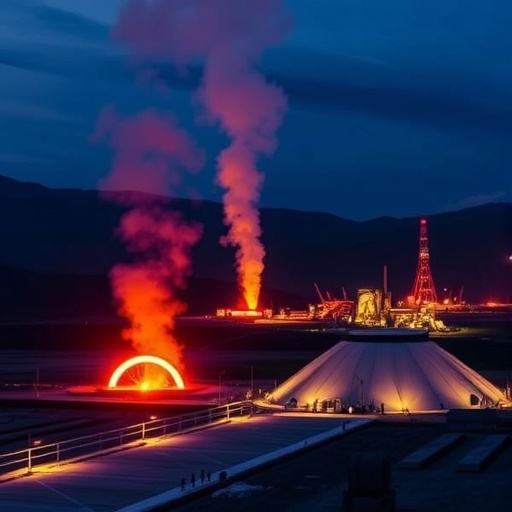
In a groundbreaking stride toward revolutionizing clean energy, Quaise Energy is pioneering the development of the world’s first power plant harnessing superhot geothermal energy—an untapped energy resource found in subterranean rock exceeding 300 degrees Celsius (572 degrees Fahrenheit). The flagship initiative, known as Project Obsidian, is now under construction in Oregon, with an expected operational timeline as early as 2030. This endeavor promises not only to demonstrate the viability of tapping into extreme thermal resources but also to reshape global energy paradigms by delivering dependable, carbon-free power.
Quaise Energy’s confidence in the transformative power of superhot geothermal energy derives from extensive computational simulations and modeling, publicly validated at the 2026 Stanford Geothermal Workshop. Their pioneering analysis projects that the initial plant could generate a minimum of 50 megawatts of electricity—sustained continuously around the clock from just a handful of wells. This level of output signals a profound step forward in geothermal technology, with Phase Two ambitions escalating capacity to 250 megawatts and an overarching vision to reach the gigawatt scale within the same geographic locus.
Such advancements hinge on overcoming the significant technical obstacles traditionally associated with deep geothermal energy extraction. The primary challenge is the sheer intensity of heat and pressure encountered several kilometers below the earth’s surface, where conventional drilling technologies falter. Most existing methods, optimized for oil and gas exploration, simply cannot endure the hostile conditions or economic constraints posed by drilling beyond a few kilometers deep. Enter Quaise’s revolutionary solution: millimeter wave drilling technology. This technique employs high-frequency electromagnetic waves—akin to those used in microwave ovens—to melt and vaporize rock, enabling access to depths previously considered unattainable.
Project Obsidian is structured around a dual-system approach targeting distinct temperature regimes within the superhot geothermal realm. One well system focuses on rock with an average temperature of approximately 315 degrees Celsius, a threshold near the frontier of current geothermal engineering capabilities. This system serves as a lower-risk proving ground. The other system aims at the loftier target of 365 degrees Celsius on average, where the technical and operational risks are elevated but the potential returns in power generation efficiency are significantly greater. This phased strategy encapsulates Quaise’s ethos of balance between innovation and cautious scaling.
The drilling methodology involves a hybrid process optimized for efficiency and feasibility. Initially, conventional rotary drilling techniques will be employed to penetrate and remove near-surface rock layers where temperatures and pressures remain manageable. As the drill descends into the geothermal basement rock—characterized by higher temperatures and more challenging geophysical properties—the technology will transition to millimeter wave drilling. This hybrid strategy not only mitigates risk but also extends the capabilities of geothermal drilling into geological strata previously out of reach.
One of the most compelling aspects of Project Obsidian lies in its minimal surface footprint. Unlike solar and wind installations, which demand expansive land use, the two geothermal well systems collectively occupy approximately 20 acres. This small spatial requirement, compounded by pipes with inner diameters of just about ten inches, highlights the environmental advantages of geothermal energy. By efficiently cycling water through the subterranean geothermal reservoir, the project leverages a naturally replenishing thermal resource with vastly diminished ancillary environmental impacts.
The resource extraction design comprises multiple wells arranged strategically for sustained energy production. Water is injected into the reservoir via a central well, where it is superheated by the fractured rock formations. Flanking this injection well are production wells tasked with capturing the now hot, pressurized fluid—converting its geothermal heat into electricity. Additionally, a confirmation well drilled earlier this year serves a critical role in assessing geomechanical properties and in calibrating the engineering framework to optimize fracture creation and fluid flow pathways within the superhot rock.
Despite significant modeling and preparatory work, numerous uncertainties remain. Key among them is understanding the geochemistry of the superhot rock formations—an element that influences fluid enthalpy and the presence of dissolved minerals such as silica, which can have corrosive effects and impact long-term plant maintenance and efficiency. Additionally, outputs from the formation—whether primarily water or steam—will dictate the specific design parameters for heat exchangers and turbines at the surface facility.
The implications of successfully harnessing superhot geothermal energy extend far beyond the confines of Oregon. According to a 2025 report from the Clean Air Task Force, tapping into just 1% of the world’s superhot rock resources could yield an astonishing 63 terawatts of reliable, carbon-free electricity—exceeding global current electricity generation by a factor of eight. While projects have thus far been geographically constrained to rare, near-surface volcanic regions like Iceland, Quaise’s approach aims to unlock the vast “mother lode” of geothermal energy that resides between two to twelve miles beneath the earth’s crust.
This ambition is structured into a global blueprint delineating geothermal development into three tiers. Tier I includes sites like Project Obsidian with superhot temperatures accessible at roughly five kilometers below the surface. Tier II targets sites with intermediate geothermal gradients, encompassing nearly 40% of the globe. Meanwhile, Tier III promises groundbreaking potential by accessing resources as deep as 19 kilometers (approximately twelve miles), opening the door to geothermal energy supply for more than 90% of the world’s population. At these depths, only innovative drilling technologies such as Quaise’s millimeter wave system will suffice.
The potential impact of this technology is not merely academic. By providing a continuous, dispatchable clean energy source—unimpeded by the intermittency issues that plague solar and wind—superhot geothermal energy offers a foundational solution for decarbonizing power grids. Furthermore, the scalability to gigawatt levels within concentrated areas could significantly bolster energy security and economic resilience, particularly in regions previously considered unsuitable for geothermal exploitation.
As Project Obsidian advances through its initial phases, the data collected—ranging from thermal output measurements to intricate geochemical analyses—will refine modeling predictions and inform future expansion. The team anticipates iterative design adaptations based on real-world observations, underscoring a pragmatic philosophy that embraces uncertainty as a path toward optimization rather than a barrier.
Quaise’s collaborative efforts extend beyond internal research, with partnerships involving institutions like Oregon State University, where laboratory experiments replicate extreme subsurface conditions and contribute nuanced insights into geothermal rock behavior and fluid dynamics. Such multidisciplinary synergy reinforces the technical robustness and societal relevance of Project Obsidian.
In summary, Quaise Energy’s Project Obsidian represents a transformative leap in geothermal energy technology. By leveraging cutting-edge drilling methods, sophisticated modeling, and a pragmatically staged development plan, the project aims to realize the full potential of superhot rock formations buried kilometers beneath the surface. If successful, this endeavor will not only create a new category of renewable energy generation but will also catalyze a paradigm shift toward ubiquitous, reliable, and carbon-neutral power on a global scale.
Subject of Research: Not applicable
Article Title: Concept of a High-Temperature EGS Plant in Central Oregon
News Publication Date: 10-Feb-2026
Web References:
– https://www.quaise.com/
– https://quaiseprojectobsidian.com/
– https://pangea.stanford.edu/ERE/pdf/IGAstandard/SGW/2026/Dichter.pdf
– https://www.catf.us/2025/12/road-map-de-risking-scaling-next-generation-geothermal-energy/
– https://www.quaise.com/news/millimeter-wave-drilling-the-key-to-clean-energy-abundance
– https://www.quaise.energy/news/tiers-of-development
Image Credits: Quaise Energy
Keywords
Superhot geothermal energy, Project Obsidian, millimeter wave drilling, clean energy, high-temperature geothermal, renewable electricity, geothermal power plant, enhanced geothermal systems, deep drilling technology, carbon-free power, sustainable energy, energy innovation
Tags: 50 megawatt geothermal plant outputcarbon-free renewable energy sourcescomputational modeling in geothermal energycontinuous geothermal power generationdeep geothermal power plant constructionfuture gigawatt-scale geothermal projectsgeothermal energy above 300 degrees Celsiusgeothermal energy development in Oregonovercoming technical challenges in geothermal drillingQuaise Energy Project Obsidianscaling geothermal energy capacitysuperhot geothermal energy technology