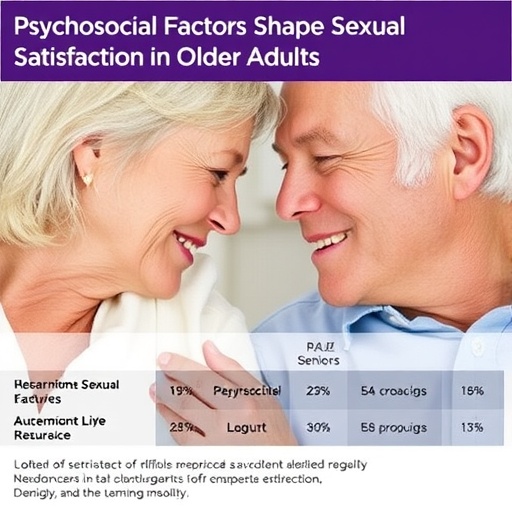
In the realm of aging populations and the increasing prevalence of complex health conditions, understanding the intricate tapestry of factors influencing sexual satisfaction among older adults has emerged as a critical and fascinating area of scientific inquiry. Recent research sheds groundbreaking light on the psychosocial determinants that shape sexual wellbeing in individuals navigating the challenges of multimorbidity—where multiple chronic conditions coexist. This exploration, published in a leading geriatric journal, unveils the nuanced interplay between physical health burdens and psychological, social, and relational dimensions of intimacy in senior populations, promising a paradigm shift in how clinicians and society approach sexual health in advancing age.
Sexual satisfaction has long been considered a vital component of overall quality of life, yet it remains neglected in clinical conversations involving older adults, particularly when compounded by multimorbidity. The new study delves into this neglected intersection, employing a rigorous cross-sectional methodology to dissect how a constellation of psychosocial variables impact sexual fulfillment despite the inevitable constraints imposed by chronic illnesses. By encompassing diverse factors such as emotional intimacy, self-perception, mental health status, and social support networks, the research elucidates pathways through which older adults maintain or reclaim sexual happiness amid physical adversity.
Central to this investigation is the recognition that multimorbidity does not uniformly degrade sexual satisfaction; rather, it interacts dynamically with an individual’s psychosocial context. The presence of multiple chronic conditions often necessitates medication regimens, lifestyle adaptations, and psychological coping mechanisms that can either hinder or inadvertently promote sexual engagement. The study’s findings point towards resilience mechanisms—such as adaptive communication with partners, positive body image, and effective stress management—that may buffer against the negative impacts of health challenges on sexuality. This nuanced understanding calls for integrated care models that attend to more than just the physical, inviting holistic frameworks where sexual wellbeing is a cornerstone.
Furthermore, the research underscores emotional closeness and secure attachment as pivotal contributors to sexual satisfaction among older adults with multimorbidity. Emotional intimacy appears to transcend the functional limitations posed by illness, enabling individuals to experience profound sexual pleasure and connection. This challenges prevailing stereotypes that equate sexual activity solely with physical performance, emphasizing instead the richness of emotional exchange and psychological safety. Clinicians are urged to incorporate these insights into therapeutic interventions and patient dialogues, fostering environments where older adults feel empowered to express their sexual needs and vulnerabilities without stigma.
Importantly, the study also highlights the pivotal role of mental health in sexual satisfaction. Anxiety and depressive symptoms, prevalent among older adults managing several chronic diseases, were found to significantly dampen sexual enjoyment and frequency. By addressing these psychological dimensions with appropriate counseling, social engagement opportunities, and where necessary pharmacologic treatments, healthcare providers can markedly improve not only sexual outcomes but overall wellbeing. This research advocates for routine mental health screening as integral to comprehensive geriatric care, reinforcing how intertwined emotional health is with sexual fulfillment.
Moreover, societal perceptions and self-stigmatization around aging and sexuality emerge as potent psychosocial barriers. The researchers identify that internalized ageism and negative cultural narratives surrounding elder sexuality can erode confidence and desire, regardless of physical capacity. Educational campaigns and community programs designed to normalize and celebrate sexual expression across the lifespan are thus implicated as strategic interventions. By reframing aging bodies and identities in positive, sex-affirming ways, society can dismantle these invisible obstacles and unlock greater sexual satisfaction for millions.
Another compelling dimension revealed is the variability of sexual satisfaction linked to gender and relationship status within the cohort studied. Patterns suggested that partnered individuals with supportive, communicative relationships tend to report higher sexual fulfillment, whereas single older adults face unique challenges related to intimacy and companionship, often exacerbated by multimorbidity. Gender-specific experiences also surfaced, revealing that physiological and psychosocial pathways influencing sexual satisfaction may differ significantly between men and women. Such findings advocate for personalized approaches in clinical and social support systems, recognizing the heterogeneity in experience and needs.
The implications of this comprehensive study ripple beyond sexual health alone. Sexual satisfaction intersects with crucial health outcomes including cardiovascular function, immune response, psychological resilience, and social integration. By identifying psychosocial determinants that bolster sexual wellbeing, researchers provide clues on how to improve multifaceted aspects of aging successfully. This highlights sexual health as not a mere luxury but an essential component of holistic aging, meriting prioritization in health policy, research funding, and clinical training paradigms.
From a methodological perspective, the cross-sectional design utilized allowed for the capture of a broad snapshot of experiences from a densely comorbid older adult population. Advanced statistical analyses unraveled complex associations while controlling for confounders, enabling a robust characterization of psychosocial influences. Nonetheless, the researchers acknowledge limitations inherent to cross-sectional studies such as the inability to determine causality, thus advocating for longitudinal research to track these dynamics over time and understand temporal fluctuations in sexual satisfaction.
While the study hones in on psychosocial determinants, it does not underplay the physical health dimensions that modulate sexual function. However, rather than viewing medical conditions in isolation, this work integrates them into a biopsychosocial framework where the interplay with psychological and social factors becomes the focal lens. This holistic perspective encourages multidisciplinary approaches, inviting collaboration among geriatricians, psychologists, sex therapists, social workers, and community organizations to tailor comprehensive support for older adults with multimorbidity.
Importantly, this research also calls attention to the need for accessible sexual health resources and education tailored to the older population. Many older adults receive little guidance regarding safe and satisfying sexual activity in the context of their chronic illnesses and medications. Empowering patients through age-appropriate, culturally sensitive information can dismantle fears, misconceptions, and logistical barriers to sexual engagement. Furthermore, training healthcare professionals to initiate conversations about sexuality proactively and compassionately remains a critical step toward integrating sexual health into routine geriatric care.
In summary, this study breaks crucial new ground by mapping the psychosocial tapestry that underlies sexual satisfaction in older adults grappling with multiple chronic health conditions. It reveals how emotional intimacy, mental health, social attitudes, and relationship dynamics converge to foster sexual wellbeing despite physical hurdles. This research not only challenges ageist assumptions about sexuality but also underscores the resilience and adaptability of older adults. It advocates for a holistic, person-centered approach that embraces sexual health as a fundamental pillar of thriving in later life, ultimately aiming to enhance dignity, connection, and joy.
As the global population ages, the relevance of understanding factors like sexual satisfaction in multimorbid older adults cannot be overstated. Societies worldwide face the challenge—and opportunity—of reshaping how aging bodies and desires are perceived and supported. This study’s insights pave the way for innovation in healthcare, social policy, and cultural narratives, inspiring a future where sexual wellbeing is acknowledged, researched, and nurtured as an essential human right and vital component of health for all ages.
Subject of Research: Psychosocial determinants of sexual satisfaction in older adults with multimorbidity
Article Title: Psychosocial determinants of sexual satisfaction in older adults with multimorbidity: a cross-sectional study
Article References:
Mantilla-Morrón, M., Parejo, A.M.F., Palacio, D.S. et al. Psychosocial determinants of sexual satisfaction in older adults with multimorbidity: a cross-sectional study. BMC Geriatr (2026). https://doi.org/10.1186/s12877-026-07720-3
Image Credits: AI Generated
Tags: aging and sexual healthchronic illness and sexual fulfillmentclinical approaches to elder sexual healthemotional intimacy and agingimpact of multimorbidity on intimacymental health and sexual satisfactionpsychological determinants of sexual satisfactionpsychosocial factors in sexual satisfactionquality of life in seniorsrelational dimensions of intimacysexual wellbeing in older adultssocial support and sexual wellbeing