

• HOME
  • NEWS
  • EXPLORE
    • CAREER
      • Companies
      • Jobs
    • EVENTS
    • iGEM
      • News
      • Team
    • PHOTOS
    • VIDEO
    • WIKI
  • BLOG
  • COMMUNITY
    • FACEBOOK
    • INSTAGRAM
    • TWITTER
Thursday, January 8, 2026
BIOENGINEER.ORG
No Result
View All Result
  • Login
  • HOME
  • NEWS
  • EXPLORE
    • CAREER
      • Companies
      • Jobs
        • Lecturer
        • PhD Studentship
        • Postdoc
        • Research Assistant
    • EVENTS
    • iGEM
      • News
      • Team
    • PHOTOS
    • VIDEO
    • WIKI
  • BLOG
  • COMMUNITY
    • FACEBOOK
    • INSTAGRAM
    • TWITTER
  • HOME
  • NEWS
  • EXPLORE
    • CAREER
      • Companies
      • Jobs
        • Lecturer
        • PhD Studentship
        • Postdoc
        • Research Assistant
    • EVENTS
    • iGEM
      • News
      • Team
    • PHOTOS
    • VIDEO
    • WIKI
  • BLOG
  • COMMUNITY
    • FACEBOOK
    • INSTAGRAM
    • TWITTER
No Result
View All Result
Bioengineer.org
No Result
View All Result
Home NEWS Science News Health

Providing medications for free leads to greater adherence and cost-savings, study shows

Bioengineer by Bioengineer
May 21, 2021
in Health
Reading Time: 2 mins read
0
IMAGE
Share on FacebookShare on TwitterShare on LinkedinShare on RedditShare on Telegram

IMAGE

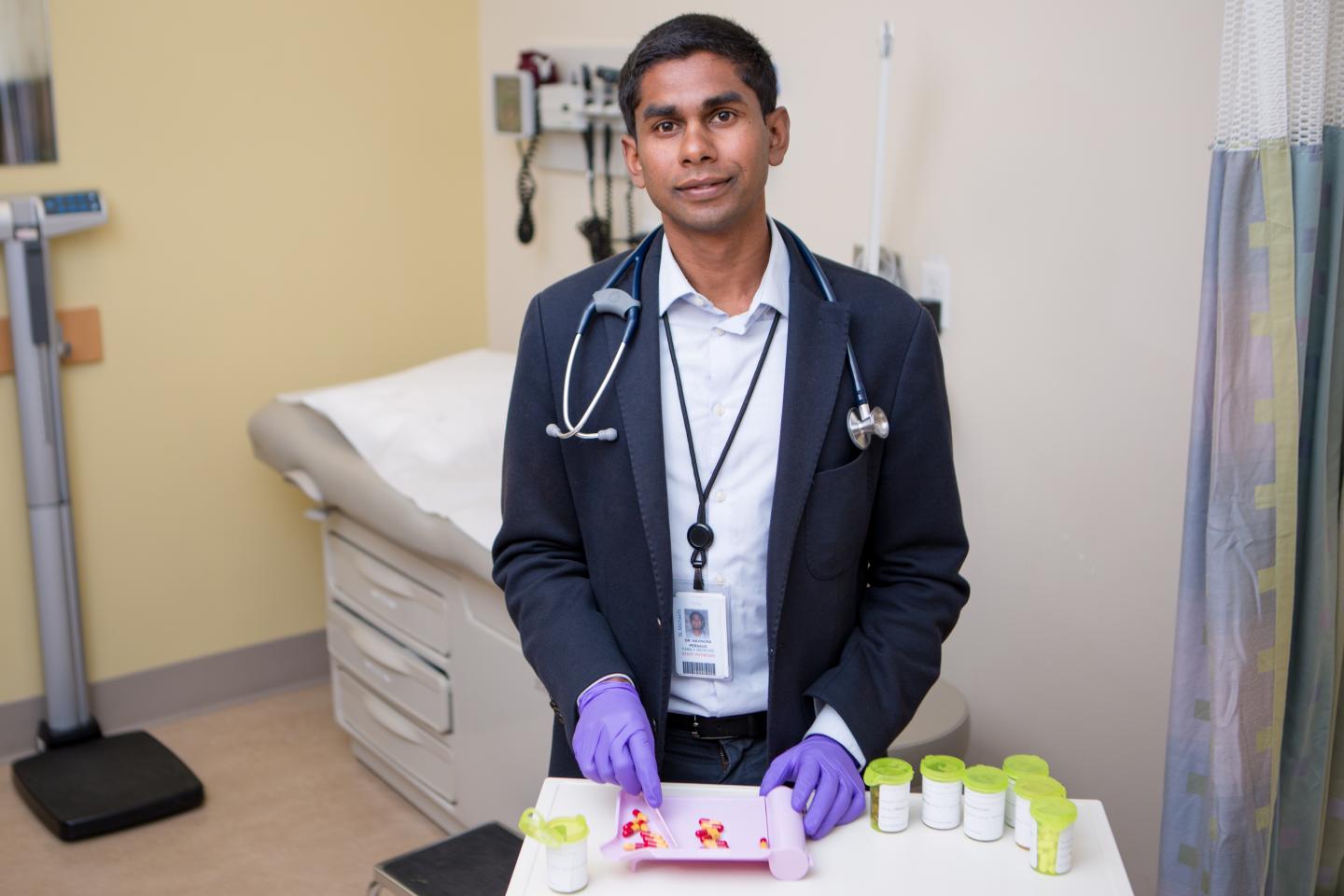
Credit: Unity Health Toronto

Free access to essential medicines increases patient adherence to taking medication by 35 per cent and reduces total health spending by an average of over $1,000 per patient per year, according to a two-year study that tested the effects of providing patients with free and convenient access to a carefully selected set of medications.

The findings, published May 21 in PLOS Medicine, come as advocates urge Canada to carve a path toward single-payer, public pharmacare. Canada is the only country with universal healthcare that does not have a universal pharmacare program.

A group of researchers led by St. Michael’s Hospital of Unity Health Toronto recruited a total of 786 patients across nine primary care sites in Ontario who reported cost-related non-adherence to medications. Most of the study participants were recruited from St. Michael’s Department of Family and Community Medicine and others were recruited from three rural sites. Participants were randomized into two groups – half received free medications via mail, the other half had their usual access to medications.

Two years into the study, adherence to all appropriate prescribed medicines was 35 per cent higher in the free distribution group compared with the group that had usual access to medications. Free distribution of medication also showed to reduce healthcare costs, including hospitalization, by an average of $1,222 per patient per year.

“The cost savings are substantial, but they are less important than people simply being able to afford taking lifesaving medications,” said Dr. Nav Persaud, a scientist at the Li Ka Shing Knowledge Institute of St. Michael’s and lead author of the study.

“This is the first study of providing people with free access to a comprehensive set of medicines, and hopefully it will be the last one needed before policy changes,” said Dr. Persaud, who is also a family physician at St. Michael’s Hospital.

In June 2019, the Advisory Council on the Implementation of National Pharmacare recommended a universal, single-payer, public pharmacare, estimating such a program would save Canada an estimated $5 billion per year. The report cited a list of medicines like the one used in the CLEAN Meds study as “a starting point” for determining which drugs all Canadians should have free access to.

The CLEAN Meds Trial focused on 128 essential medicines, adapted from the WHO Model List of Essential Medicines and removed treatments not needed in Canada. The medicines in the study included treatments for acute conditions, such as antibiotics and pain relievers, as well as chronic conditions, such as antipsychotics and HIV-AIDS medications.

The paper is the final result of the CLEAN Meds Trial. Preliminary results of the trial after one year of free medication indicated improved adherence, improvements in some health outcomes, and that free distribution of essential medicines led to a 160 per cent increase in the likelihood of participants being able to make ends meet.

###

Media Contact
Jennifer Stranges
[email protected]

Related Journal Article

http://dx.doi.org/10.6084/m9.figshare.14428832

Tags: Clinical TrialsHealth CareHealth Care Systems/ServicesInsuranceMedicine/HealthPolicy/EthicsPublic HealthSocioeconomics
Share12Tweet8Share2ShareShareShare2

Related Posts

Unraveling Human Lipid Transfer Mechanisms

January 8, 2026

Prefrontal Neural Maps Shape Motivated Behaviors

January 8, 2026

Victimization Impacts Turkish Doctors’ Migration Decisions

January 8, 2026

Impact of Lobbying Costs on Physician Specialties

January 8, 2026
Please login to join discussion

POPULAR NEWS

  • Enhancing Spiritual Care Education in Nursing Programs

    153 shares
    Share 61 Tweet 38
  • PTSD, Depression, Anxiety in Childhood Cancer Survivors, Parents

    143 shares
    Share 57 Tweet 36
  • Impact of Vegan Diet and Resistance Exercise on Muscle Volume

    46 shares
    Share 18 Tweet 12
  • SARS-CoV-2 Subvariants Affect Outcomes in Elderly Hip Fractures

    44 shares
    Share 18 Tweet 11

About

We bring you the latest biotechnology news from best research centers and universities around the world. Check our website.

Follow us

Recent News

Genome of Alpine Streptomyces Reveals Bioactive Compounds

AI Revolutionizes Traditional Motifs in Design Integration

Unraveling Human Lipid Transfer Mechanisms

Subscribe to Blog via Email

Enter your email address to subscribe to this blog and receive notifications of new posts by email.

Join 71 other subscribers
  • Contact Us

Bioengineer.org © Copyright 2023 All Rights Reserved.

Welcome Back!

Login to your account below

Forgotten Password?

Retrieve your password

Please enter your username or email address to reset your password.

Log In
No Result
View All Result
  • Homepages
    • Home Page 1
    • Home Page 2
  • News
  • National
  • Business
  • Health
  • Lifestyle
  • Science

Bioengineer.org © Copyright 2023 All Rights Reserved.


