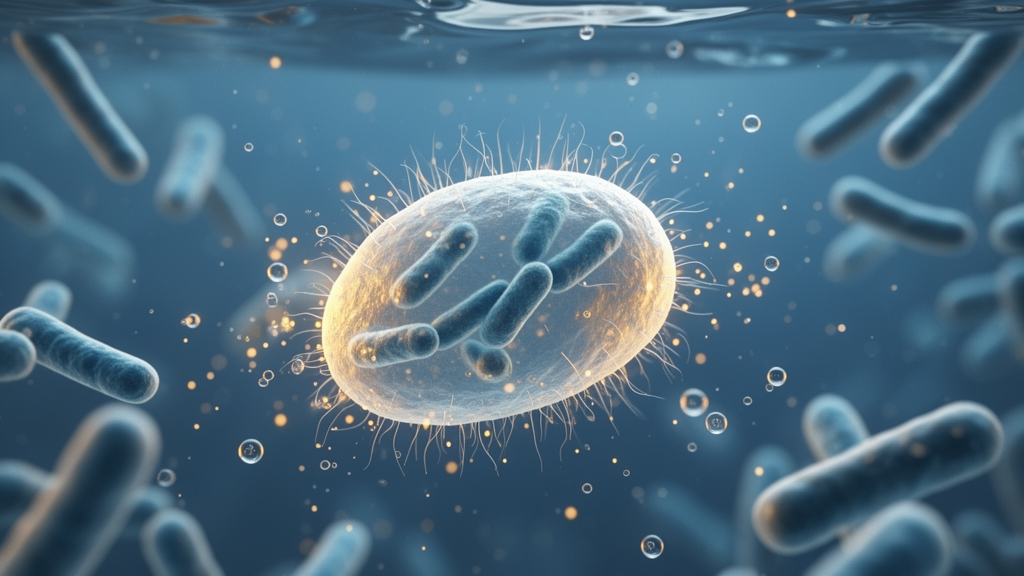
A proof-of-concept investigation into microbial nutrient cycling has demonstrated that interactions between a ciliate and a bacterium substantially accelerate the release of inorganic nitrogen and phosphorus in a simulated liquid culture. Researchers evaluated a co-culture pairing the ciliate Colpoda cf. grandis with the bacterium Priestia aryabhattai across a 96-hour monitoring period. The study established that direct ecological engagement between the two microorganisms stimulates significant nutrient liberation compared to both initial baseline conditions and single-species bacterial controls.
The research addresses an ongoing ecological challenge in Northeast China, where valuable black soils experience declining nutrient bioavailability linked to long-term continuous crop cultivation and intense chemical fertilizer application. While protozoa-bacteria dynamics are widely acknowledged to drive natural nutrient turnover in soils, specific quantitative evidence tracking how distinct protozoan-bacterial pairings simultaneously release nitrogen and phosphorus has remained limited. To investigate this mechanism, investigators isolated both Colpoda cf. grandis and Priestia aryabhattai directly from the rhizosphere of sugar beet crops to build their liquid test model.
Over the course of the 96-hour experiment, the combined co-culture system yielded striking gains in critical plant nutrients. Ammonium nitrogen concentrations surged by 882 percent relative to starting levels, while total phosphorus increased by 468 percent over the initial baseline.
Beyond nutrient concentrations, the researchers calculated an apparent grazing rate for the ciliate predator, estimating that each Colpoda cf. grandis consumed Priestia aryabhattai at a pace of 2,588 bacterial cells per protozoan per hour. The experiment also detected an unexpected elevation in nitrate within protozoa-only control cultures at the 96-hour mark. The study authors emphasized that the precise origin of this nitrate increase could not be determined, leaving whether it stemmed from biotic processes or abiotic reactions unresolved within the scope of this investigation.
At the biochemical level, co-culturing produced pronounced changes in the internal enzymatic activity of Colpoda cf. grandis, noticeably increasing intracellular levels of glutaminase, glutamate dehydrogenase, acid phosphatase, and alkaline phosphatase. Spectroscopic analysis further documented heightened fluorescence intensities for both tryptophan-like and humic-like organic substances. Curiously, measured trends in phosphatase gene expression did not match the elevated enzyme activity, pointing toward likely environmental modulation or post-transcriptional regulatory mechanisms within the ciliate cells.
The study authors concluded that the dynamic relationship between Colpoda cf. grandis and Priestia aryabhattai effectively drives the release of both inorganic nitrogen and phosphorus in liquid culture systems. These quantitative observations clarify the underlying mechanics of microbial nutrient exchange and highlight this paired consortium as a potential candidate for soil bio-amendment strategies. Nevertheless, the researchers cautioned that thorough field trials in natural soil environments remain essential before this microbial approach can be recommended for practical black soil management.
Subject of Research: Protozoan-bacterial interactions and nutrient release in simulated liquid culture
Article Title: Protozoa-bacteria interactions enhance nitrogen and phosphorus release in a simulated liquid culture: A proof-of-concept study with Colpoda cf. grandis and Priestia aryabhattai
Article References: Dong, C., Zhang, X., Dou, Q., Cao, L., Han, M., Pan, X., Sun, S., Lee, D.-J., Li, J., & Wang, L. (2026). Protozoa-bacteria interactions enhance nitrogen and phosphorus release in a simulated liquid culture: A proof-of-concept study with Colpoda cf. grandis and Priestia aryabhattai. BMC Microbiology. https://doi.org/10.1186/s12866-026-05807-w
Image Credits: AI Generated
DOI: 10.1186/s12866-026-05807-w
Keywords: Colpoda cf. grandis, Priestia aryabhattai, protozoa-bacteria interactions, nutrient cycling, ammonium nitrogen, total phosphorus, black soils, microbial ecology, Protozoa-bacteria, interactions, enhance, nitrogen
News Source: Morgan Morrow. (November 11, 2026). Protozoan and Bacterial Interactions Boost Nitrogen and Phosphorus Release in Liquid Tests. Scienmag.