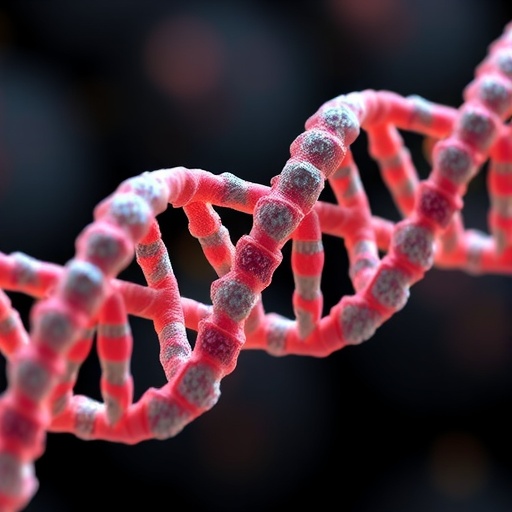
In the intricate world of reproductive biology, male infertility has long posed an enigmatic challenge to scientists and clinicians alike. Despite the arsenal of diagnostic tools available today, many genetic defects that contribute to male infertility remain elusive, and intriguingly, not all problems stem directly from the DNA sequence itself. Recent groundbreaking research led by Professor Satoshi Namekawa and graduate student Yu-Han Yeh at the University of California, Davis, has unraveled a novel dimension of sperm DNA packaging that could radically enhance our understanding of fertility, IVF outcomes, and the heritable health of future generations.
At the heart of this discovery lies the epigenetic architecture within sperm cells—how DNA is meticulously folded and organized to ensure functionality and viability. The way DNA is wrapped around histone proteins not only dictates gene activity but also carries epigenetic information crucial for embryonic development. Namekawa’s team identified a pivotal protein, DAXX, which orchestrates this complex DNA packaging process in male germ cells, effectively silencing over a thousand genes that could otherwise disrupt fertilization while selectively preserving expression of essential developmental genes.
The DNA in human cells is not free-floating; it coils around histones forming nucleosomes, acting as spools, regulating access to genetic information. This epigenetic regulation involves swapping canonical histone variants—such as replacing H3.4 with H3.3—to signal whether genes remain off or become poised for activation. Sperm cells undergo a dramatic histone replacement process during their development, culminating in a highly compacted DNA state with minimal histone content. What remains, however, serves as an epigenetic bookmark that primes critical genes for early embryonic activation.
Through a series of meticulously designed experiments, Namekawa and Yeh demonstrated that deleting the gene encoding DAXX in male mice disrupts this delicate histone replacement system, resulting in abnormal sperm morphology, reduced sperm counts, and dramatic dysregulation of gene expression across the genome, especially on sex chromosomes. This dysregulation echoes beyond fertilization, persistently impacting gene expression in the resulting embryos and leading to decreased offspring viability, underscoring the essential role of DAXX in reproductive success.
The implications of this research are profound. By decoding the molecular underpinnings of histone replacement and gene silencing in sperm, the team provides a framework for diagnosing male infertility beyond genetic mutations. This insight is critical because many infertile men exhibit abnormal sperm epigenetics despite having intact DNA sequences. Furthermore, the findings suggest new avenues to refine in vitro fertilization techniques, particularly when relying on immature sperm cells whose epigenetic signatures may not yet be fully established.
Epigenetic inheritance—the transmission of gene expression patterns without changes to the DNA sequence—is a rapidly growing area of scientific inquiry. The discovery of DAXX’s dual role in both silencing and bookmarking genes provides an essential focal point for future research exploring how paternal health and environmental exposures, such as to endocrine-disrupting chemicals, influence offspring health across generations. Chemicals like DDT and vinclozolin have been linked to abnormal epigenetic states in sperm, leading to effects like obesity, kidney disease, and infertility in descendants. Understanding proteins like DAXX may offer new strategies to mitigate these intergenerational health risks.
The meeting point between molecular epigenetics and reproductive biology revealed by Namekawa’s research also forces a reassessment of paternal contributions to offspring well-being. While maternal influences on early development have traditionally dominated scientific focus, the emerging data spotlight the father’s epigenetic imprint as equally crucial. Disruptions in sperm DNA packaging not only decrease fertility but might also predispose offspring to long-term health challenges due to faulty activation or silencing of developmental genes.
Technically, the research digs into the nuances of histone variant exchange in male germ cells. H3.4 histones are methodically removed and replaced with H3.3 variants during spermatogenesis, a process tightly regulated by DAXX. This epigenetic reprogramming prepares the sperm chromatin to condense into its highly compacted form essential for protection during the sperm’s journey. Yet, selective retention of some H3.3 histones at specific genomic loci acts as bookmarks, facilitating the rapid activation of key embryonic genes post-fertilization.
When DAXX is absent or dysfunctional, this carefully choreographed dance of histone exchange falters, leading to incomplete chromatin compaction. The sex chromosomes, vital for determining embryo gender and associated gene activities, become particularly vulnerable to improper packaging. The resulting epigenetic chaos unleashes aberrant gene expression, disrupting the delicate balance of gene regulation necessary for healthy embryo development and subsequent offspring survival.
The research undertaken by Namekawa and Yeh goes beyond fundamental biology; it identifies potential biomarkers for male infertility and epigenetic abnormalities in sperm that could be monitored clinically. These biomarkers might enable targeted interventions to rescue faulty sperm packaging or select sperm cells with appropriate epigenetic configurations during assisted reproduction. This paradigm shift holds promise for improving reproductive outcomes for countless couples facing infertility.
Looking forward, the elucidation of DAXX’s role opens fertile ground for interdisciplinary collaboration among molecular biologists, reproductive endocrinologists, and environmental health scientists. It invites further exploration into how lifestyle factors, diet, and toxin exposures influence sperm epigenetics and how those changes propagate through offspring generations. The research thus spotlights epigenetic regulation as a critical nexus linking paternal health, environmental interactions, and progeny well-being in ways previously unappreciated.
In summary, the discovery of DAXX as a master regulator of histone replacement in the male germline illuminates a vital mechanism of epigenetic inheritance and male fertility. By maintaining the delicate balance of gene silencing and selective gene activation through histone variant swapping, DAXX ensures that sperm DNA is optimally packaged for fertilization while preprogramming the early embryo’s developmental trajectory. This breakthrough inspires optimism that novel therapies targeting sperm epigenetics may soon emerge, offering new hope for families struggling with infertility and for safeguarding the health of future generations.
Subject of Research: Cells
Article Title: DAXX directs dual modes of H3.4-to-H3.3 histone replacement in the male germline
News Publication Date: 14-Apr-2026
Web References: https://genesdev.cshlp.org/content/early/2026/04/13/gad.353435.125.abstract
Image Credits: Joaquin Benitez/UC Davis College of Biological Sciences
Keywords: Sperm, Developmental genetics, Human reproduction, Epigenetics, Molecular genetics, Molecular biology
Tags: DNA folding and histone interactionepigenetic factors in embryonic developmentepigenetic regulation in sperm cellsepigenetics and generational healthgene silencing in male germ cellsheritable health and fertilityimpact of DNA organization on IVF successmale infertility genetic causesnovel biomarkers for male infertilityrole of nucleosomes in gene expressionsperm DNA packaging protein DAXXUniversity of California Davis fertility research