Credit: RUB, Marquard
Using a combination of infrared spectroscopy and computer simulation, researchers at Ruhr-Universität Bochum (RUB) have gained new insights into the workings of protein switches. With high temporal and spatial resolution, they verified that a magnesium atom contributes significantly to switching the so-called G-proteins on and off.
G-proteins affect, for example, seeing, smelling, tasting and the regulation of blood pressure. They constitute the point of application for many drugs. "Consequently, understanding their workings in detail is not just a matter of academic interest," says Prof Dr Klaus Gerwert, Head of the Department of Biophysics. Together with his colleagues, namely Bochum-based private lecturer Dr Carsten Kötting and Daniel Mann, he published his findings in the Biophysical Journal. The journal features the subject matter as its cover story in the edition published on January 10, 2017.
G-proteins as source of disease
GTP can bind to all G-proteins. If an enzyme cleaves a phosphate group from the bound GTP, the G-protein is switched off. This so-called GTP hydrolysis takes place in the active centre of enzymes within seconds. If the process fails, severe diseases may be triggered, such as cancer, cholera or the rare McCune-Albright syndrome, which is characterised by, for example, abnormal bone metabolism.
Magnesium important for switch mechanism
In order for GTP hydrolysis to take place, a magnesium atom has to be present in the enzyme's active centre. The research team observed for the first time directly in what way the magnesium affects the geometry and charge distribution in its environment. After being switched off, the atom remains in the enzyme's binding pocket. To date, researchers had assumed that the magnesium leaves the pocket after the switching off process is completed.
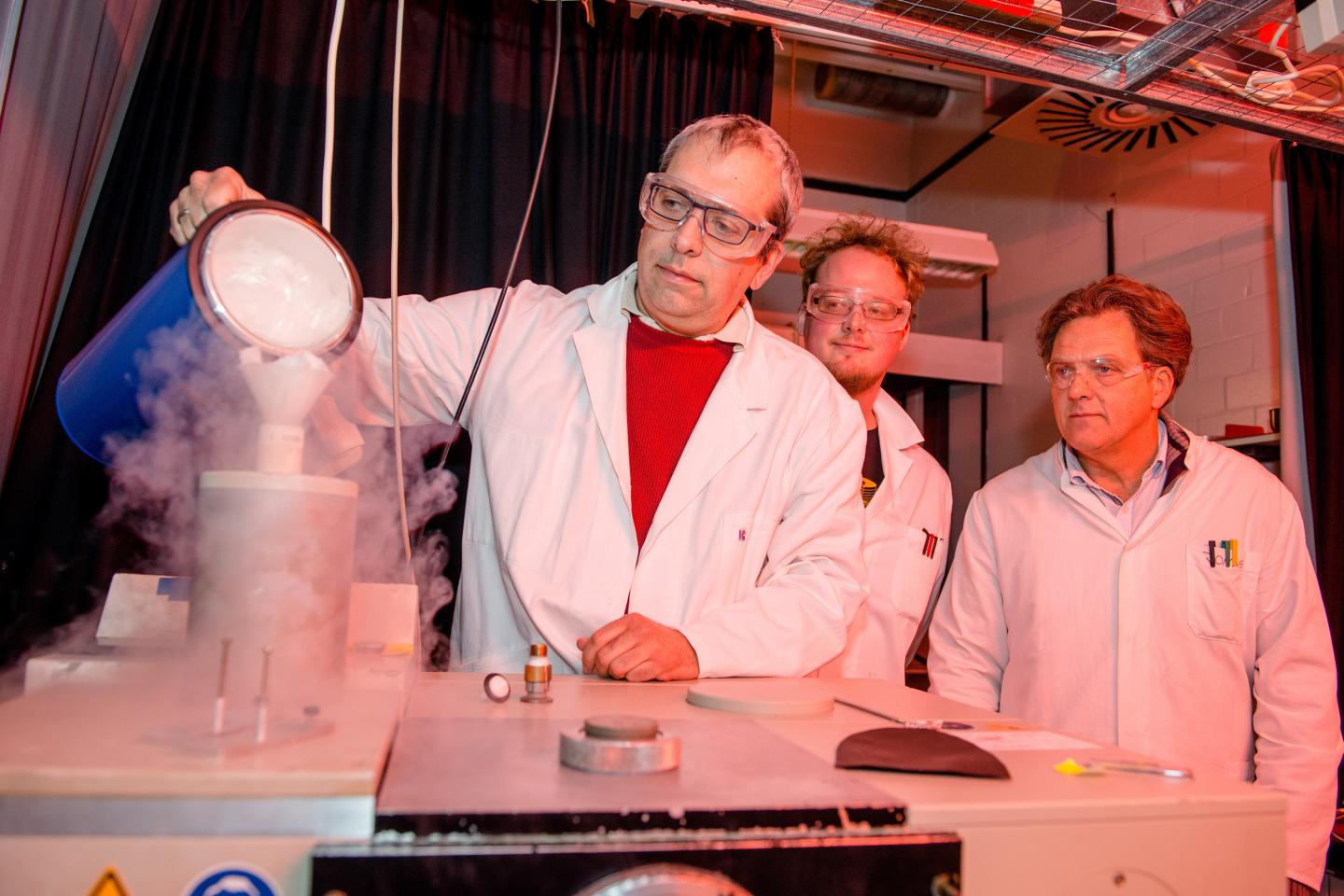
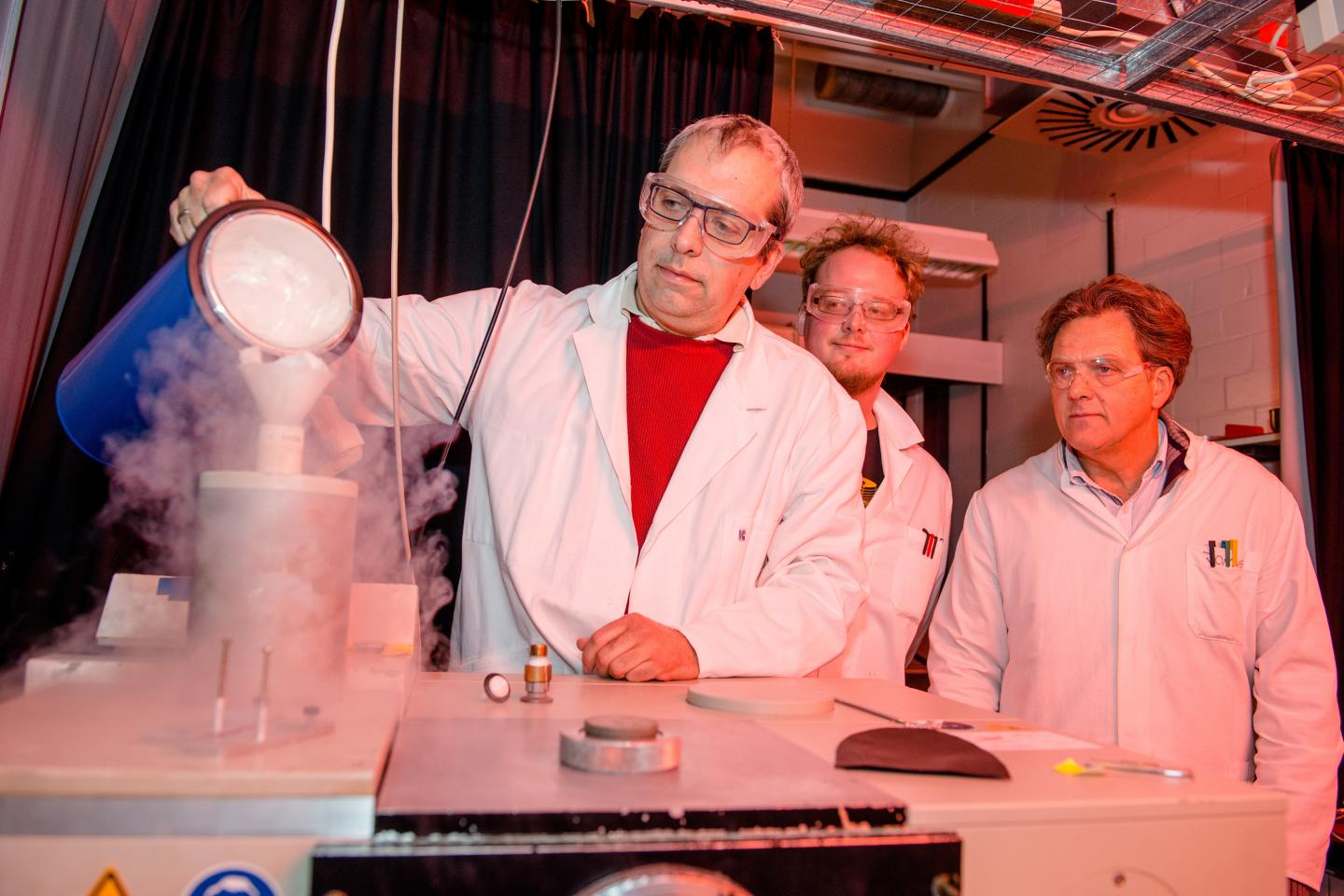
The new findings have been gathered thanks to a method developed at the RUB Department of Biophysics. It allows to monitor enzymatic processes at a high temporal and spatial resolution in their natural state. The method in question is a special type of spectroscopy, namely the time-resolved Fourier Transform Infrared Spectroscopy. However, the data measured with its aid do not provide any information about the precise location in the enzyme where a process is taking place. The researchers gather this information through quantum-mechanical computer simulations of structural models. "Computer simulations are crucial for decoding the information hidden in the infrared spectra," explains Carsten Kötting. The computer, so to speak, becomes a microscope.
How proteins accelerate the switching off process
In the current study, the RUB biophysicists also demonstrated in what way the specialised protein environment affects the acceleration of GTP hydrolysis. They analysed the role of a lysine amino acid, which is located in the same spot in many G-proteins. It binds precisely that phosphate group of the GTP molecule from which a phosphate is separated when the G-protein is switched off.
"The function of lysine is to accelerate GTP hydrolysis by transferring negative charges from the third phosphate group to the second phosphate group," elaborates Daniel Mann. "This is a crucial starting point for the development of drugs for the treatment of cancer and other severe diseases in the long term."
###
Media Contact
Carsten Kötting
[email protected]
49-234-322-4873
@ruhrunibochum
http://www.ruhr-uni-bochum.de
############
Story Source: Materials provided by Scienmag