• HOME
  • NEWS
  • EXPLORE
    • CAREER
      • Companies
      • Jobs
    • EVENTS
    • iGEM
      • News
      • Team
    • PHOTOS
    • VIDEO
    • WIKI
  • BLOG
  • COMMUNITY
    • FACEBOOK
    • INSTAGRAM
    • TWITTER
Wednesday, October 7, 2026
BIOENGINEER.ORG
No Result
View All Result
  • Login
  • HOME
  • NEWS
  • EXPLORE
    • CAREER
      • Companies
      • Jobs
        • Lecturer
        • PhD Studentship
        • Postdoc
        • Research Assistant
    • EVENTS
    • iGEM
      • News
      • Team
    • PHOTOS
    • VIDEO
    • WIKI
  • BLOG
  • COMMUNITY
    • FACEBOOK
    • INSTAGRAM
    • TWITTER
No Result
View All Result
Bioengineer.org
No Result
View All Result
Home NEWS Science News

Prostate cancer trial shows treating with precision radiotherapy cuts course of treatment by 50 percent

Bioengineer by Bioengineer
March 16, 2017
in Science News
Reading Time: 2 mins read
0
Share on FacebookShare on TwitterShare on LinkedinShare on RedditShare on Telegram
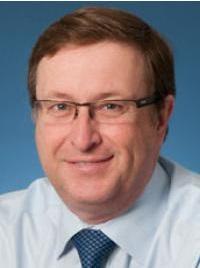
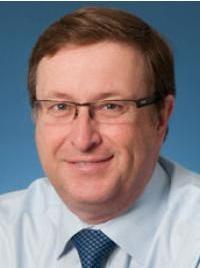
IMAGE

Credit: UHN

(TORONTO, Canada – March 16, 2017) – An Ontario-led international clinical trial with 1,206 men with localized prostate cancer shows that compressing radiation treatments into four weeks from eight delivers similar outcomes.

The findings, published online today in the Journal of Clinical Oncology, provide a new standard of care worldwide, which the participating centres have already adopted, says co-principal investigator Charles Catton, radiation oncologist, Princess Margaret Cancer Centre, University Health Network. Dr. Catton is also a Professor, Department of Radiation Oncology, University of Toronto.

"We conducted a randomized clinical trial looking at a way of improving radiation therapy for men with intermediate-risk prostate cancer. Using modern radiation therapy techniques that are very precise, we determined there was no noticeable difference between eight- and four-week treatment regimens in terms of cancer control or side effects of treatment," says Dr. Catton. The trial participants were followed for six years.

"In fact, for some men, the shorter regimen meant slightly fewer side effects (particularly regarding bowel function) and therefore improved quality of life. The compressed course of treatment is of great benefit to patients and also to the system in terms of being able to treat more patients in less time," he says. In Canada, 20,000 men are diagnosed with prostate cancer every year; many of whom have intermediate-risk disease that has not spread.

The trial was conducted with co-principal investigator Himu Lukka, radiation oncologist, Juravinski Cancer Centre, and Professor, Department of Oncology, McMaster University, and coordinated by the Ontario Clinical Oncology Group, Hamilton, Ontario. Twenty-seven cancer centres in Canada, Australia and France participated in the study, which began in 2005.

Dr. Catton says the trial further improved patient care by standardizing quality delivery of precision radiation techniques among participating institutions.

###

The research was funded by the Canadian Institutes for Health Research and The Princess Margaret Cancer Foundation.

About Princess Margaret Cancer Centre, University Health Network

The Princess Margaret Cancer Centre has achieved an international reputation as a global leader in the fight against cancer and delivering personalized cancer medicine. The Princess Margaret, one of the top five international cancer research centres, is a member of the University Health Network, which also includes Toronto General Hospital, Toronto Western Hospital, Toronto Rehabilitation Institute and the Michener Institute for Education; all affiliated with the University of Toronto. For more information, go to http://www.theprincessmargaret.ca or http://www.uhn.ca .

About Ontario Clinical Oncology Group

The Ontario Clinical Oncology Group (OCOG) is an academic-based clinical trials development and coordination organization which focuses on cancer. It works with networks of clinician investigators locally, provincially, nationally and abroad to conduct trials which address clinically relevant questions, go to http://www.ocog.ca

Media Contact

Jane Finlayson
[email protected]
416-946-2846
@UHN_News

http://www.uhn.on.ca/

############

Story Source: Materials provided by Scienmag

Share12Tweet8Share2ShareShareShare2

Related Posts

Ghana's rivers, hospitals and landfills are steeped in antibiotic pollution, review finds

Ghana’s rivers, hospitals and landfills are steeped in antibiotic pollution, review finds

October 7, 2026
Layered Vanadium-Molybdenum Oxide Films Push Electrochromic Blue Displays Further

Layered Vanadium-Molybdenum Oxide Films Push Electrochromic Blue Displays Further

October 7, 2026

Heavy Fermions Spotted Forming at a One-Atom-Thick Interface

October 7, 2026

Rat-Inspired Algorithm Tackles the Chaos of University Exam Scheduling

October 7, 2026
Please login to join discussion

POPULAR NEWS

  • Alloys That Shrink Their Own Grains: New PIX Mechanism Refines Metals With Heat Alone

    Alloys That Shrink Their Own Grains: New PIX Mechanism Refines Metals With Heat Alone

    29 shares
    Share 12 Tweet 7
  • Endurance Exercise Reshapes the Liver in Males and Females Through Distinct Molecular Routes

    29 shares
    Share 12 Tweet 7
  • Single Transcription Factor PU.1 Rapidly Converts Fibroblasts into Macrophage-Lineage Cells

    29 shares
    Share 12 Tweet 7
  • New Scale Measures How Ready Nurse Educators Really Are for the AI Era

    29 shares
    Share 12 Tweet 7

About

We bring you the latest biotechnology news from best research centers and universities around the world. Check our website.

Follow us

Recent News

Alloys That Shrink Their Own Grains: New PIX Mechanism Refines Metals With Heat Alone

Endurance Exercise Reshapes the Liver in Males and Females Through Distinct Molecular Routes

Single Transcription Factor PU.1 Rapidly Converts Fibroblasts into Macrophage-Lineage Cells

Subscribe to Blog via Email

Success! An email was just sent to confirm your subscription. Please find the email now and click 'Confirm' to start subscribing.

Join 85 other subscribers
  • Contact Us

Bioengineer.org © Copyright 2023 All Rights Reserved.

Welcome Back!

Login to your account below

Forgotten Password?

Retrieve your password

Please enter your username or email address to reset your password.

Log In
No Result
View All Result
  • Homepages
    • Home Page 1
    • Home Page 2
  • News
  • National
  • Business
  • Health
  • Lifestyle
  • Science

Bioengineer.org © Copyright 2023 All Rights Reserved.