• HOME
  • NEWS
  • EXPLORE
    • CAREER
      • Companies
      • Jobs
    • EVENTS
    • iGEM
      • News
      • Team
    • PHOTOS
    • VIDEO
    • WIKI
  • BLOG
  • COMMUNITY
    • FACEBOOK
    • INSTAGRAM
    • TWITTER
Wednesday, August 26, 2026
BIOENGINEER.ORG
No Result
View All Result
  • Login
  • HOME
  • NEWS
  • EXPLORE
    • CAREER
      • Companies
      • Jobs
        • Lecturer
        • PhD Studentship
        • Postdoc
        • Research Assistant
    • EVENTS
    • iGEM
      • News
      • Team
    • PHOTOS
    • VIDEO
    • WIKI
  • BLOG
  • COMMUNITY
    • FACEBOOK
    • INSTAGRAM
    • TWITTER
  • HOME
  • NEWS
  • EXPLORE
    • CAREER
      • Companies
      • Jobs
        • Lecturer
        • PhD Studentship
        • Postdoc
        • Research Assistant
    • EVENTS
    • iGEM
      • News
      • Team
    • PHOTOS
    • VIDEO
    • WIKI
  • BLOG
  • COMMUNITY
    • FACEBOOK
    • INSTAGRAM
    • TWITTER
No Result
View All Result
Bioengineer.org
No Result
View All Result
Home NEWS Science News Chemistry

Prospecting for gold just got a lot easier

Bioengineer by Bioengineer
October 11, 2019
in Chemistry
Reading Time: 2 mins read
0
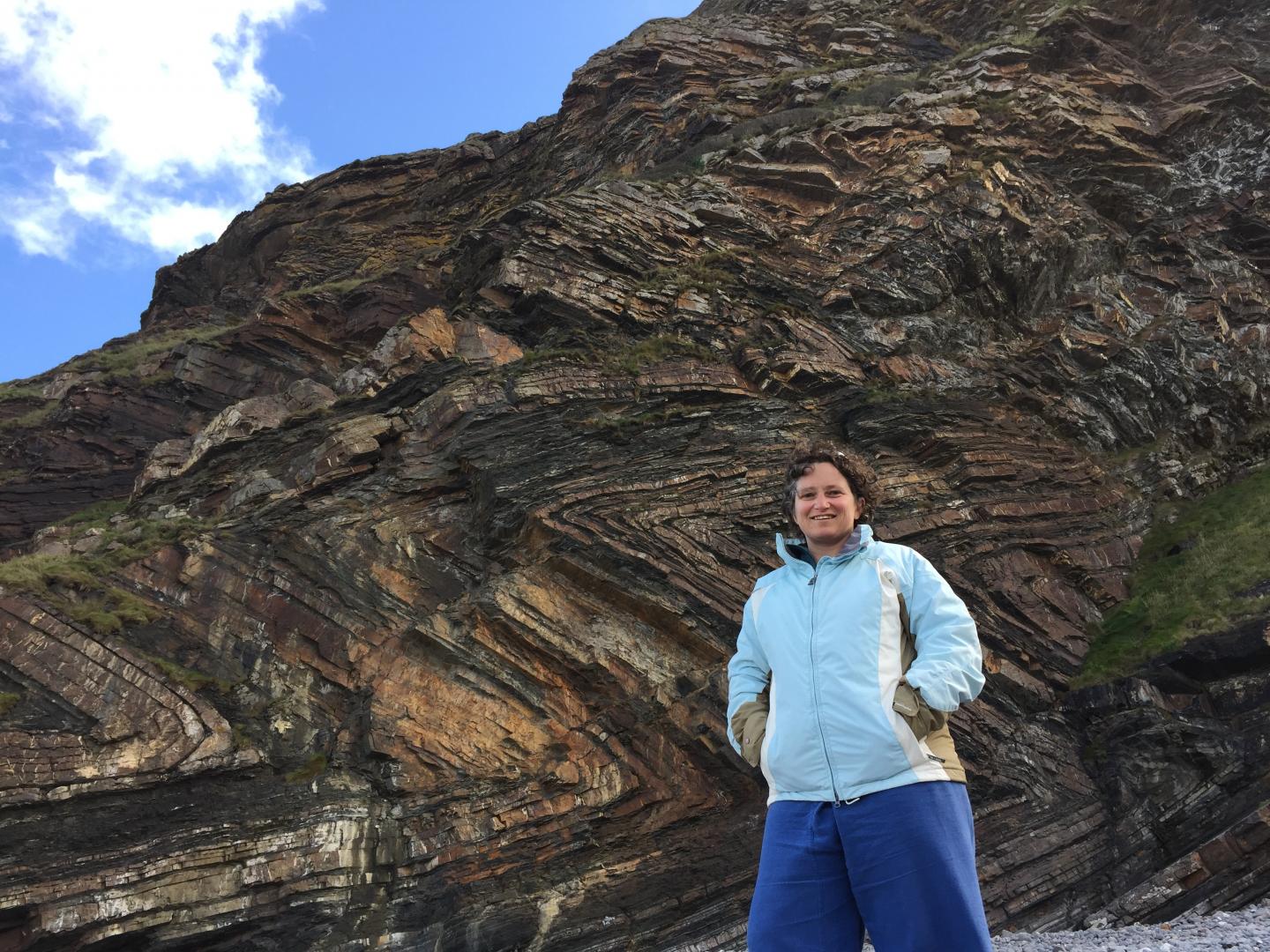
IMAGE
Share on FacebookShare on TwitterShare on LinkedinShare on RedditShare on Telegram

IMAGE

Credit: University of South Australia


Looking for gold? Every good explorer knows there’s no silver bullet in finding an ore deposit, but a University of South Australia researcher is hoping to change all that.

Dr Caroline Tiddy, a Senior Research Fellow in UniSA’s Future Industries Institute, has developed a suite of geochemical tools to more accurately target valuable mineral deposits and save drilling companies millions of dollars in the process.

The tools use data collected from analysing drilling materials in new ways to help locate undiscovered precious metals buried by younger sediment and identify the right drill holes.

“The global demand for copper and gold is growing, but it is getting increasingly hard to find these metals as companies are forced to drill deeper and deeper, costing them significant amounts of money,” Dr Tiddy says.

“Diamond drilling, for example, costs up to $400 a metre and it is not uncommon to drill to depths of 1-2 kilometres. That amounts to an $800,000 bill with no guarantee of success, so it limits the number of drill holes. To add to the challenge, ore deposits are tiny compared to the search space. It’s a real life, global problem of looking for a needle in a haystack.”

Dr Tiddy’s goal is to develop new technologies for faster, cheaper and more environmentally-friendly drilling.

By mapping out where key chemical elements are found in greater concentrations, Dr Tiddy is creating geochemical algorithms that increase the chances of finding an ore deposit and decrease the cost of mineral exploration.

Using the exploration tools developed by Dr Tiddy, exploration companies stand to vastly increase the return on their investment.

The tools have been successfully tested at Prominent Hill, an iron oxide-copper-gold deposit in the north of South Australia, increasing the footprint of their ore body fourfold. They have also been trialled in the Yorke Peninsula, highlighting unexplored areas of copper.

“South Australia has a reputation for its copper and gold deposits so these data-driven approaches to exploration are revealing important information about mineral exploration in the state.

“By using these geochemical tools, companies can better focus their drilling resources into lower risk areas. Finding an economically viable copper-enriched area has the potential to generate revenues of up to $175 million a year as well as creating more than 500 jobs,” she says.

###

Media Contact
Candy Gibson
[email protected]
61-883-020-961

Original Source

https://www.unisa.edu.au/Media-Centre/Releases/2019/prospecting-for-gold-just-got-a-lot-easier-and-cheaper/

Tags: Earth ScienceEnergy Sources
Share14Tweet9Share3ShareShareShare2

Related Posts

Review examines how metal nanoparticles move through subsurface environments

Review examines how metal nanoparticles move through subsurface environments

August 26, 2026
Cu/Zn Ratio Tunes CuZnAl Catalysts for Selective 1,4-Butanediol Conversion to γ-Butyrolactone

Cu/Zn Ratio Tunes CuZnAl Catalysts for Selective 1,4-Butanediol Conversion to γ-Butyrolactone

August 26, 2026

Optimizing Ca2FeNbO6 Boosts Polarization and Energy Density in Ferroelectric Polymer Composites

August 26, 2026

Scripps Research’s Jeffery Kelly Elected to European Academy of Engineering

August 26, 2026
Please login to join discussion

POPULAR NEWS

  • MSR Gene Discovery in Four Wheat Species Reveals TaMSRB5 Enhances Copper Tolerance

    29 shares
    Share 12 Tweet 7
  • Host selection shapes microbial communities and functions, determining mangrove soil carbon fate

    29 shares
    Share 12 Tweet 7
  • Amygdala Activity Linked to Stroke and Carotid-Vertebral Stenosis in Takayasu Arteritis

    29 shares
    Share 12 Tweet 7
  • Atrial Fibrillation Associated With Kidney Tubular Injury; Three Biomarkers Predict Risk

    29 shares
    Share 12 Tweet 7

About

We bring you the latest biotechnology news from best research centers and universities around the world. Check our website.

Follow us

Recent News

MSR Gene Discovery in Four Wheat Species Reveals TaMSRB5 Enhances Copper Tolerance

Host selection shapes microbial communities and functions, determining mangrove soil carbon fate

Amygdala Activity Linked to Stroke and Carotid-Vertebral Stenosis in Takayasu Arteritis

Subscribe to Blog via Email

Enter your email address to subscribe to this blog and receive notifications of new posts by email.

Join 85 other subscribers
  • Contact Us

Bioengineer.org © Copyright 2023 All Rights Reserved.

Welcome Back!

Login to your account below

Forgotten Password?

Retrieve your password

Please enter your username or email address to reset your password.

Log In
No Result
View All Result
  • Homepages
    • Home Page 1
    • Home Page 2
  • News
  • National
  • Business
  • Health
  • Lifestyle
  • Science

Bioengineer.org © Copyright 2023 All Rights Reserved.