• HOME
  • NEWS
  • EXPLORE
    • CAREER
      • Companies
      • Jobs
    • EVENTS
    • iGEM
      • News
      • Team
    • PHOTOS
    • VIDEO
    • WIKI
  • BLOG
  • COMMUNITY
    • FACEBOOK
    • INSTAGRAM
    • TWITTER
Thursday, July 16, 2026
BIOENGINEER.ORG
No Result
View All Result
  • Login
  • HOME
  • NEWS
  • EXPLORE
    • CAREER
      • Companies
      • Jobs
        • Lecturer
        • PhD Studentship
        • Postdoc
        • Research Assistant
    • EVENTS
    • iGEM
      • News
      • Team
    • PHOTOS
    • VIDEO
    • WIKI
  • BLOG
  • COMMUNITY
    • FACEBOOK
    • INSTAGRAM
    • TWITTER
  • HOME
  • NEWS
  • EXPLORE
    • CAREER
      • Companies
      • Jobs
        • Lecturer
        • PhD Studentship
        • Postdoc
        • Research Assistant
    • EVENTS
    • iGEM
      • News
      • Team
    • PHOTOS
    • VIDEO
    • WIKI
  • BLOG
  • COMMUNITY
    • FACEBOOK
    • INSTAGRAM
    • TWITTER
No Result
View All Result
Bioengineer.org
No Result
View All Result
Home NEWS Science News Health

Proper burial of dead cells limits inflammation

Bioengineer by Bioengineer
May 7, 2018
in Health
Reading Time: 2 mins read
0
Share on FacebookShare on TwitterShare on LinkedinShare on RedditShare on Telegram
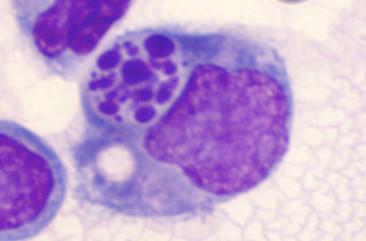
IMAGE

Credit: UofL

If dead cells accumulate in the body, they can contribute to inflammation and pre-dispose individuals to multiple chronic inflammatory conditions such as rheumatoid arthritis, cardiovascular diseases, Crohn's disease or lupus by uncharacterized pathways.

"Billions of cells die daily as a consequence of regular wear and tear, tissue turnover and during an inflammatory response. The body dedicates a significant amount of energy in the specific recognition and uptake of these dead cells via specific pathways," said Juhi Bagaitkar, Ph.D., a researcher in the University of Louisville School of Dentistry's Department of Oral Immunology and Infectious Diseases. "If you don't bury the dead cells, they can burst open and cause harm, however the underlying mechanisms are incompletely characterized."

Bagaitkar, along with researchers at Washington University, Indiana University and University of Michigan, recently published a paper in blood, demonstrating the importance of oxidants in the digestion of apoptotic, or dead cells.

Specifically, the research uncovers how NADPH-oxidase is activated to generate reactive oxygen species (ROS) in macrophages, a kind of white blood cell that eats dead cells. These cells also are involved in getting rid of viruses and bacteria.

The presence of ROS is critical as its generation drives additional mechanisms involved in the digestion of cellular corpses to perform at an optimal level. This allows the macrophage to complete the digestion process of efferocytosis, meaning "to bury the dead".

"Independent of their role in microbial killing, we are gaining even greater appreciation of ROS for their huge role in the regulation of host immune response," Bagaitkar said. "Uncovering this role of ROS in the clearance of dead cells sheds some mechanistic insights on how oxidants function in limiting of host inflammation rather than activating it.

"When our bodies produce too much or too little ROS we become pre-disposed to autoimmune disease and chronic inflammation. Producing just enough – the optimal level — is what's needed," she said.

###

Read the complete journal article online.

Media Contact

Julie Heflin
[email protected]
502-852-7987

http://www.louisville.edu
Share12Tweet7Share2ShareShareShare1

Related Posts

Study Links Early PFAS Exposure to Childhood Intestinal Inflammation at Mount Sinai

July 16, 2026

Repurposed Antiplatelet Prasugrel Shows Neuroprotective Effects in Parkinson’s, Proteomics Reveal

July 16, 2026

Study Explains Why Some Colorectal Cancers Respond Better to Immunotherapy

July 16, 2026

Bayesian framework integrates longitudinal EHR data with genetic discovery

July 16, 2026
Please login to join discussion

POPULAR NEWS

  • New Drug Candidate Developed at McMaster Shows Potential for Treating Brain Cancer

    58 shares
    Share 23 Tweet 15
  • Scientists Overcome Antimicrobial Resistance in Bacteria Linked to Cystic Fibrosis

    42 shares
    Share 17 Tweet 11
  • Porcine Heart Transplant

    50 shares
    Share 20 Tweet 13
  • A varied menu

    51 shares
    Share 22 Tweet 12

About

We bring you the latest biotechnology news from best research centers and universities around the world. Check our website.

Follow us

Recent News

Driving Speed Limits Saves Millions in Fuel Costs with Seconds of Change

Association for Molecular Pathology Honors Dartmouth Health Director for Long Leadership

Air-Stable Ru/BaSiN2O: Floating Electrons Power New Catalyst

Subscribe to Blog via Email

Enter your email address to subscribe to this blog and receive notifications of new posts by email.

Join 85 other subscribers
  • Contact Us

Bioengineer.org © Copyright 2023 All Rights Reserved.

Welcome Back!

Login to your account below

Forgotten Password?

Retrieve your password

Please enter your username or email address to reset your password.

Log In
No Result
View All Result
  • Homepages
    • Home Page 1
    • Home Page 2
  • News
  • National
  • Business
  • Health
  • Lifestyle
  • Science

Bioengineer.org © Copyright 2023 All Rights Reserved.