In an era when cancer therapeutics are rapidly evolving, a groundbreaking study published in Nature Communications has highlighted a transformative approach to controlling both primary and metastatic breast cancer—through the innovative use of programmable nanomicelles that rewire myeloid immunity. This novel strategy signifies a remarkable leap in immunotherapy, delving deep into the intricate interplay between nanotechnology and the immune system, specifically targeting the often elusive myeloid cells within the tumor microenvironment. Researchers led by Yang, J., Chang, D., and Li, Y. have illuminated paths toward durable cancer control that may redefine treatment paradigms in oncology.
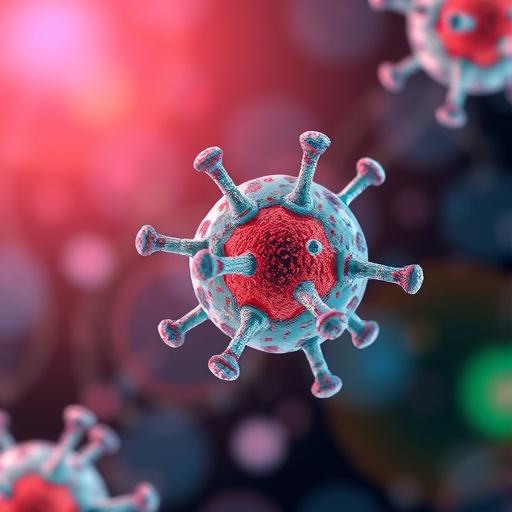
The central theme of this research revolves around the engineering of nanomicelles—nanoscale, self-assembling polymeric structures designed for targeted drug delivery—which have been programmably optimized to interact with myeloid immune cells. Myeloid cells, including macrophages and dendritic cells, play pivotal roles in the tumor milieu, often polarizing into states that promote cancer progression and immune evasion. The tailored nanomicelles are designed to recalibrate these cells from a pro-tumoral to an anti-tumoral state, effectively reprogramming the immune environment to recognize and eradicate cancer cells more efficiently.
This reprogramming is not a superficial adjustment but a profound molecular remodeling of the myeloid cells’ functional state. By delivering specific payloads—such as immunomodulatory agents, signaling molecules, or genetic material—the nanomicelles alter the signaling pathways within myeloid cells to enhance antigen presentation, promote inflammatory responses against tumor cells, and reduce immunosuppressive factors. This intricate recalibration yields a sustained immune activation landscape that prevents tumor growth and dissemination.
A crucial technical aspect lies in the programmability of these nanomicelles. The researchers meticulously designed their physicochemical properties, including size, surface charge, and functional moieties, to optimize trafficking, uptake, and payload release strictly within myeloid cell populations. This targeted approach minimizes off-target effects and systemic toxicity, a frequent challenge in cancer immunotherapy, making the treatment safer and more effective. The nanomicelles’ programmable nature allows customization for different tumor phenotypes and patient-specific immune profiles, opening avenues for personalized medicine.
The study’s preclinical models demonstrated striking outcomes. Treated animals exhibit prolonged survival, significant regression of primary tumors, and, notably, effective control of metastatic sites often resistant to conventional therapies. This dual efficacy addresses a critical gap—metastasis is the primary cause of mortality in breast cancer patients. The nanomicelle-induced immune re-wiring sustains an army of myeloid cells primed to surveil and attack metastatic niches, forestalling secondary tumor formation and enhancing long-term disease control.
From a biochemical perspective, the research uncovered key signaling cascades modulated by the nanomicelle treatment. For instance, pathways involving NF-κB and STAT proteins were recalibrated to shift macrophage phenotypes from M2-like, which aid tumor growth, to M1-like, which promote tumor destruction. This switch is accompanied by enhanced secretion of pro-inflammatory cytokines and chemokines, recruiting additional immune effector cells and amplifying the anti-cancer immune response.
The use of polymeric nanomicelles as a delivery vehicle is significant due to their superior stability, biocompatibility, and controlled release capacities. The incorporation of stimuli-responsive elements enables triggered release of therapeutic payloads within the acidic tumor microenvironment or upon enzymatic activation by myeloid cell-specific enzymes. This finely-tuned control enhances the therapeutic window and minimizes systemic exposure, reducing adverse effects often seen with chemotherapeutic agents.
A standout feature of the nanomicelle platform is its versatility. Beyond breast cancer, related constructs could be adapted to tackle diverse malignancies characterized by immunosuppressive myeloid involvement, such as lung, pancreatic, and colorectal cancers. The principle of reprogramming innate immunity through nanotechnology has broad implications, potentially revolutionizing treatment for cancers historically refractory to immunotherapy.
The methodology employed in this investigation incorporated advanced imaging and single-cell sequencing technologies to precisely map the interactions between nanomicelles and immune subsets in vivo. This in-depth profiling allowed the team to unravel the temporal dynamics of immune reprogramming, providing insight into the mechanisms underpinning durable tumor control. Moreover, these technologies facilitated the evaluation of off-target effects, ensuring that immune modulation remained tightly focused on tumor-associated myeloid cells.
An additional layer of the research focused on the safety and pharmacokinetics of programmable nanomicelles. The investigators reported favorable toxicity profiles in preclinical models, with minimal systemic cytokine release syndromes and negligible impact on hematopoiesis. The nanomicelles exhibited efficient clearance from non-target tissues, predominantly via the liver and kidneys, indicating a manageable safety profile that paves the way for clinical translation.
The implications of these findings stretch beyond immediate therapeutic benefits. The concept of harnessing programmable nanosystems to dynamically rewire immune cell functionality challenges the traditional static view of immune modulation in cancer. Instead, it fosters a new paradigm where immune cells are not just activated but fundamentally re-educated at the molecular level to sustain anti-tumor activity throughout the disease course.
Integration with existing treatment modalities such as checkpoint inhibitors or chemotherapy could yield synergistic effects. The nanomicelle approach may overcome resistance mechanisms that currently limit the efficacy of checkpoint blockade, particularly by reversing immunosuppression orchestrated by tumor-associated myeloid cells. Combining these therapies could elicit more robust, multifaceted immune assaults on cancer.
From a translational perspective, the flexibility of programmable nanomicelles offers promise for rapid iterative optimization in clinical settings. Their modular design facilitates incorporation of novel payloads or targeting ligands as new oncological insights emerge, thus maintaining therapeutic relevance in the face of tumor heterogeneity and evolving resistance landscapes.
The study by Yang and colleagues not only advances nanotechnology applications in oncology but also deepens our understanding of the immune microenvironment’s plasticity. It underscores the therapeutic potential lying within myeloid cells—historically considered less tractable immunological targets—and exemplifies how interfacing cutting-edge materials science with immunobiology can lead to revolutionary cancer therapies.
As these programmable nanomicelles progress toward clinical development, the oncology field eagerly anticipates validation of their efficacy and safety in human trials. Should these promising preclinical results translate clinically, this technology could inaugurate a new chapter in cancer immunotherapy, offering patients durable, precision-targeted treatment options that address both primary tumors and lethal metastases.
In conclusion, this landmark study heralds an exciting frontier where nanotechnology-driven immune modulation rewires cancer biology at its core. It exemplifies the innovative spirit necessary to conquer the enduring challenge of metastatic breast cancer and lays foundational principles adaptable to a spectrum of cancers. As programmable nanomicelles move beyond the laboratory bench, they stand poised to impact millions battling this formidable disease, exemplifying hope through scientific ingenuity.
Subject of Research: Programmable nanomicelles designed to reprogram myeloid immunity for durable control of primary and metastatic breast cancer.
Article Title: Programmable nanomicelles rewire myeloid immunity for durable control of primary and metastatic breast cancer.
Article References:
Yang, J., Chang, D., Li, Y. et al. Programmable nanomicelles rewire myeloid immunity for durable control of primary and metastatic breast cancer. Nat Commun (2026). https://doi.org/10.1038/s41467-026-70859-5
Image Credits: AI Generated
Tags: breast cancer immunotherapy advancementsinnovative cancer immunotherapy approachesmetastatic breast cancer treatment strategiesmolecular remodeling of immune cellsmyeloid cell polarization in cancermyeloid immunity in breast cancernanotechnology in immunotherapypolymeric nanomicelles drug deliveryprogrammable nanomicelles for cancer therapyreprogramming tumor-associated macrophagestargeted drug delivery to myeloid cellstumor microenvironment modulation