A team led by biomedical engineer Kam Leong has been awarded $3.2 million by the National Institutes of Health (NIH) to use focused ultrasound to achieve gene editing in the brain.
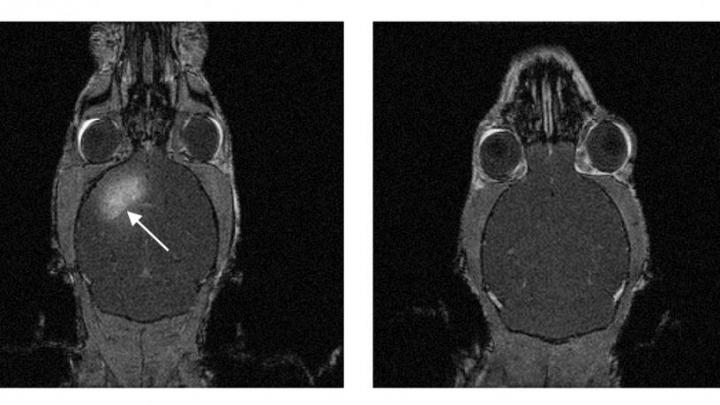
Credit: Leong Lab/Columbia Engineering
New York, NY—October 21, 2019—A team led by biomedical engineer Kam Leong has been awarded $3.2 million by the National Institutes of Health (NIH) to use focused ultrasound to achieve gene editing in the brain.
The grant comes as part of NIH’s larger Somatic Cell Genome Editing (SCGE) Program, an $89 million initiative designed to advance the field of genome editing.
According to Leong, Columbia’s Samuel Y. Sheng professor of biomedical engineering, gene editing may offer a new therapeutic strategy to tackle many neurodegenerative disorders that remain untreatable. Current methodologies of delivering CRISPR-based gene editing elements to the brain are highly inefficient; Leong’s group proposes to develop an efficient, noninvasive alternative.
“We are excited to be a part of this NIH consortium and are grateful for the opportunity to realize the tremendous potential of gene editing in the brain. We are hopeful that we will find ourselves one step closer to ‘treating the untreatable’ in neurodegenerative diseases,” says Leong.
This work fits into the trajectory of Leong’s research through his Nanotherapeutics & Stem Cell Engineering Lab, which focuses on nonviral gene editing, among other core research areas.
Yeh-Hsing (Sima) Lao, a postdoctoral research scientist in Leong’s lab and the lead scientist on the project, is working in close collaboration with Leong, and co-PI and Robert and Margaret Hariri Professor of biomedical engineering, Elisa Konofagou. “We are very excited and deeply honored by the opportunity to open the barrier for the gene editing vectors developed by Kam’s group so that they are efficient enough to treat devastating diseases such as Alzheimer’s,” says Konofagou.
“Delivery is the key to enable effective gene editing; however, this remains a challenge to the field,” says lead scientist Sima Lao. “We look forward to the opportunity to work on this project with Professor Konofagou, the foremost leader in the focused-ultrasound field, and with two experts in CRISPR technology and Alzheimer’s disease, Professors Alejandro Chavez and Karen Duff. We hope that by integrating the expertise from the four laboratories, we can achieve our goal of noninvasive, highly efficient, and specific gene editing in the brain. Eventually, we hope to use this approach to tackle the intractable neuronal disorders.”
The NIH project is designed to support the development and evaluation of innovative approaches to deliver genome editing machinery into targeted somatic cells, with the ultimate goal of enabling genome editing therapeutics to treat human disease. Leong and his team will design nanocarriers with targeting characteristics to achieve efficient gene editing in various tissues. Efficient in vivo delivery remains a significant challenge to the realization of the clinical potential of gene editing, and the team will evaluate in vivo efficacy of a gene editing system that targets three separate genes correlated with cardio-protective point mutations.
>
Columbia Engineering
Columbia Engineering, based in New York City, is one of the top engineering schools in the U.S. and one of the oldest in the nation. Also known as The Fu Foundation School of Engineering and Applied Science, the School expands knowledge and advances technology through the pioneering research of its more than 220 faculty, while educating undergraduate and graduate students in a collaborative environment to become leaders informed by a firm foundation in engineering. The School’s faculty are at the center of the University’s cross-disciplinary research, contributing to the Data Science Institute, Earth Institute, Zuckerman Mind Brain Behavior Institute, Precision Medicine Initiative, and the Columbia Nano Initiative. Guided by its strategic vision, “Columbia Engineering for Humanity,” the School aims to translate ideas into innovations that foster a sustainable, healthy, secure, connected, and creative humanity.
Media Contact
Holly Evarts
[email protected]
212-854-3206
Original Source
http://bme.