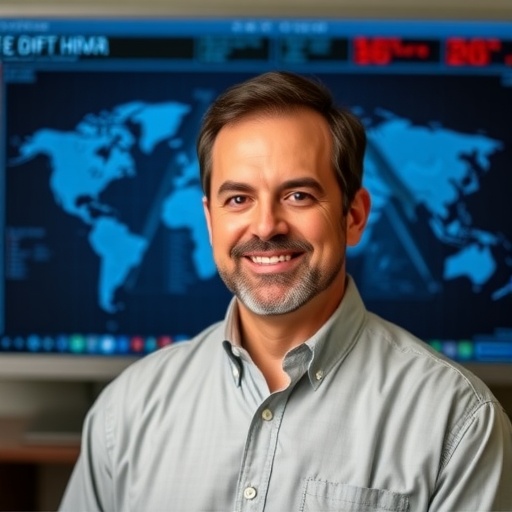
In the evolving landscape of psychological science, few figures have captured as much attention and respect as Professor Philip Hyland of Maynooth University, Ireland. His groundbreaking work on Complex Posttraumatic Stress Disorder (CPTSD) has not only reshaped diagnostic frameworks but has also challenged entrenched clinical practices, effectively shifting the paradigm toward a more patient-centered approach in trauma assessment and treatment. This pivotal transformation in understanding and treating trauma marks a significant milestone in the psychiatric and psychological disciplines, underscoring Hyland’s profound impact on mental health science globally.
Hyland’s scientific journey is deeply rooted in his personal experiences with anxiety during his formative years. Unlike many researchers who enter the field purely through academic interest, Hyland’s motivation originated from an intense desire to unravel the complexities behind his own psychological distress. This autobiographical impetus lends a distinctive authenticity and urgency to his research, as he integrates personal insights with rigorous scientific methodologies. Such a fusion of experience and empirical inquiry is rare and has proven critical in propelling the field forward.
One of Hyland’s most controversial yet influential stances is his advocacy for prioritizing self-report symptom measures over clinician evaluations when diagnosing psychological disorders. For decades, psychiatric assessments have heavily relied on clinicians’ interpretations, often sidelining the subjective experiences reported by patients themselves. Hyland’s position, regarded as radical by some, confronts this orthodoxy head-on. He argues, supported by empirical validation, that individuals’ self-accounts provide a more authentic and reliable window into their mental states. This approach not only empowers patients but also enhances diagnostic accuracy, fostering more tailored and effective interventions.
.adsslot_71FOTbVsWE{ width:728px !important; height:90px !important; }
@media (max-width:1199px) { .adsslot_71FOTbVsWE{ width:468px !important; height:60px !important; } }
@media (max-width:767px) { .adsslot_71FOTbVsWE{ width:320px !important; height:50px !important; } }
ADVERTISEMENT
Central to Hyland’s contributions is the development of the International Trauma Questionnaire (ITQ), a psychometric instrument designed explicitly to gauge symptoms of PTSD and CPTSD based on patient self-report. The ITQ represents a synthesis of sophisticated statistical modeling and clinical insight, effectively operationalizing the World Health Organization’s updated diagnostic criteria with unprecedented precision. Its global adoption underscores the tool’s robustness and the clinical community’s growing acceptance of Hyland’s patient-centric assessment philosophy.
Expanding beyond trauma, Hyland has ventured into the relatively under-explored domain of prolonged grief disorder, particularly as it relates to bereavement after the loss of pets. Contemporary diagnostic manuals largely omit such scenarios, inadvertently neglecting a significant facet of human suffering. Hyland’s research here is notable for its empirical rigor, demonstrating through methodologically sound studies that profound, extended grief responses to pet loss share phenomenological and neurobiological similarities with other recognized grief disorders. This work not only broadens the conceptual boundaries of grief but also calls for updates in clinical guidelines and diagnostic frameworks, advocating for more inclusive and compassionate mental health care.
In addition to his research on trauma and grief, Hyland has co-led Ireland’s most extensive sexual violence prevalence study since 2002. This investigation is emblematic of his commitment to leveraging science as a tool for societal betterment. Addressing sexual violence—an issue fraught with stigma and underreporting—through a rigorous epidemiological lens demands exceptional methodological precision and ethical sensitivity. Hyland’s leadership in this domain reflects his dedication to applying scientific rigor beyond traditional laboratory settings, aiming to inform public health policy and interventions that can tangibly improve lives.
Throughout the interview, Hyland attributes much of his academic success to fortuitous circumstances and mentorship, notably his collaboration with Professor Mark Shevlin. Yet, beneath this humility lies a legacy of impeccable scholarship, evident in his extensive publication record and nearly 20,000 citations. His roles as Deputy Statistical Editor for the Journal of Traumatic Stress and Chair of the International Trauma Consortium further cement his standing as an authoritative figure in trauma research, shaping both discourse and practice worldwide.
Hyland’s critique of contemporary scientific culture, particularly his concerns about the encroachment of identity politics and activism on objective research, adds a nuanced layer to his profile. He underscores the imperative for maintaining scientific integrity and public trust, advocating for a balanced skepticism that neither blindly accepts nor cynically dismisses scientific findings. In an era rife with misinformation and polarized debates, his call for fidelity to the scientific method resonates profoundly.
Looking to the future, Hyland’s research trajectory involves refining theoretical models of Complex PTSD and pioneering advanced measurement techniques. These innovations promise to revolutionize how psychological symptoms are quantified and understood on a global scale, potentially enabling earlier diagnosis and more effective intervention strategies. His work epitomizes the intersection of personal experience and cutting-edge science, serving as an inspiring blueprint for researchers navigating complex, multifaceted psychopathologies.
The interview with Professor Hyland, published in Brain Medicine—an open-access journal committed to bridging neuroscience and clinical practice—offers unparalleled insight into the mind of a scholar who seamlessly integrates personal narrative with scientific innovation. This dialogue not only illuminates the human dimension of trauma research but also highlights the transformative potential of evidence-based psychological assessment tools.
Subject of Research: People
Article Title: Philip Hyland: Human responses to extreme stress and trauma
News Publication Date: 5 August 2025
Web References: https://doi.org/10.61373/bm025k.0095
Image Credits: Philip Hyland, PhD, Maynooth University, Ireland
Keywords: Complex PTSD, trauma assessment, self-report measures, International Trauma Questionnaire, prolonged grief disorder, psychological diagnostics, trauma research, mental health, psychiatric assessment
Tags: clinician evaluations in psychiatryComplex Posttraumatic Stress DisorderCPTSD diagnosisevolution in mental health practicesmental health impact on societypatient-centered trauma assessmentpersonal experiences in researchProfessor Philip Hylandpsychological science innovationsself-report symptom measurestrauma psychology advancementstrauma treatment methodologies