


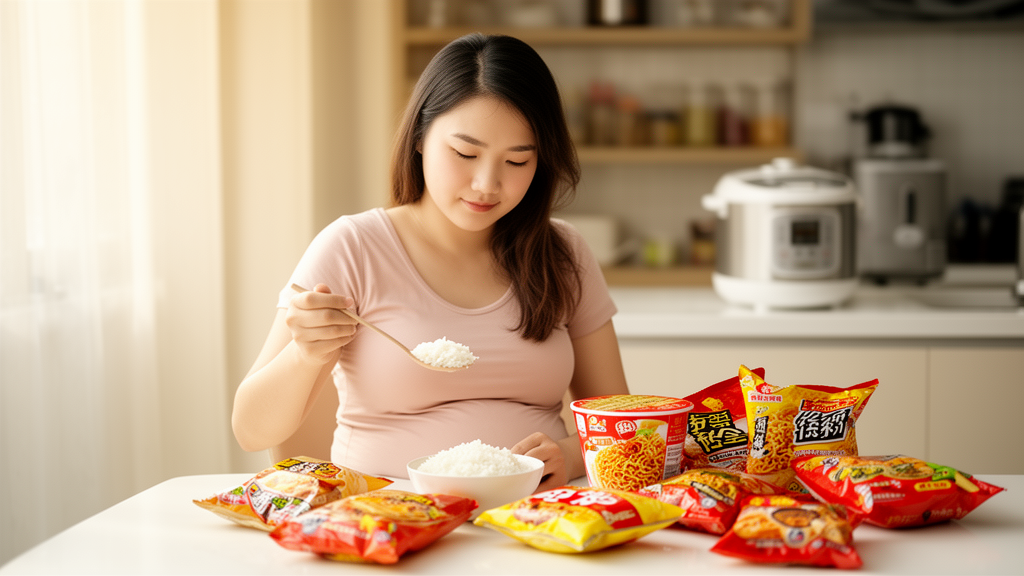
A diet heavy on sweetened drinks, alcohol, desserts, processed meat and convenience foods was linked to gestational diabetes in a matched study of Miao pregnant women in southwest China, and the same eating pattern tracked with lower blood levels of two HDL-related proteins, apolipoprotein M and serum amyloid A-4. The study, published in Frontiers in Nutrition on 28 October 2026, integrated dietary pattern analysis with serum proteomics in 78 women recruited at three tertiary hospitals in Kaili City, Guizhou Province, between March 2023 and January 2025.
The research team, led by Wansong Zhang and Chenyu Liu with corresponding author Yi Liang, designed the work as a 1:1 matched case-control study. Thirty-nine women with newly diagnosed gestational diabetes mellitus were matched to 39 women with normal glucose tolerance on age, gestational age and body mass index. All participants were at least 18 years old, carried singleton pregnancies, self-identified as Miao ethnicity, and had lived in Qiandongnan Prefecture for at least a year. Women with pregestational diabetes, prior gestational diabetes, severe liver or kidney disease, malignant tumors, autoimmune disorders or long-term use of glucose-affecting medications such as glucocorticoids were excluded.
Gestational diabetes was diagnosed between 24 and 28 gestational weeks using a standard 2-hour 75-gram oral glucose tolerance test and the 2011 diagnostic criteria issued by the Ministry of Health of China: fasting serum glucose at or above 5.1 mmol/L, 1-hour serum glucose at or above 10.0 mmol/L, or 2-hour serum glucose at or above 8.5 mmol/L, with any single criterion sufficient. Blood samples were collected in the morning before the OGTT results were known, allowed to stand for an hour, centrifuged at 3000 rpm for 10 minutes at 4 degrees Celsius, and stored at minus 80 degrees Celsius until analysis.
Dietary intake was assessed with a food frequency questionnaire developed and validated specifically for Miao pregnant women, administered on the same day as blood sampling at two antenatal windows, 10 to 12 weeks and 24 to 28 weeks of gestation. Because the proteomics subset was small, dietary patterns were derived by principal component analysis from a larger cohort of 705 pregnant women, and the resulting factor loadings were applied to the 78 participants in the matched sample. Two patterns emerged. A processed dietary pattern loaded heavily on beverages (0.537), alcoholic beverages (0.454), dairy desserts (0.439), processed meats (0.395), refined grains (0.360), convenience foods (0.354), red meat (0.328) and snacks (0.311), explaining 8.4 percent of variance. A balanced dietary pattern, explaining 11.54 percent of variance, was defined by edible fungi and algae, fish and seafood, whole grains, root vegetables, eggs, dairy products, cruciferous vegetables and fruits.
In conditional logistic regression stratified by matched-pair identifier, higher adherence to the processed dietary pattern was associated with higher odds of gestational diabetes. Each 1-standard-deviation increment in the Z-standardized pattern score carried an odds ratio of 2.14 in the crude model, 2.06 after adjustment for total energy intake, 2.33 (95 percent confidence interval 1.08 to 5.04) in the fully adjusted model that also accounted for gravidity and parity, and 2.55 (95 percent CI 1.25 to 5.23) when both dietary patterns were entered simultaneously. The balanced dietary pattern showed no statistically significant association with gestational diabetes in any model; its point estimates trended below one after energy and full adjustment, but every confidence interval crossed the null. The authors cautioned that the absence of a significant protective association should not be read as evidence of no biological benefit, noting that modest effect sizes, limited exposure contrast and restricted statistical power in a 39-pair design make weaker signals difficult to detect.
Serum proteomics was performed with data-independent acquisition mass spectrometry on an Orbitrap Eclipse instrument after magnetic-bead enrichment of low-abundance proteins. Of 1,658 proteins initially identified, 416 survived filtering for missing values and 344 met quality-control criteria. Exploratory differential screening using a fold-change threshold of 1.2 and nominal p at or below 0.05 flagged 34 candidate differentially expressed proteins, 11 upregulated and 23 downregulated, enriched in lipid metabolism, immune responses and cytoskeletal organization, with GO terms pointing to extracellular exosomes and lipoprotein particles including HDL, VLDL and LDL. Only four of the 34 candidates, APOL1, PRSS1, TCEAL6 and SAA4, retained q values below 0.05 after Benjamini-Hochberg correction, and the authors emphasized that the candidates are hypothesis-generating rather than definitive biomarkers. A protein-protein interaction network revealed three modules centered on APOE-linked lipid metabolism, LTF/LYZ immune defense and keratin-associated structural proteins, and CytoHubba ranking identified ten hub proteins split between lipid and inflammation-related members (APOM, APOL1, APOE, SAA4, TTR and ORM2) and structural keratins.
Linear mixed-effects models with matched pair as a random intercept, adjusted for total energy intake, gravidity and parity, tested whether dietary pattern scores tracked with candidate protein levels. The processed dietary pattern was inversely associated with APOM (beta = -0.308, 95 percent CI -0.595 to -0.020, p = 0.036) and showed a borderline inverse association with SAA4 (beta = -0.285, 95 percent CI -0.573 to 0.003, p = 0.052), which the authors treated as suggestive rather than statistically significant. Inverse but non-significant trends appeared for APOL1 and APOE, and positive non-significant trends for ORM2 and TTR. The balanced pattern was not significantly associated with any candidate protein. APOM is an HDL-associated apolipoprotein and a major carrier of sphingosine-1-phosphate, a signaling lipid implicated in inflammation, cholesterol metabolism and endothelial barrier integrity. SAA4, unlike the inducible acute-phase proteins SAA1 and SAA2, is constitutively expressed and mostly bound to HDL, so the authors argued it should not be read as a simple marker of systemic inflammation; the association may instead reflect changes in HDL particle composition or remodeling, an interpretation they acknowledged remains speculative because HDL subclasses and SAA4 partitioning were not directly measured.
To guard against data leakage from feature selection, the team ran a leave-one-matched-pair-out nested LASSO analysis using all 344 quality-controlled proteins without prior differential-expression filtering. In each of 39 outer iterations, one complete matched pair was held out while penalty tuning happened entirely within the training pairs, and predictions were pooled to estimate internal discrimination. The procedure yielded an AUC of 0.953 (95 percent CI 0.894 to 0.992), with sensitivity analyses of 0.916 after removing contaminant and technical proteins and 0.918 after further removing immunoglobulin variable-region proteins. A permutation test of 1,000 matched-pair label shuffles produced no AUC exceeding the observed value, an empirical p of 0.001. Six proteins, APOL1, GPRC6A, PRSS1, RFC1, SAA4 and TCEAL6, were selected in all 39 iterations, while 309 of the 344 proteins were never chosen, and selection frequencies varied substantially across the rest. Critically, the authors disclosed that the upstream quality-control correction and normalization incorporated GDM group information before cross-validation, so the internal AUC cannot be considered free of preprocessing-related optimism and should be interpreted as exploratory internal discrimination rather than validated predictive performance.
APOM itself was never selected in any of the 39 LASSO iterations, yet it was retained for the integrative analysis on hypothesis-driven grounds: its significant association with the processed dietary pattern, its status as a PPI hub and its biological relevance. The authors explicitly flagged this as a subjective prioritization that may introduce bias. In exploratory joint models, a core protein score built from risk-direction-coded Z-scores of APOM and SAA4 remained associated with gestational diabetes across all matched models, with odds ratios of 5.72, 7.74 and 8.30 in the processed-pattern models as adjustments accumulated, while the dietary pattern score itself lost significance after adjustment. In unconditional logistic models, the apparent C-index rose from 0.755 with proteins alone to 0.801 with the dietary pattern added, and bootstrap-corrected values were 0.739 and 0.777. The authors stressed these are proof-of-concept estimates, not a clinically applicable prediction model, and that the joint associations do not establish that the proteins are causally closer to disease than diet.
The study carries clear limitations. The sample of 78 women limits statistical power for high-dimensional proteomics, physical activity was not collected and could not be adjusted for, and education, occupation and income were described but excluded from primary models because of the small number of pairs, leaving residual confounding possible. The case-control design cannot establish temporal ordering between diet, proteins and disease, and the first-trimester findings, 15 differentially expressed proteins concentrated along an inflammation-complement-lipid axis with SAA4 showing an exploratory AUC of 0.965, were not cross-validated. Gestational diabetes affects roughly 14 percent of pregnancies globally by IADPSG criteria and raises the long-term risk of type 2 diabetes about tenfold in mothers, which is why modifiable dietary targets attract attention. The authors concluded that larger, independent and prospective cohorts are needed to determine whether the processed-diet signal and the APOM and SAA4 associations replicate beyond this population.
Subject of Research: Dietary patterns, serum proteomic signatures and gestational diabetes risk in Miao pregnant women
Article Title: A processed dietary pattern is associated with gestational diabetes mellitus and altered APOM and SAA4 proteomic signatures in Miao women
Article References: Zhang, W., Liu, C., Sun, Y., Zhao, D., Shen, L., Ni, X., Qiao, T., Zong, Y., & Liang, Y. (2026). A processed dietary pattern is associated with gestational diabetes mellitus and altered APOM and SAA4 proteomic signatures in Miao women. Frontiers in Nutrition, 13, Article 1933838. https://doi.org/10.3389/fnut.2026.1933838
Image Credits: AI Generated
DOI: 10.3389/fnut.2026.1933838
Keywords: gestational diabetes, dietary patterns, processed foods, proteomics, APOM, SAA4, HDL, Miao women, case-control study, LASSO, biomarkers, pregnancy
News Source: Daisy Hatcher. (October 28, 2026). Processed diets tied to gestational diabetes and altered blood proteins in Miao women. Scienmag.



