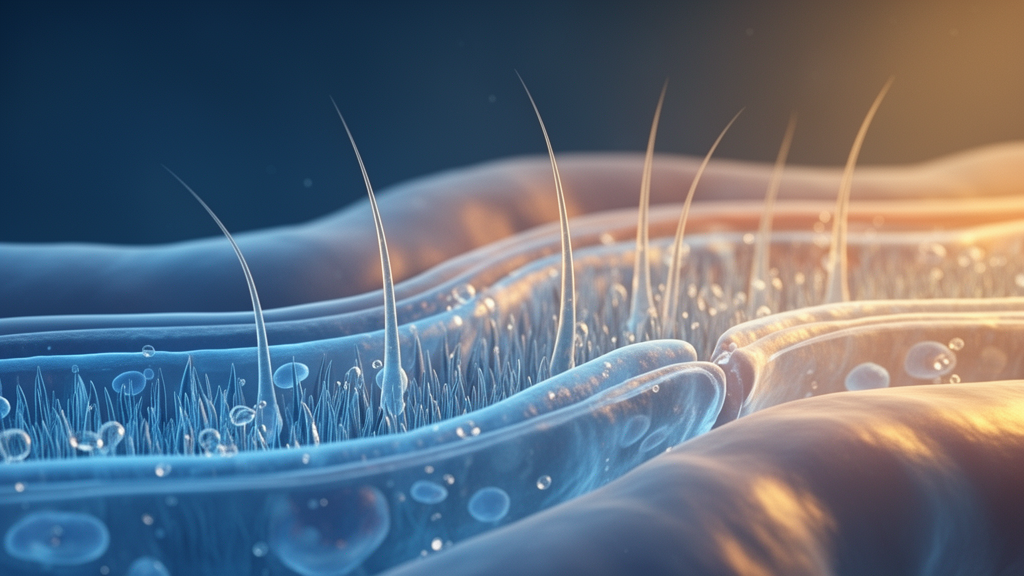
Primary cilia on human airway smooth muscle cells and surrounding mesenchymal populations undergo a steady, progressive decline throughout fetal lung organogenesis, transitioning into distinct regional alterations during the progression of chronic obstructive pulmonary disease in adults. Detailed in a brief research report published in Frontiers in Cell and Developmental Biology, the investigation tracks the presence and morphology of these solitary, non-motile organelles from early embryonic maturation into mature lung tissue and chronic respiratory illness. Primary cilia serve as specialized sensory hubs coordinating key morphogenetic cascades, including Hedgehog, Wnt, and Notch pathways, which direct cellular migration, proliferation, and differentiation. While chronic obstructive pulmonary disease has long been recognized as a disorder linked to tobacco smoke inhalation and cumulative environmental exposures, emerging epidemiological and genetic investigations suggest that its origins may trace back to aberrant lung development and impaired airway architecture established early in life. The researchers sought to systematically chart primary ciliogenesis across normal fetal development, adult homeostasis, and stratified disease stages to clarify how developmental cellular mechanisms interface with adult tissue remodeling.
To evaluate embryonic dynamics, the research team analyzed fifteen de-identified human fetal lung specimens spanning gestational ages from ten to twenty-four weeks, representing male and female donors across mid pseudoglandular, late pseudoglandular, and mid canalicular stages of development. Using immunofluorescence staining of formalin-fixed paraffin-embedded sections, the investigators detected primary cilia using an antibody directed against ARL13B, a ubiquitous intraciliary small guanosine triphosphatase that incorporates into the axoneme early in ciliogenesis prior to stabilizing microtubule modifications. Smooth muscle cells were simultaneously delineated through labeling with alpha-smooth muscle actin, designated ACTA2, enabling clear segregation between differentiated smooth muscle bundles and the remaining ACTA2-negative mesenchymal cell pool. Quantitative microscopic imaging across ten fields per tissue section uncovered an inverse correlation between gestational age and ciliary abundance within mesenchymal compartments. Among airway smooth muscle cells, the percentage of primary ciliated cells stood at 24.63 percent at ten to twelve weeks of gestation, fell to 14.76 percent between thirteen and sixteen weeks, and declined sharply to 5.84 percent between seventeen and twenty-four weeks. Statistical evaluation demonstrated a robust negative linear relationship, characterized by a correlation coefficient of negative 0.8407 and high statistical significance.
A parallel pattern of ciliary downregulation emerged within the general ACTA2-negative mesenchymal population across the identical gestational window. The proportion of ciliated cells among these mesenchymal elements was measured at 40.20 percent during the ten to twelve week mid pseudoglandular interval, registered 39.21 percent at thirteen to sixteen weeks during late pseudoglandular development, and dropped to 20.89 percent in the mid canalicular window between seventeen and twenty-four weeks of gestation. This trajectory yielded a significant inverse correlation of negative 0.7160. By contrast, the epithelial compartment exhibited no statistically significant developmental correlation with gestational age over the same period. The epithelial primary ciliated cell frequency was recorded at 12.98 percent at ten to twelve weeks, 22.22 percent at thirteen to sixteen weeks, and 21.59 percent at seventeen to twenty-four weeks, producing a non-significant correlation coefficient of 0.4055. These observations indicate that the progressive loss of sensory organelles during human pulmonary organogenesis is specifically confined to mesenchymal and smooth muscle lineages, reflecting a maturation shift from active mesenchymal proliferation toward terminal structural differentiation.
Building upon the developmental observations, the authors evaluated adult pulmonary tissue obtained from prospective surgical resections performed at the University Hospital of Reims in France. The adult cohort comprised twenty patients scheduled for lung resection for cancer, including eight individuals without chronic obstructive pulmonary disease, seven individuals diagnosed with mild disease classified as Global Initiative for Chronic Obstructive Lung Disease stage one, and five patients with moderate disease categorized as stage two. The authors excluded individuals presenting with alternative chronic respiratory conditions, such as asthma, cystic fibrosis, bronchiectasis, or pulmonary fibrosis. Chronic obstructive pulmonary disease was defined clinically by a post-bronchodilator ratio of forced expiratory volume in one second over forced vital capacity below 0.70. Tissue sections were histologically divided into large conducting airways, defined as bronchi by the presence of pseudostratified epithelium, submucosal secretory glands, and cartilage plates, and small peripheral conducting airways, classified as bronchioles based on the absence of both glands and cartilage.
Within adult bronchial airway smooth muscle cells, the proportion of ciliated cells demonstrated pronounced, stage-dependent elevations in diseased airways. Airway smooth muscle cells in moderate chronic obstructive pulmonary disease exhibited a mean ciliation rate of 11.46 percent with a standard error of 0.63 percent, representing a statistically significant 22 percent increase compared to the 9.39 percent mean observed in non-diseased control subjects. When compared directly to patients with mild chronic obstructive pulmonary disease, whose bronchial smooth muscle ciliation averaged 9.22 percent, moderate patients displayed a significant 24 percent relative increase. However, this expansion in organelle presence did not reflect a change in the physical dimensions of the structures themselves, as measurements of average cilium length across at least twenty-five identifiable organelles per acquisition revealed no significant differences among non-diseased controls, mild disease, and moderate disease cohorts. The structural dimensions remained uniform despite marked differences in the total frequency of ciliated smooth muscle cells.
In the small peripheral conducting airways, primary cilia in airway smooth muscle cells displayed a strikingly different, divergent pattern. In bronchioles, smooth muscle cells from mild chronic obstructive pulmonary disease patients exhibited a 28.5 percent reduction in ciliary frequency compared with non-diseased individuals, recording 6.57 percent versus 9.19 percent. Yet, as disease progressed to the moderate stage, the proportion of ciliated bronchiolar smooth muscle cells rebounded significantly to 9.03 percent, representing an increase over mild cases that mirrored the heightened ciliation seen in proximal bronchi. Manual ImageJ tracing of organelle length confirmed that primary cilium length in bronchioles remained unchanged across all patient subsets. Thus, while advanced disease stages show re-emergence of ciliary structures, the initial phases of airway obstruction in small peripheral conduits are characterized by an absolute drop in smooth muscle sensory organelles.
The study subsequently extended these phenotypic evaluations to interstitial fibroblasts, identified in adult lung sections through positive immunofluorescent labeling for vimentin. Fibroblasts mirrored the spatial and stage-specific dynamics observed in smooth muscle cells. In the bronchi, the percentage of ciliated fibroblasts rose from 8.38 percent in non-diseased individuals to 12.98 percent in patients with moderate chronic obstructive pulmonary disease, marking a 55 percent relative elevation. Furthermore, fibroblasts from moderate patients demonstrated significantly higher ciliary numbers than those from mild patients, who averaged 5.46 percent ciliation. In the bronchioles, fibroblasts from mild chronic obstructive pulmonary disease subjects displayed a significant 35 percent reduction relative to non-diseased controls, dropping from 6.00 percent down to 3.91 percent. As observed in smooth muscle, moderate patients possessed significantly more ciliated bronchiolar fibroblasts, averaging 6.90 percent, than mild patients. Organelle length measurements across bronchial and bronchiolar fibroblasts remained completely uniform across all three clinical classifications, confirming that alterations govern ciliogenesis frequency rather than axonemal elongation.
To assess whether vascular elements shared these morphological transformations, the team examined endothelial cells using monoclonal antibody labeling against CD31. In bronchial vascular structures, ciliated endothelial cell frequencies measured 6.75 percent in non-diseased controls, 6.67 percent in mild chronic obstructive pulmonary disease, and 7.90 percent in moderate chronic obstructive pulmonary disease, showing no statistically significant variation across groups. Similarly, bronchiolar endothelial cells demonstrated ciliation levels of 4.83 percent in controls, 3.71 percent in mild disease, and 6.24 percent in moderate disease, differences that did not reach statistical significance. Endothelial cilium length also exhibited complete preservation across groups in both anatomical compartments. Furthermore, correlation analyses between endothelial ciliation percentages and clinical spirometric parameters or cumulative smoking exposure yielded no significant associations, indicating that ciliary remodeling in obstructive lung disease is restricted to mesenchymal lineages rather than the vascular endothelium.
Clinical correlation analyses underscored functional relationships between mesenchymal ciliation patterns and physiological indices of pulmonary function and smoking exposure. In the bronchioles of patients with chronic obstructive pulmonary disease, smooth muscle ciliation showed a significant positive correlation with cumulative smoking history, quantified in cigarette pack-years, yielding a correlation coefficient of 0.6299. Crucially, bronchiolar smooth muscle ciliary frequency demonstrated a significant inverse correlation with the post-bronchodilator ratio of forced expiratory volume in one second to forced vital capacity, producing a correlation coefficient of negative 0.69. A corresponding inverse relationship emerged among bronchial fibroblasts, where ciliary percentage correlated inversely with the forced expiratory volume ratio at negative 0.66. Because lower ratios reflect worsening physiological airflow obstruction, these findings demonstrate that elevated ciliation within mesenchymal cells is directly associated with more severe functional impairment, whereas no significant correlations were detected with patient age or absolute forced expiratory volume alone.
In discussing the biological mechanisms underpinning these observations, the authors highlighted that primary cilia are essential for Hedgehog signal transduction, an axis that is tightly modulated during pulmonary organogenesis and adult tissue maintenance. During normal lung maturation, primary cilia decline alongside an upregulation of Sonic Hedgehog and its pathway inhibitor HHIP, whereas downstream transcription factors GLI1, GLI2, GLI3, and the receptor PTCH1 decrease. Because Hedgehog signaling relies strictly on primary cilia for signal transduction, the developmental loss of cilia likely restricts GLI-mediated signaling cascades as mesenchymal cells assume non-proliferative, specialized fates. The re-emergence of primary cilia in the bronchi of moderate chronic obstructive pulmonary disease patients may therefore represent a pathological attempt by smooth muscle and fibroblast lineages to revert to an immature, progenitor-like repair state under sustained inflammatory stress. In larger airways exposed to heavy inflammatory stimuli, heightened ciliation may facilitate adaptive repair and extracellular matrix production, which ultimately contributes to airway wall thickening and progressive remodeling.
Conversely, the pronounced depletion of primary cilia in the bronchioles of mild chronic obstructive pulmonary disease patients aligns with established histopathological evidence showing substantial early destruction and loss of terminal and transitional bronchioles prior to overt clinical disability. Early inflammatory injury in peripheral airways may disrupt primary ciliogenesis or trigger organelle resorption before compensatory fibrotic remodeling processes take hold, providing a cellular hallmark of early pathological damage. The authors noted several limitations inherent to their study design, including a relatively modest sample size of fifteen fetal specimens and twenty adult patients, which warrants validation in expanded prospective cohorts. Additionally, the microscopic identification relied exclusively on ARL13B immunoreactivity, without evaluating post-translational tubulin modifications such as acetylation or glutamylation that determine ciliary mechanical stability and functional competence. The authors also acknowledged that anatomical sampling variations across tissue blocks could influence regional ciliary quantifications, emphasizing that future studies employing pharmacological or genetic modulation of ciliary proteins are required to establish direct causal links.
Subject of Research: Dynamics of primary cilia in human lung development and chronic obstructive pulmonary disease
Article Title: Dynamics of primary ciliated cells in human lung development, adult homeostasis, and COPD
Article References: Hatoum, S., Belgacemi, R., El Alam, I., Lalun, N., Glass, I. A., Polette, M., Danopoulos, S., Al Alam, D., & Dormoy, V. (2026). Dynamics of primary ciliated cells in human lung development, adult homeostasis, and COPD. Frontiers in Cell and Developmental Biology, 14, Article 1987291. https://doi.org/10.3389/fcell.2026.1987291
Image Credits: AI Generated
DOI: 10.3389/fcell.2026.1987291
Keywords: primary cilia, lung development, chronic obstructive pulmonary disease, airway smooth muscle cells, fibroblasts, ARL13B, organogenesis, bronchi, bronchioles, pulmonary homeostasis, Hedgehog signaling, airflow obstruction, respiratory disease, mesenchymal cells, spirometry, epithelial remodeling, fetal lung, endothelial cells
News Source: Barbara Leach. (November 19, 2026). Primary Cilia Decline During Lung Development and Alter Across COPD Stages. Scienmag.