• HOME
  • NEWS
  • EXPLORE
    • CAREER
      • Companies
      • Jobs
    • EVENTS
    • iGEM
      • News
      • Team
    • PHOTOS
    • VIDEO
    • WIKI
  • BLOG
  • COMMUNITY
    • FACEBOOK
    • INSTAGRAM
    • TWITTER
Saturday, February 7, 2026
BIOENGINEER.ORG
No Result
View All Result
  • Login
  • HOME
  • NEWS
  • EXPLORE
    • CAREER
      • Companies
      • Jobs
        • Lecturer
        • PhD Studentship
        • Postdoc
        • Research Assistant
    • EVENTS
    • iGEM
      • News
      • Team
    • PHOTOS
    • VIDEO
    • WIKI
  • BLOG
  • COMMUNITY
    • FACEBOOK
    • INSTAGRAM
    • TWITTER
  • HOME
  • NEWS
  • EXPLORE
    • CAREER
      • Companies
      • Jobs
        • Lecturer
        • PhD Studentship
        • Postdoc
        • Research Assistant
    • EVENTS
    • iGEM
      • News
      • Team
    • PHOTOS
    • VIDEO
    • WIKI
  • BLOG
  • COMMUNITY
    • FACEBOOK
    • INSTAGRAM
    • TWITTER
No Result
View All Result
Bioengineer.org
No Result
View All Result
Home NEWS Science News

Preventing lead spread

Bioengineer by Bioengineer
March 16, 2017
in Science News
Reading Time: 2 mins read
0
Share on FacebookShare on TwitterShare on LinkedinShare on RedditShare on Telegram
IMAGE

Credit: Courtesy: Biswas Lab

While lead pipes were banned decades ago, they still supply millions of American households daily with drinking water amid risks of corrosion and leaching that can cause developmental and neurological effects in young children.

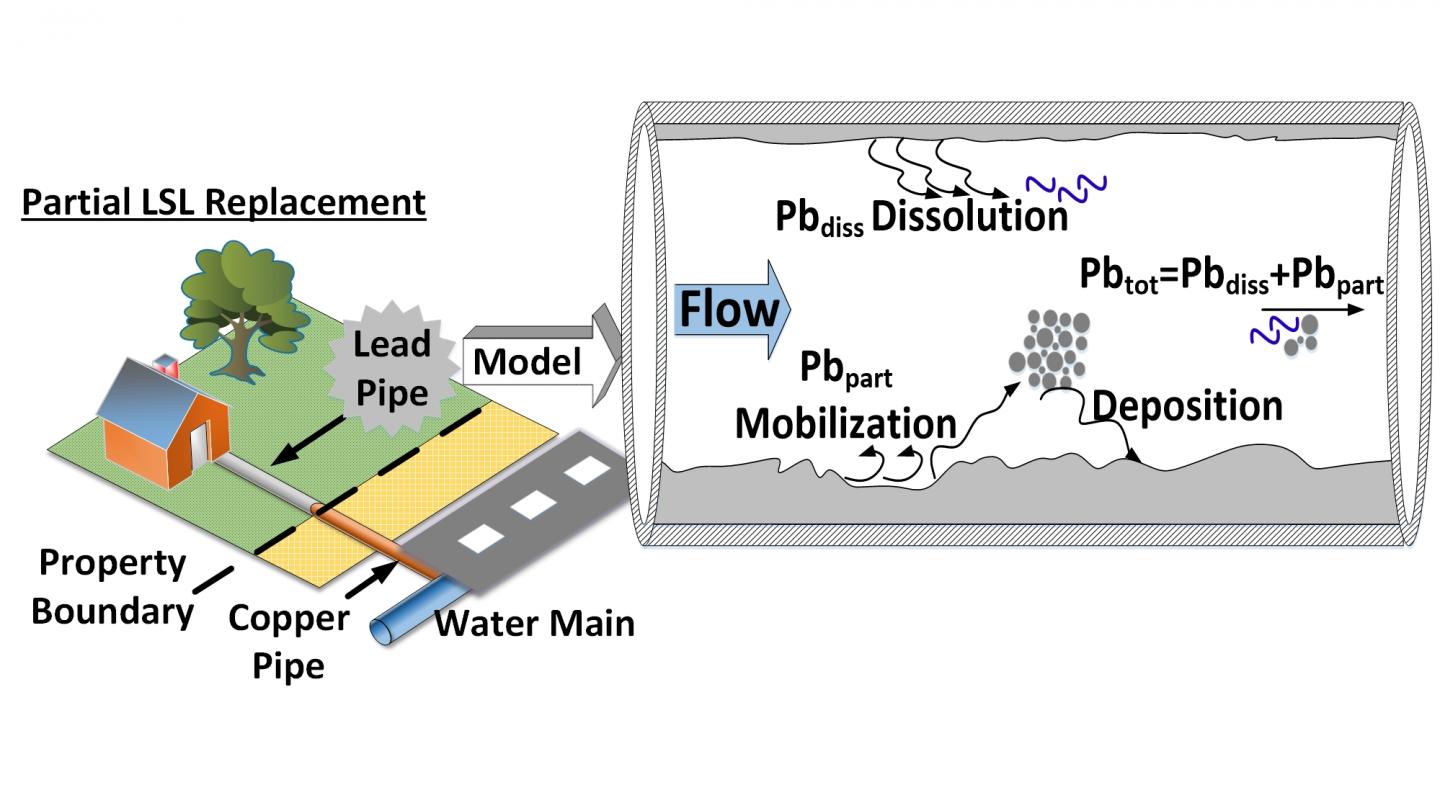
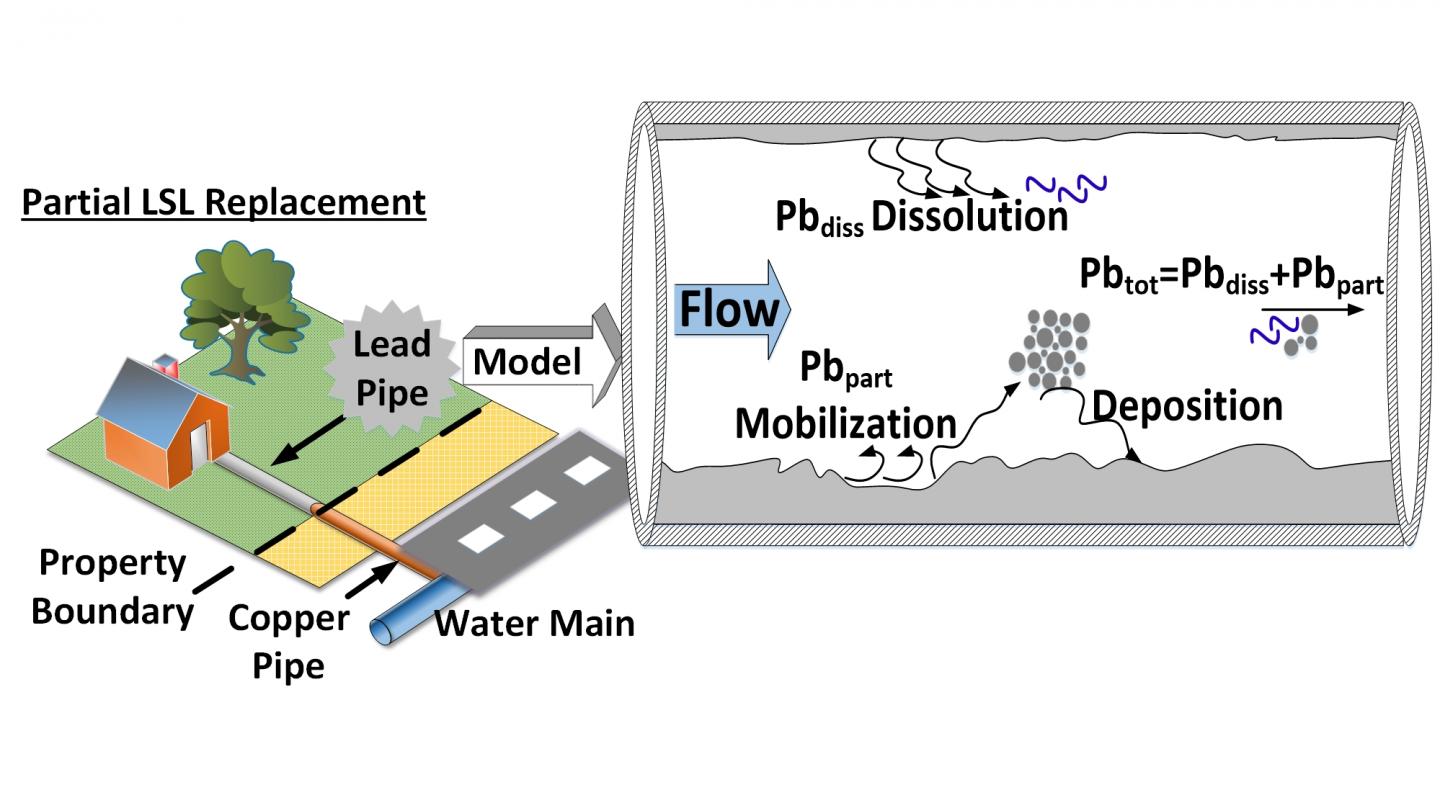
One common abatement: Dig up old lead lines and replace a portion of them with another metal, such as copper. However, this technique can dislodge lead particulates and release them into the water supply. Furthermore, partially replacing the lead pipe connection instead of entirely exchanging it is problematic.

A team of engineers at Washington University in St. Louis has developed a new way to model and track where lead particles might be transported during the partial-replacement process, in an effort to keep the water supply safer.

"We all know lead is not safe, it needs to go," said Assistant Vice Chancellor of International Programs Pratim Biswas, the Lucy and Stanley Lopata Professor and the chair of Energy, Environmental and Chemical Engineering at the School of Engineering & Applied Science. "This is the first comprehensive model that works as a tool to help drinking-water utility companies and others to predict the outcome of an action. If they have the necessary information of a potential action, they can run this model and it can advise them on how best to proceed with a pipe replacement to ensure there are no adverse effects."

In the research, recently accepted by the journal Environmental Science & Technology, Biswas and graduate research assistant Ahmed A. Abokifa present their approach, which predicts how far lead particles and dissolved species might travel after they've been disturbed. Utilizing water-quality modeling they had previously developed for the Environmental Protection Agency, Biswas and his team built a new computational model to predict lead particulate release, taking into account factors such as pipe age and dimensions, water-use patterns, water chemistry and previous pipe disturbances.

After running a number of simulations testing their predictions, Biswas and his team are ready to make their model widely available to utility companies and even consumers. Biswas said the companies can input their individual system's information and receive recommendations so partial-pipe replacement can proceed without compromising water quality. Abokifa and Biswas have developed several other drinking-water distribution system models to accurately predict disinfectant concentrations in the pipe network, especially dead-end systems.

"We'll work to make these accurate models readily available, so utilities can download and use them," he added. "The predictions of the model will guide them on best practices to ensure the safety of the public at large."

###

Biswas may be reached for interviews at [email protected].

Media Contact

Erika Ebsworth-Goold
[email protected]
314-935-2914
@WUSTLnews

Home

############

Story Source: Materials provided by Scienmag

Share12Tweet8Share2ShareShareShare2

Related Posts

Phage-Antibiotic Combo Beats Resistant Peritoneal Infection

February 7, 2026

Boosting Remote Healthcare: Stepped-Wedge Trial Insights

February 7, 2026

Barriers and Boosters of Seniors’ Physical Activity in Karachi

February 7, 2026

Evaluating Pediatric Emergency Care Quality in Ethiopia

February 7, 2026
Please login to join discussion

POPULAR NEWS

  • Robotic Ureteral Reconstruction: A Novel Approach

    Robotic Ureteral Reconstruction: A Novel Approach

    82 shares
    Share 33 Tweet 21
  • Digital Privacy: Health Data Control in Incarceration

    63 shares
    Share 25 Tweet 16
  • Study Reveals Lipid Accumulation in ME/CFS Cells

    57 shares
    Share 23 Tweet 14
  • Breakthrough in RNA Research Accelerates Medical Innovations Timeline

    53 shares
    Share 21 Tweet 13

About

We bring you the latest biotechnology news from best research centers and universities around the world. Check our website.

Follow us

Recent News

Phage-Antibiotic Combo Beats Resistant Peritoneal Infection

Boosting Remote Healthcare: Stepped-Wedge Trial Insights

Barriers and Boosters of Seniors’ Physical Activity in Karachi

Subscribe to Blog via Email

Enter your email address to subscribe to this blog and receive notifications of new posts by email.

Join 73 other subscribers
  • Contact Us

Bioengineer.org © Copyright 2023 All Rights Reserved.

Welcome Back!

Login to your account below

Forgotten Password?

Retrieve your password

Please enter your username or email address to reset your password.

Log In
No Result
View All Result
  • Homepages
    • Home Page 1
    • Home Page 2
  • News
  • National
  • Business
  • Health
  • Lifestyle
  • Science

Bioengineer.org © Copyright 2023 All Rights Reserved.