In a retrospective secondary analysis of adult surgical patients, researchers found that preoperative pulse rate variability derived from routine fingertip photoplethysmography does not reliably distinguish patients who mount a pronounced hemodynamic spike during tracheal intubation from those who remain hemodynamically stable. The investigation, conducted using clinical data from one hundred and eighty-three adults undergoing elective surgical procedures under general anesthesia, evaluated whether autonomic measures extracted from an unsedated resting recording could anticipate cardiovascular surges triggered by airway placement. Although an unadjusted comparison initially suggested a higher low-frequency to high-frequency ratio among patients who developed blood pressure or heart rate increases, the statistical difference vanished entirely after applying standard adjustments for multiple testing. Furthermore, receiver operating characteristic curve analysis revealed an area under the curve barely above chance, while secondary assessments restricted exclusively to systolic blood pressure elevations showed no association whatsoever. These findings indicate that short-term pre-induction pulse rate variability lacks the discriminative capability required for clinical risk stratification.
Tracheal intubation represents one of the most intense noxious stimuli encountered during standard general anesthesia, evoking sympathetic nervous system stimulation that frequently exceeds the physiological stress caused by subsequent surgical skin incision. In clinical practice, this activation prompts reflex surges in heart rate and arterial blood pressure, which anesthesiologists traditionally monitor as primary markers of inadequate antinociception. While modern balanced anesthesia relies heavily on intravenous opioid administration to blunt these airway responses—most notably through effect-site target-controlled infusions of remifentanil—individual patient responses display substantial unpredictability even when identical drug concentrations are maintained in the central nervous system. Identifying which individuals remain susceptible to abrupt cardiovascular surges prior to the initiation of anesthesia could offer valuable insights into personal physiological variation and assist clinical planning. Consequently, clinical investigators sought to examine whether readily accessible cardiovascular waveforms gathered before induction could yield an objective, non-invasive indicator capable of predicting patient-specific hemodynamic instability following definitive airway management.
To quantify individual autonomic nervous system activity without invasive monitoring, researchers frequently examine beat-to-beat variations in heart rhythm, a methodology traditionally rooted in electrocardiographic heart rate variability. When variations are calculated from pulse waveforms acquired through photoplethysmography rather than electrocardiographic R-wave peaks, the resulting metric is termed pulse rate variability. Because pulse oximetry sensors are applied universally to all patients as standard operating room monitoring before anesthetic induction, extracting pulse rate variability from this existing optical signal represents an operationally efficient approach that requires no specialized sensors or procedural disruptions. However, pulse rate variability cannot be assumed to be entirely equivalent to electrocardiographic heart rate variability, as peripheral vascular compliance and pulse transit time can independently modulate optical interval timing. Despite these physiological nuances, the investigative team reasoned that pre-induction pulse rate variability might capture the prevailing balance between sympathetic and parasympathetic regulation, thereby exposing subtle autonomic predispositions that modulate cardiovascular vulnerability during endotracheal instrumentation.
The investigation was designed as a retrospective secondary analysis utilizing data from a prospective observational cohort originally assembled to develop and validate machine-learning models for perioperative pain estimation. The parent protocol received formal ethical approval from the Institutional Review Board of Asan Medical Center in Seoul, Republic of Korea, and was registered prospectively in the Clinical Research Information Service under the identifier KCT0005840. The study cohort comprised adult patients between twenty and seventy-nine years of age classified as American Society of Anesthesiologists physical status one, two, or three who were scheduled for elective operative procedures under general anesthesia. To eliminate confounding autonomic disruptions, researchers applied rigorous exclusion criteria, removing individuals presenting with autonomic nervous system disorders, cardiac arrhythmias, ongoing sedative use, histories of neurosurgery, psychiatric conditions, epilepsy, active pregnancy, chronic pain syndromes, or neuromuscular disorders provoking spontaneous pain sensations. Patients in whom difficult intubation was anticipated during routine airway evaluation were also excluded prior to enrollment.
Every participating patient observed standard overnight fasting from midnight without receiving preoperative sedative premedication. Upon arrival in the operating room, patients rested in the supine position for at least five minutes in a quiet environment maintained at a controlled ambient temperature between twenty-three and twenty-five degrees Celsius. Monitoring included pulse oximetry, electrocardiography, non-invasive blood pressure, bispectral index, and neuromuscular transmission monitoring at the adductor pollicis muscle. Following acclimatization, a pristine three-minute photoplethysmogram was captured while patients remained resting, awake, and completely unsedated. Only after completing this recording did anesthesiologists administer intravenous midazolam, followed immediately by standardized target-controlled infusions of propofol using the Schnider model and remifentanil using the Minto model. Rocuronium was delivered upon loss of consciousness, and all intubations were executed on the first attempt by a single practitioner with two decades of experience, ensuring that mechanical airway stimuli remained uniform across the study cohort.
Patients were categorized into response-present and response-absent groups based on predefined hemodynamic criteria evaluated between forty seconds before and ten minutes following intubation. A hemodynamic response was confirmed if a patient exhibited an increase in systolic blood pressure exceeding fifteen millimeters of mercury, or an increase in heart rate above ninety beats per minute or by more than thirty percent relative to pre-stimulus baseline values. For patients whose baseline heart rate already equaled or exceeded ninety beats per minute, an elevation of ten percent or greater was classified as a response. Clinically significant hypovolemia was ruled out across the elective cohort based on preoperative fluid maintenance and the absence of pre-incision blood loss. Among the one hundred and eighty-three analyzed individuals, one hundred and one patients, representing fifty-five point two percent, met the response criteria, while eighty-two patients, or forty-four point eight percent, were categorized as response-absent, demonstrating considerable heterogeneity under identical anesthetic target concentrations.
The raw dataset required extensive signal processing and technical quality filtering before comparative analysis. From an initial pool of three hundred and eighty-five recordings, investigators excluded two hundred and two cases based on objective signal criteria applied independently of clinical response. Eighty-four recordings were removed due to unreliable pulse onset detection from signal loss or distorted waveform morphology, forty-four failed the minimum three-minute duration threshold, sixty-two exhibited inadequate signal characteristics such as pulse intervals exceeding five seconds or fewer than one hundred and twenty total pulses, and twelve were eliminated following manual inspection for severe baseline artefacts. For the remaining one hundred and eighty-three verified patients, custom Python scripts performed pulse onset detection, pulse-to-pulse interval derivation, and ectopic interval correction. Analysts computed time-domain indices including mean interval, root mean square of successive differences, and pNN50, while frequency-domain power distributions were estimated using Lomb-Scargle periodograms across low-frequency and high-frequency spectral bands.
Statistical comparisons between response-present and response-absent groups revealed remarkably little divergence in preoperative autonomic indices. Baseline resting heart rates and mean pulse-to-pulse intervals were virtually identical between groups, averaging approximately seventy-three beats per minute in responders and seventy-two beats per minute in non-responders, yielding an adjusted comparison value of zero point six two eight. None of the time-domain metrics—mean interval, root mean square of successive differences, or pNN50—demonstrated statistically significant variations, with all adjusted values exceeding zero point three zero one. In the frequency domain, unadjusted testing showed a nominally higher low-frequency to high-frequency ratio among responders, at one point eight four compared to one point three seven, generating an unadjusted significance value of zero point zero one eight. However, following Benjamini-Hochberg false discovery rate correction across multiple index comparisons, this difference lost significance with an adjusted value of zero point one zero nine and a minor effect size.
Receiver operating characteristic curve evaluation confirmed that the low-frequency to high-frequency ratio possessed negligible predictive utility, demonstrating an area under the curve of zero point six zero two with a confidence interval spanning zero point five one eight to zero point six eight four. At an optimal cut-off value of one point two nine two, the metric yielded a sensitivity of seventy-eight point two percent alongside an inadequate specificity of forty-five point one percent, indicating that over half of non-responsive patients would be incorrectly classified as vulnerable. The corresponding positive predictive value of sixty-three point seven percent barely improved upon the baseline cohort response prevalence of fifty-five point two percent. Crucially, when investigators performed sensitivity analyses isolating blood pressure spikes without heart rate components, or evaluating hemodynamic responses as continuous variables, all prospective associations dissolved completely, demonstrating that prior mathematical signals were largely entangled with the heart rate components embedded within the composite response definition.
In their interpretive appraisal, the study authors emphasized that these findings provide no justification for adopting preoperative pulse rate variability as a clinical risk assessment tool. The physiological meaning of frequency-domain ratios remains nuanced, as low-frequency spectral power reflects both sympathetic and parasympathetic modulations rather than pure sympathetic tone, and the retrospective study did not directly capture baroreflex sensitivity or nerve activity. Additional methodological boundaries included the relatively brief three-minute acquisition window, which precluded reliable estimation of very-low-frequency rhythms, the lack of standardized anxiety assessments, and the post-hoc secondary nature of the sample size. Ultimately, the investigation demonstrates that routine pre-induction optical pulse variability cannot reliably forecast cardiovascular surges during airway management under standardized target-controlled opioid regimens. Prospective studies featuring independent outcome measures will be necessary to determine whether refined autonomic assessments can ever meaningfully enhance individual hemodynamic monitoring in modern perioperative medicine.
Subject of Research: Preoperative pulse rate variability and the hemodynamic response to tracheal intubation
Article Title: Preoperative pulse rate variability and the hemodynamic response to tracheal intubation: a retrospective secondary analysis
Article References: Ryu, G., Choi, J. M., Choi, B.-M., & Shin, H. (2026). Preoperative pulse rate variability and the hemodynamic response to tracheal intubation: a retrospective secondary analysis. Journal of Clinical Monitoring and Computing. https://doi.org/10.1007/s10877-026-01506-z
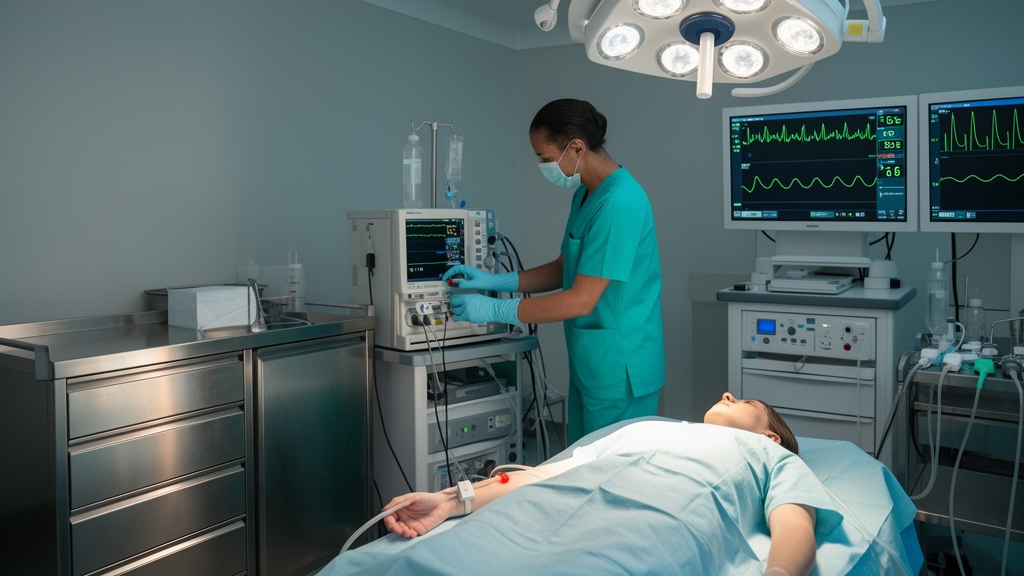
Image Credits: AI Generated
DOI: 10.1007/s10877-026-01506-z
Keywords: pulse rate variability, tracheal intubation, photoplethysmography, hemodynamic response, general anesthesia, remifentanil, propofol, target-controlled infusion, heart rate variability, systolic blood pressure, autonomic nervous system, Lomb-Scargle spectral analysis, low-frequency to high-frequency ratio, perioperative monitoring, retrospective secondary analysis, airway management
News Source: Ophelia Keating. (November 18, 2026). Preoperative Pulse Rate Variability Fails to Predict Intubation Hemodynamic Surges. Scienmag.