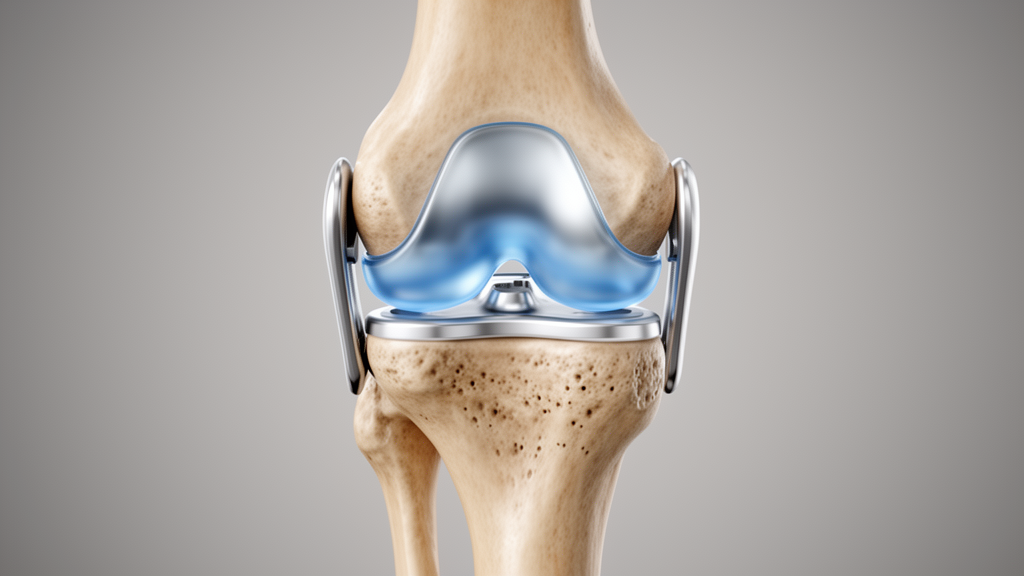
A retrospective comparative study evaluating primary total knee arthroplasty procedures has identified preoperative coronal alignment and clinical flexion contracture as statistically significant independent determinants of the final polyethylene insert thickness chosen during surgery. Published in the Journal of Orthopaedics and Traumatology by Seung-Hun Lee and colleagues, the clinical investigation evaluated medical records spanning two hundred and thirty-three knees across one hundred and fifty-eight consecutive patients treated between August 2024 and July 2025. The investigation established that patients presenting with more pronounced preoperative varus malalignment consistently required thicker polyethylene inserts to achieve balanced joint stability. Conversely, individuals presenting with more severe preoperative flexion contractures received systematically thinner polyethylene inserts. By establishing concrete associations between routine preoperative anatomical assessments and intraoperative implant sizing decisions, the authors demonstrated how quantifiable structural deformities directly dictate the physical dimensions of the joint reconstruction space encountered during standard knee replacement procedures.
Surgical reconstruction for end-stage knee osteoarthritis relies upon the precise restoration of mechanical limb alignment alongside the establishment of equalized, stable soft-tissue tension throughout the complete arc of joint motion. Total knee arthroplasty functions as an established standard of care that alleviates joint pain and restores functional mobility, yet long-term implant longevity remains heavily dependent on avoiding mechanical imbalances. When soft-tissue balance or mechanical alignment is improperly restored, the prosthetic construct becomes highly vulnerable to accelerated polyethylene component wear, implant loosening, and postoperative joint instability. Within this mechanical framework, the modular polyethylene insert acts as both an articulating bearing interface and a critical instrument for intraoperative gap balancing. Surgeons rely on incremental variations in polyethylene thickness to calibrate flexion and extension gaps, compensating for individual anatomical anomalies and soft-tissue disparities to ensure that the reconstructed knee remains neither pathologically tight nor unstably lax during ambulation.
Despite the recognized importance of insert dimensions in postoperative joint kinematics, historical research has predominantly centered on postoperative outcome metrics, such as bearing wear rates, overall range of motion, and implant survival intervals, rather than elucidating the preoperative factors that compel specific intraoperative sizing choices. An inaccurate gap-balancing assessment presents severe intraoperative hazards; creating an excessively loose extension gap risks generating iatrogenic genu recurvatum, a debilitating hyperextension deformity notoriously linked with chronic instability and deteriorating patient outcomes. To address the relative paucity of systematic data bridging preoperative diagnostics with intraoperative surgical adjustments, the research team hypothesized that quantifiable markers of severe structural deformity, most notably an elevated hip-knee-ankle angle reflecting substantial varus deviation, would reliably predict the requirement for thicker polyethylene liners during primary reconstructive procedures.
To evaluate this predictive framework under uniform surgical conditions, the investigators reviewed records from a single medical center under an institutional review board protocol that waived the requirement for individual informed consent. Strict exclusion criteria removed patients presenting with previous surgical interventions or fractures involving the affected lower extremity, active periprosthetic or periarticular infections, severe bone loss secondary to post-traumatic arthritis, or prior primary or revision arthroplasty of the ipsilateral hip or knee joints. The resulting study cohort comprised exclusively patients with primary knee osteoarthritis who underwent standard primary total knee arthroplasty performed by a single experienced orthopedic surgeon. All interventions were carried out utilizing a measured resection technique aimed at establishing neutral mechanical alignment. Patients were randomly assigned to receive one of two contemporary implant systems: the Persona system by Zimmer Biomet or the PNK system by Skyve Company Limited, both of which share a standardized minimum polyethylene thickness of ten millimeters.
Preoperative assessment protocols incorporated both clinical measurements and standardized radiographic imaging. Preoperative flexion contractures were measured quantitatively during outpatient clinic visits by placing patients in the supine position and recording the lack of full active knee extension using a standard clinical goniometer. Radiographic alignment was documented using specialized full-length weight-bearing anteroposterior radiographs alongside true lateral projections. The full-length imaging protocol maintained a rigorous patient positioning standard where patellae faced strictly anteriorly toward the radiation source, coupled with a fixed tube-to-detector distance of three hundred centimeters to prevent magnification artifacts and distortion during digital image stitching. From these images, clinicians measured the hip-knee-ankle angle, the medial proximal tibial angle, the lateral distal femoral angle, the joint-line convergence angle, the weight-bearing line ratio, and the posterior tibial slope using a dedicated picture archiving and communication network.
To minimize observer bias and assess diagnostic repeatability, all radiographic parameters were evaluated by a single experienced orthopedic surgeon who repeated the entire measurement series at a four-week interval while remaining strictly blinded to patient demographic identifiers and the actual polyethylene insert dimensions utilized during surgery. Statistical analyses conducted with R software version 4.4.2 treated continuous variables under the central limit theorem given the sample size of two hundred and thirty-three knees. Linear regression models, both unadjusted and multivariable frameworks controlling for potential demographic confounding from patient age, sex, and body mass index, were deployed to identify independent predictors of polyethylene insert thickness.
Multivariable linear regression confirmed that three distinct radiographic markers alongside clinical flexion contracture maintained statistically significant associations with the final polyethylene thickness. The preoperative hip-knee-ankle angle exhibited a robust positive association, demonstrating a regression coefficient of 0.033 with a significance level below 0.001. The weight-bearing line ratio demonstrated a significant negative correlation, yielding a coefficient of negative 0.008 at a significance level below 0.001. Additionally, the lateral distal femoral angle emerged as a significant positive predictor, characterized by a coefficient of 0.065 and a significance value of 0.003 in multivariable models. Conversely, anatomical variations in the medial proximal tibial angle, the joint-line convergence angle, and the posterior tibial slope did not exhibit statistically significant relationships with insert thickness. Preoperative flexion contracture maintained an independent negative correlation, registering a regression coefficient of negative 0.027 with a significance value of 0.011.
To isolate the specific mechanical contribution of coronal varus deformity from the confounding influence of sagittal extension deficits, the authors performed a focused subgroup analysis on knees exhibiting minimal flexion contracture of five degrees or less. Stratifying these knees into incremental five-degree categories based on hip-knee-ankle angle revealed a clear, stepwise escalation in required insert dimensions as varus malalignment increased. In knees with mild varus measuring between zero and five degrees, the mean insert thickness was 10.37 millimeters with a standard deviation of 0.50 millimeters. This value rose to 10.68 millimeters in the five-to-ten degree cohort, 10.77 millimeters in the ten-to-fifteen degree cohort, and 11.18 millimeters in the fifteen-to-twenty degree group. In knees presenting with severe, extreme varus deformity exceeding twenty degrees, the mean polyethylene thickness reached 12.75 millimeters with a standard deviation of 2.36 millimeters, representing an overall increase exceeding two millimeters across the deformity spectrum.
The biomechanical mechanism underlying the direct relationship between increasing varus deformity and thicker polyethylene inserts reflects the anatomical consequences of surgical gap balancing. In severe varus deformities, medial soft-tissue structures, including the superficial and deep medial collateral ligaments, undergo chronic adaptive contraction, while lateral soft-tissue restraints often exhibit secondary laxity. To re-establish a rectangular extension gap perpendicular to the restored mechanical axis, the operating surgeon must perform systematic releases of these contracted medial envelope tissues. As the tight medial structures are progressively detached and lengthened to bring the tibia into neutral alignment, the total volumetric capacity of the tibiofemoral joint space naturally expands. Because the lax lateral compartment requires minimal intervention, the overall gap between the resected bone surfaces becomes substantially wider than that found in nondeformed knees, necessitating a thicker polyethylene bearing to adequately restore soft-tissue tension and avert extension laxity.
Conversely, the negative correlation observed between preoperative flexion contracture and insert thickness illustrates a deliberate surgical strategy designed to navigate constricted extension spaces. Severe flexion contractures stem from pathological shortening and fibrosis of the posterior capsule and adjacent posterior knee structures. Following standard bone resections, these contractures create a pronounced gap imbalance wherein the extension gap remains markedly tighter than the corresponding flexion gap due to persistent posterior tethering. Surgeons confronted with an unyielding extension gap must choose between executing additional distal femoral bone resection or performing conservative posterior releases and accommodating the shallow space with a thinner polyethylene insert. Because excessive distal femoral resection elevates the native joint line, risks inducing patellar baja, and introduces the threat of mid-flexion instability or hyperextension, surgical practice favors preserving bone and accepting thinner polyethylene bearings to maintain stable joint mechanics.
The comparative influence of regional alignment metrics further illuminated these intraoperative dynamics, as the distal femoral morphology represented by the lateral distal femoral angle demonstrated a much stronger association with insert selection than the proximal tibial morphology represented by the medial proximal tibial angle. Under standard measured resection principles, proximal tibial cuts follow a standardized resection plane perpendicular to the mechanical axis, providing a relatively uniform baseline across diverse deformities, whereas distal femoral cuts represent the primary site of active correction. Several methodological limitations contextualize these findings, including the retrospective single-center design, the involvement of a single operating surgeon, the reliance on measured resection rather than kinematic or robotic alignment philosophies, minor sizing increment differences between the two prosthesis systems, and the absence of quantified intraoperative ligamentous tension data.
Subject of Research: Preoperative radiographic alignment and clinical deformity predictors of polyethylene insert thickness in primary total knee arthroplasty
Article Title: Thicker polyethylene inserts for varus deformity versus thinner inserts for flexion contracture in total knee arthroplasty: a retrospective comparative study
Article References: Lee, S.-H., Kwon, H. M., Lee, W.-S., & Park, K. K. (2026). Thicker polyethylene inserts for varus deformity versus thinner inserts for flexion contracture in total knee arthroplasty: a retrospective comparative study. Journal of Orthopaedics and Traumatology, 27(1), Article 47. https://doi.org/10.1186/s10195-026-00939-1
Image Credits: AI Generated
DOI: 10.1186/s10195-026-00939-1
Keywords: total knee arthroplasty, polyethylene insert thickness, varus deformity, flexion contracture, hip-knee-ankle angle, lateral distal femoral angle, weight-bearing line ratio, joint gap balancing, orthopedic surgery, retrospective comparative study, measured resection technique, mechanical alignment, knee osteoarthritis, intraclass correlation coefficient, multivariable linear regression, genu recurvatum
News Source: Ophelia Keating. (November 19, 2026). Preoperative Knee Alignment and Contracture Predict Polyethylene Insert Thickness in Arthroplasty. Scienmag.