Credit: Luke Selth
University of Adelaide researchers have uncovered a new pathway which regulates the spread of prostate cancer around the body.
Published in the journal Cancer Research, the discovery has potential to lead to the development of a blood test that could predict whether cancer will spread from the prostate tumour to other parts of the body. The research also reveals potential new targets for drugs that may inhibit the spread of cancer.
"Prostate cancers only kill men after they have spread or 'metastasised' from the prostate," says project leader Dr Luke Selth, Senior Research Fellow at the University of Adelaide's Dame Roma Mitchell Cancer Research Laboratories and a member of the Freemasons Foundation Centre for Men's Health.
"The identification of markers that accurately predict, at an early stage, prostate tumours that are likely to metastasise could guide the urgency and aggressiveness of treatment – and this could save lives."
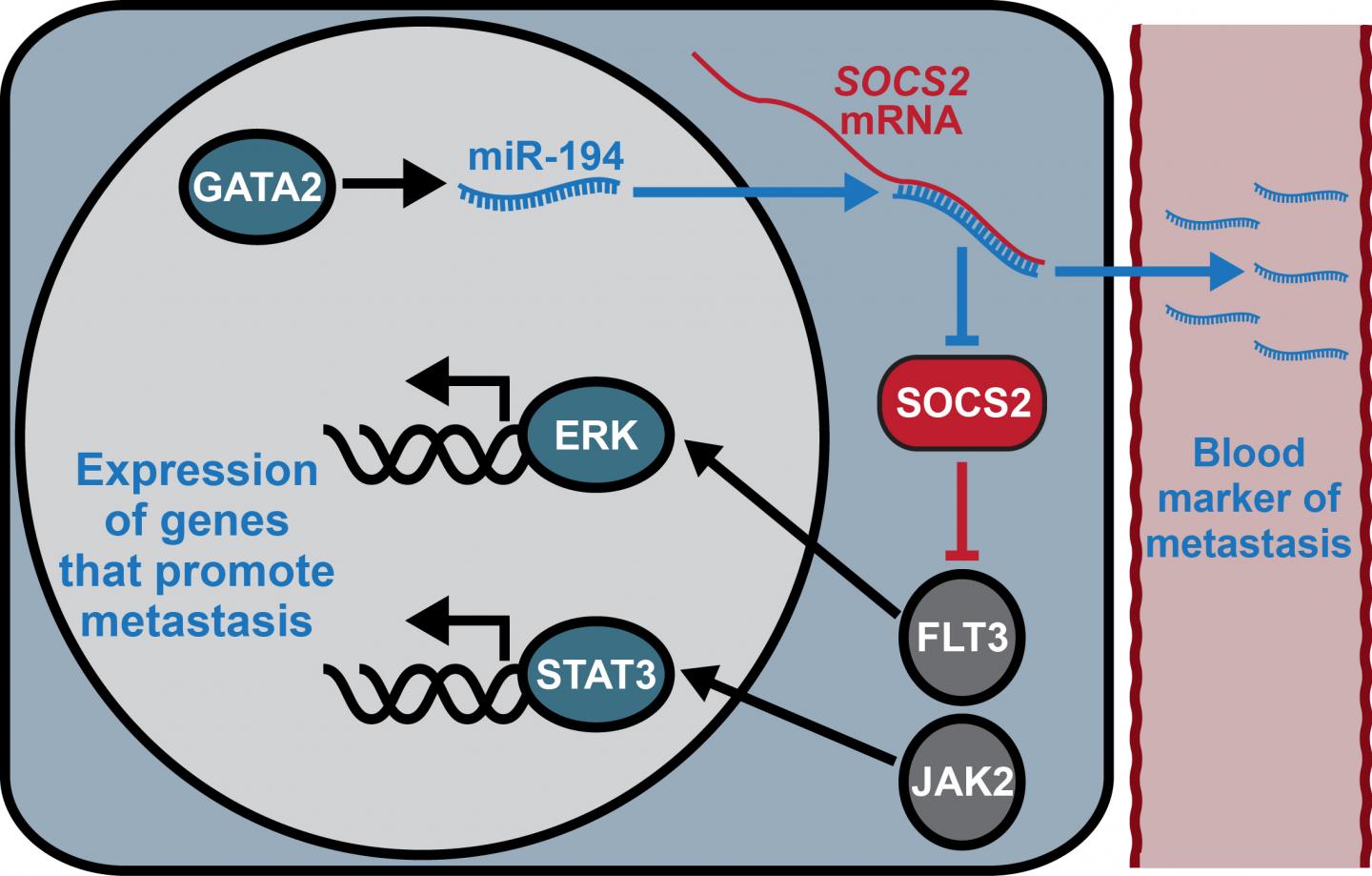
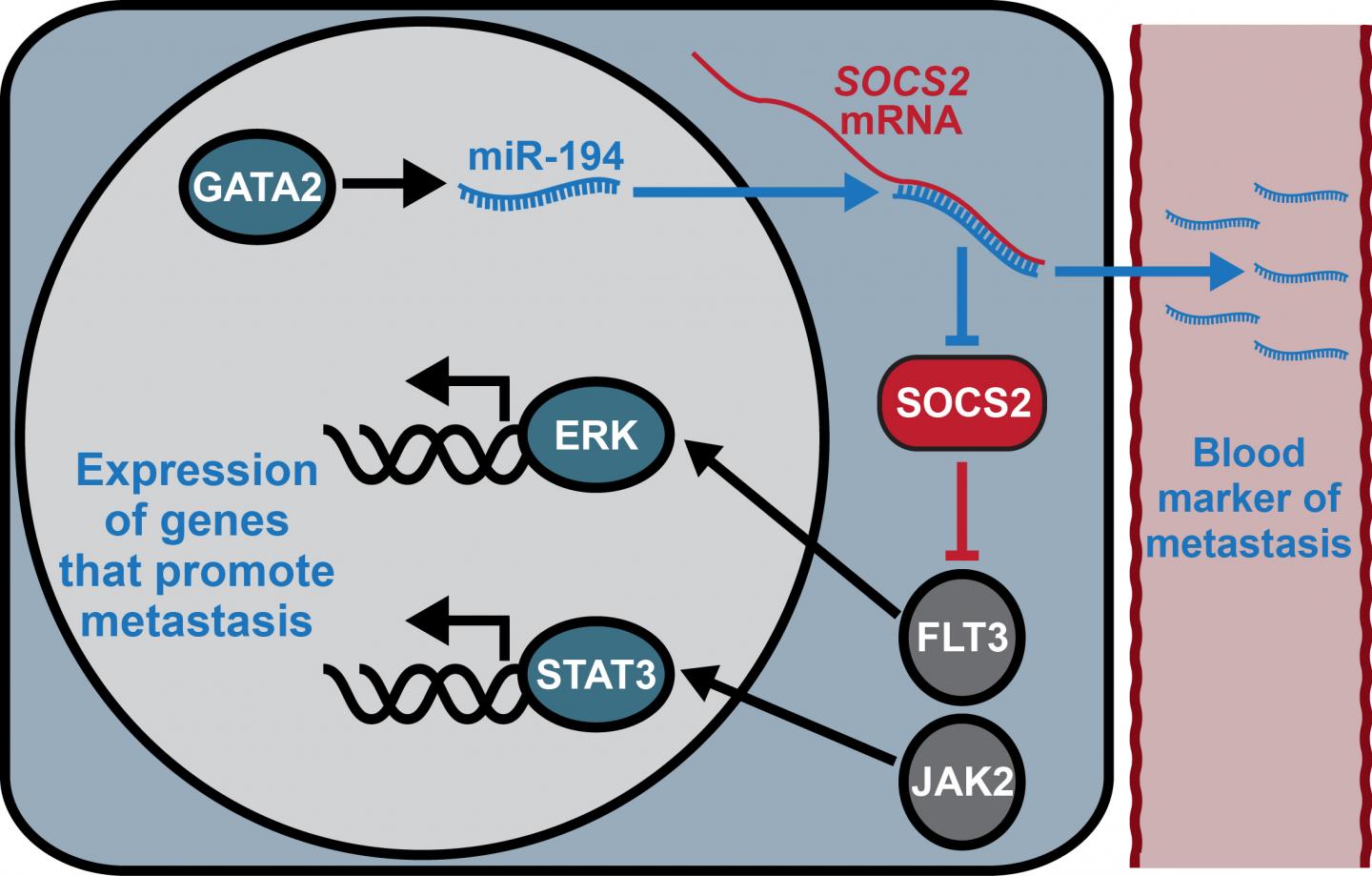
The international research team – led by the University of Adelaide and including members from the University of Michigan, Vancouver Prostate Centre, the Mayo Clinic and Johns Hopkins University – showed that a specific microRNA (a type of molecule involved in regulating the level and activity of genes) called miR-194 promotes cancer metastasis by inhibiting a key protein called SOCS2. SOCS2 can suppress the spread of cancer cells.
"In previous work, we had found that a high level of miR-194 in a patient's blood was associated with rapid relapse of prostate cancer following surgical removal of the tumour," says Dr Selth. "This new work explains why miR-194 is associated with a poor outcome, and in the process reveals a completely novel pathway regulating prostate cancer metastasis.
"Importantly, measuring miR-194 in a patient's blood at the time of diagnosis could become a test for the likelihood of metastasis. Patients with high levels of miR-194 in their blood could receive more aggressive treatment to reduce the chance of the cancer spreading to other parts of the body." Dr Selth's team is currently testing this idea using larger patient groups to validate their findings.
Dr Selth says miR-194 also represents a potential therapeutic target. "There are currently no drugs that effectively inhibit the spread of prostate cancer," he says. "We propose that inhibiting miR-194 could reduce rates of metastasis in patients with aggressive disease, but the development of a drug to achieve this goal is still a long way off."
###
This work was supported by funding from the National Health and Medical Research Council of Australia, the Prostate Cancer Foundation (USA), the Freemasons Foundation Centre for Men's Health, the Prostate Cancer Foundation of Australia and Movember.
Media Contact:
Dr Luke Selth, Senior Research Fellow, Dame Roma Mitchell Cancer Research Laboratories, Adelaide Medical School, University of Adelaide. Phone: +61 8 8222 3618, Mobile: +61 (0) 413 734 037, [email protected]
Robyn Mills, Media Officer, Phone: +61 (0)8 8313 6341, Mobile: +61 (0)410 689 084, [email protected]
Media Contact
Luke Selth
[email protected]
61-041-373-4037
@UniofAdelaide
http://www.adelaide.edu.au
############
Story Source: Materials provided by Scienmag