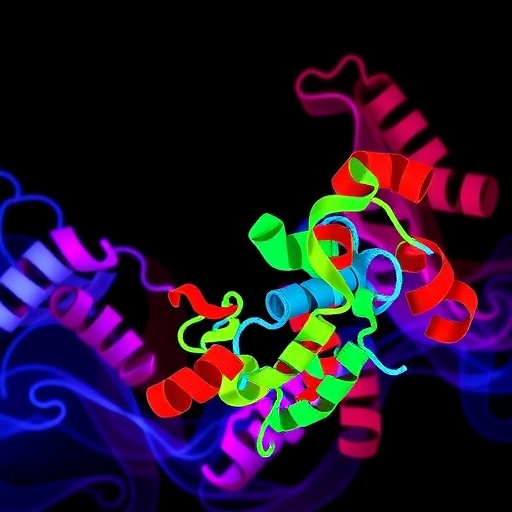
Emerging evidence suggests that microbes in the digestive system have a big influence on human health and may play a role in the onset of disease throughout the body. Now, in a study appearing in ACS Chemical Biology, scientists report that they have potentially found a way to use chemical compounds to target and inhibit the growth of specific microbes in the gut associated with diseases without causing harm to other beneficial organisms.
The digestive system is crammed with trillions of bacteria, fungi, and other microbes that help process food. Recent studies suggest that the changes in these gut flora, or microbiome, may play a role in the onset of a host of diseases and conditions including obesity, diabetes, cancer, allergies, asthma, autism and multiple sclerosis. Antibiotics can help regulate the microbiome, but bacterial resistance is on the rise. In addition, antibiotics can wipe out some of the organisms that contribute to a healthy microbiome, and the microbes that take their place can sometimes cause more harm than good. Researchers have also investigated using probiotics and fecal transplants to resolve some of these problems. But to date, few have really looked at using non-microbicidal small molecules to alter the microbiome in a targeted way to improve health. To help fill this gap, Daniel Whitehead, Kristi Whitehead and colleagues sought to use a chemical compound to precisely target and disrupt the metabolic processes of members of the Bacteroides genus, a group of bacteria commonly found in the gut that appear to be associated with the onset of type I diabetes in genetically susceptible individuals.
In laboratory studies, the researchers found that small concentrations of acarbose, a drug used to treat diabetes, significantly disrupted the activity of a group of proteins involved in the Starch Utilization System (Sus). The model bacteria called Bacteroides thetaiotaomicron (Bt), as well as other Bacteroides members, have this system. With Sus inhibited, Bt couldn't metabolize a pair of complex carbohydrates that are not digested by humans once they reach the colon, but that are vital to the survival of the microbes. As a result, the bacteria cannot grow. The team found that acarbose was specific, having similar effects on another Bacteroides bacteria, but little or no effect on other types of gut microbes. The researchers conclude that with further study it may be possible to develop drugs that target gut bacteria with pinpoint accuracy to permanently alter the composition of the microbiome and, in turn, prevent or treat disease.
###
The authors acknowledge funding from the Juvenile Diabetes Research Foundation, the Clemson University Creative Inquiry program, as well as the university's departments of Chemistry and Biological Sciences.
The abstract that accompanies this study is available here.
The American Chemical Society, the world's largest scientific society, is a not-for-profit organization chartered by the U.S. Congress. ACS is a global leader in providing access to chemistry-related information and research through its multiple databases, peer-reviewed journals and scientific conferences. ACS does not conduct research, but publishes and publicizes peer-reviewed scientific studies. Its main offices are in Washington, D.C., and Columbus, Ohio.
To automatically receive news releases from the American Chemical Society, contact [email protected].
Follow us on Twitter | Facebook
Media Contact
Katie Cottingham
[email protected]
301-775-8455
@ACSpressroom
http://www.acs.org