The study, published in Behavioral and Brain Functions, demonstrates that while the deletion of Hoxa5 during early development does not impair motor coordination or social interaction, it significantly increases stereotypical behaviors, including scratching and marble burying. This finding suggests that HOXA5 acts as a subtle modulator of precerebellar circuit connectivity, with effects that are selective rather than broad-based.
The research team, led by Françoise Gofflot, utilized a conditional knockout mouse model to investigate the role of HOXA5 during a critical window of postnatal development. HOXA5 is a transcription factor essential for embryonic patterning and organogenesis, but it also maintains sustained expression in the hindbrain precerebellar nuclei after birth. Previous transcriptomic analyses indicated that HOXA5 regulates genes involved in synaptic organization, including components of glutamatergic and GABAergic signaling. The current study aimed to determine whether inactivating this gene during the early postnatal period contributes to phenotypes associated with neurodevelopmental disorders.
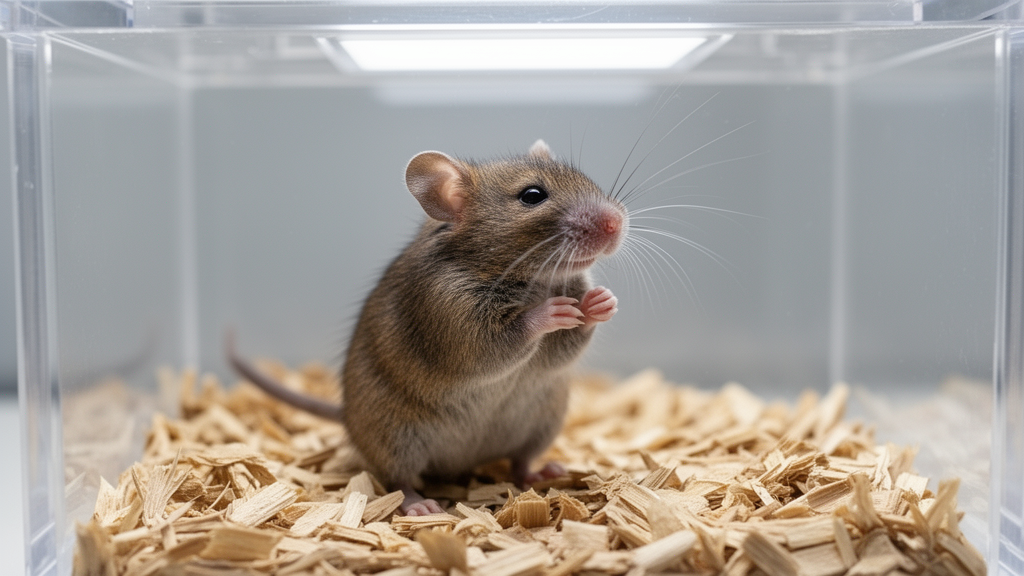
To achieve postnatal inactivation, the researchers employed a tamoxifen-inducible CreERT2 system in Hoxa5 floxed mice. Newborn pups received intragastric injections of tamoxifen over three consecutive days, from postnatal day 1 to day 3. This protocol was optimized to reduce the stress on pups and mothers compared to previous four-day regimens, while still achieving comparable gene inactivation efficiency. The study included 98 male mice across six consecutive cohorts, with littermate controls that did not carry the CreERT2 transgene but were treated with tamoxifen to control for the effects of the chemical and handling.
Before assessing complex behaviors, the researchers conducted a series of baseline tests to ensure that the mice had intact sensory and motor capacities. Olfactory and auditory tests revealed no significant differences between the control and knockout groups. Grip strength tests confirmed that the postnatal deletion of Hoxa5 did not impair forelimb or hindlimb strength. These baseline assessments were crucial for interpreting the subsequent behavioral data, as they ruled out sensory deficits or general weakness as confounding factors for the observed behavioral changes.
The motor function assessment included five distinct assays designed to evaluate coordination, learning, memory, and fine motor control. In the open field test, which measures general activity and locomotion, no differences were found between the genotypes. The beam walking and rotarod tests, which assess balance and motor learning, showed that both groups had similar baseline coordination and learning trajectories. A second phase of the rotarod test, conducted after a five-week break to evaluate motor memory, also revealed no genotype-dependent differences. The ladder rung test and the Noldus Catwalk gait analysis further confirmed that fine motor skills and gait patterns were preserved in the Hoxa5-cKO mice.
Social behavior was evaluated using several paradigms, including the tube test for social hierarchy, the social odor test, and the three-chamber social interaction test. The tube test, which assesses dominance and subordination, showed high variability across cohorts, with no consistent genotype effect. The social odor test, which measures interest in social cues, indicated that the knockout mice had preserved social odor reactivity. In the three-chamber test, initial analysis suggested reduced sociability in the knockout group during the social novelty phase. However, a more refined analysis focusing on the time spent within 1 cm of the stimulus cages eliminated these statistical differences, suggesting that the initial findings were sensitive to analytical methods.
In contrast to the preserved motor and social functions, the Hoxa5-cKO mice exhibited significant increases in stereotypical behaviors. In a test measuring self-grooming, burrowing, and scratching, the knockout mice displayed significantly higher scratching counts than the controls. Although scratching is not inherently a stereotyped behavior, its elevated frequency in the absence of a clear trigger, such as skin irritation, can indicate a shift toward repetitive, nonfunctional behaviors. The marble burying test, a common assay for repetitive behavior, revealed a highly significant increase in the number of marbles buried or displaced by the Hoxa5-cKO mice relative to the controls.
The researchers also assessed anxiety-related and attentional behaviors, which are common comorbidities in ASD. In the open field test, the knockout mice spent more time in the brightly lit center, suggesting an absence of anxiety or increased exploratory interest. The light-dark test, a stronger anxiogenic challenge, did not reveal significant differences between the groups, although individual variability was high. An attention test involving exploratory behavior under unpredictable sensory distraction showed that both genotypes reduced locomotion during music playback, with no genotype effect observed. These results indicate that postnatal Hoxa5 deletion does not lead to anxiety or attention-related impairments.
The study also revisited previous transcriptomic data to identify genes regulated by HOXA5 that are associated with ASD. By crossing the list of differentially expressed genes in Hoxa5-cKO mice with the Simons Foundation Autism Research Initiative (SFARI) database, the researchers identified eight genes in common. Among these, two human homologs, CHD7 and RELN, are strong candidates for ASD risk. CHD7 mutations cause CHARGE syndrome, while RELN mutations lead to Norman-Roberts syndrome. Most of these genes have been associated with cerebellar abnormalities in mice, further supporting the link between HOXA5 and cerebellar function in neurodevelopmental disorders.
The authors discuss the implications of their findings in the context of cerebellar function. The cerebellum is traditionally associated with motor coordination, but emerging evidence points to its role in cognitive and affective processes. The lack of a motor phenotype in the Hoxa5-cKO mice may be explained by the late depletion of HOXA5 protein, the restricted expression of the gene in specific neuronal populations, or functional redundancy within the Hox-PG5 gene family. The increase in stereotyped behaviors, however, suggests that HOXA5 plays a role in the maturation of circuits that regulate repetitive actions.
The study highlights several limitations in behavioral neuroscience research. The authors note that social behavior tests are sensitive to analytical methods and cohort variability, which can hinder the interpretation of results. They also emphasize the importance of using appropriate statistical models, such as mixed modeling, to account for the hierarchical structure of behavioral data. The use of male mice only, while common in preclinical research to maximize statistical power, limits the generalizability of the findings to the whole population. The random insertion of the CreERT2 transgene could also introduce confounding effects, although this line has been used in previous studies without reported issues.
Overall, the findings indicate that postnatal Hoxa5 deficiency selectively enhances stereotyped behaviors without broadly affecting motor or social functions. The data support a model in which HOXA5 acts as a modulator of postnatal precerebellar circuit connectivity and function. The subtle behavioral consequences observed in this study suggest that HOXA5 may contribute to the genetic context of neurodevelopmental disorders, particularly those involving synaptic dysregulation. Further research in specific genetic or environmental contexts is needed to fully understand the role of HOXA5 in these conditions.
Subject of Research: Postnatal relevance of HOXA5 transcription factor in cerebellum-associated behaviors and disorders
Article Title: Postnatal relevance of HOXA5 transcription factor in cerebellum-associated behaviors and disorders
Article References: Glibert, H., Bridoux, L., Moens, C., Schakman, O., Jeannotte, L., Clotman, F., & Gofflot, F. (2026). Postnatal relevance of HOXA5 transcription factor in cerebellum-associated behaviors and disorders. Behavioral and Brain Functions, 22(1), Article 50. https://doi.org/10.1186/s12993-026-00343-z
Image Credits: AI Generated
DOI: 10.1186/s12993-026-00343-z
Keywords: Postnatal, relevance, HOXA5, transcription, factor, cerebellum-associated, behaviors, disorders, scientific research
News Source: Glenn Wilkins. (November 11, 2026). Postnatal HOXA5 Loss Increases Stereotypies in Mice. Scienmag.