• HOME
  • NEWS
  • EXPLORE
    • CAREER
      • Companies
      • Jobs
    • EVENTS
    • iGEM
      • News
      • Team
    • PHOTOS
    • VIDEO
    • WIKI
  • BLOG
  • COMMUNITY
    • FACEBOOK
    • INSTAGRAM
    • TWITTER
Sunday, June 28, 2026
BIOENGINEER.ORG
No Result
View All Result
  • Login
  • HOME
  • NEWS
  • EXPLORE
    • CAREER
      • Companies
      • Jobs
        • Lecturer
        • PhD Studentship
        • Postdoc
        • Research Assistant
    • EVENTS
    • iGEM
      • News
      • Team
    • PHOTOS
    • VIDEO
    • WIKI
  • BLOG
  • COMMUNITY
    • FACEBOOK
    • INSTAGRAM
    • TWITTER
  • HOME
  • NEWS
  • EXPLORE
    • CAREER
      • Companies
      • Jobs
        • Lecturer
        • PhD Studentship
        • Postdoc
        • Research Assistant
    • EVENTS
    • iGEM
      • News
      • Team
    • PHOTOS
    • VIDEO
    • WIKI
  • BLOG
  • COMMUNITY
    • FACEBOOK
    • INSTAGRAM
    • TWITTER
No Result
View All Result
Bioengineer.org
No Result
View All Result
Home NEWS Science News Chemistry

Possible lives for food waste from restaurants

Bioengineer by Bioengineer
April 1, 2020
in Chemistry
Reading Time: 2 mins read
0
IMAGE
Share on FacebookShare on TwitterShare on LinkedinShare on RedditShare on Telegram

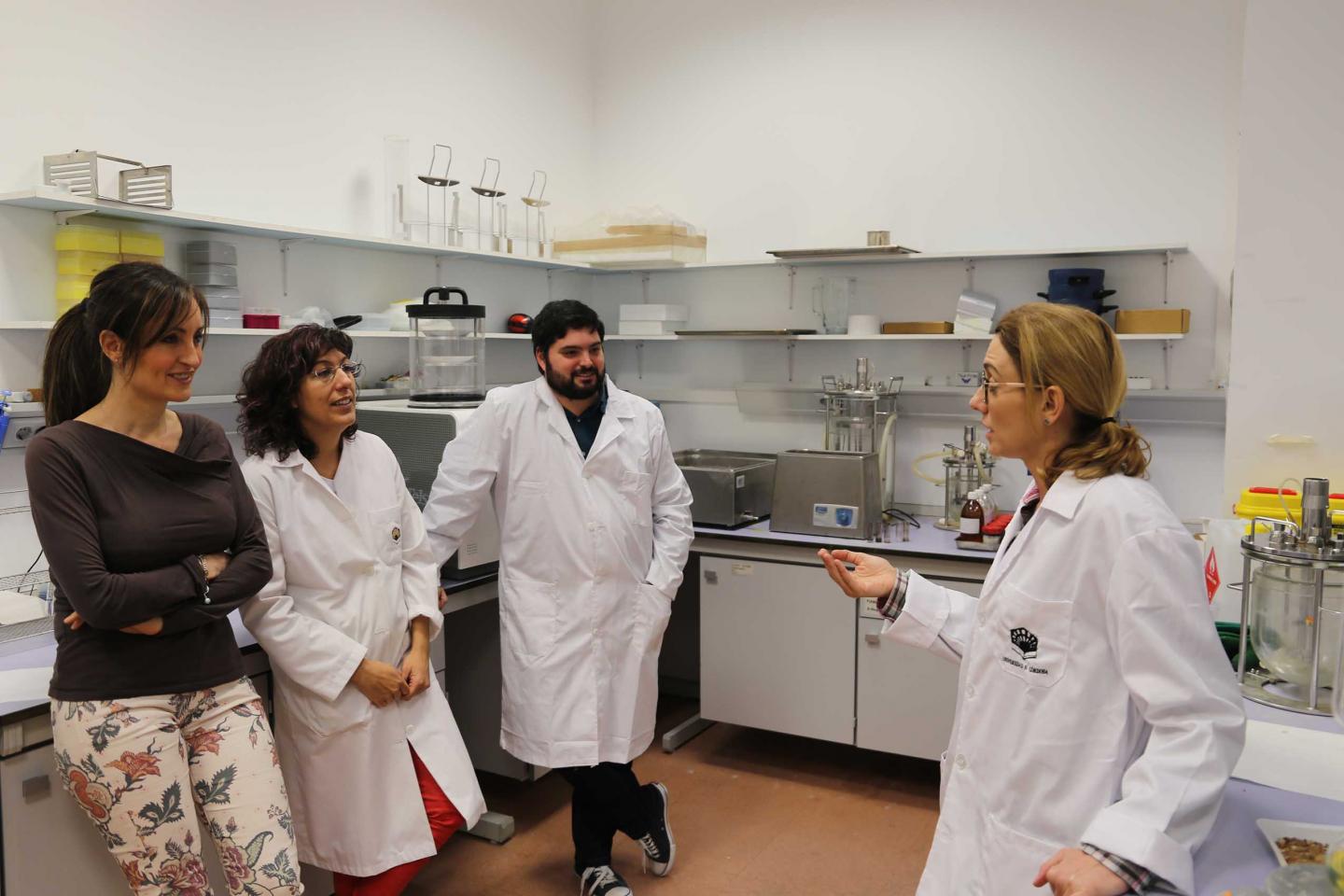
IMAGE

Credit: University of Cordoba

More than a third of the food produced ends up being wasted. This situation creates environmental, ethical and financial issues, that also alter food security. Negative effects from waste management, such as bad smells or the emission of greenhouse gases, make the bioeconomy one of the best options to reduce these problems.

Research into the field of the bioeconomy and the search for waste valorization strategies, such as agricultural by-products, is the field of research for the BIOSAHE (a Spanish acronym of biofuels and energy-saving systems) research group at the University of Cordoba. Led by Professor Pilar Dorado, they are now taking a step further: they aim to establish the best valorization paths for restaurant food waste. Among the possible lives for restaurant scraps, they are looking to find which one is most effective and which provides the most value.

Along these lines, researcher Miguel Carmona and the rest of the BIOSAHE group, including Javier Sáez, Sara Pinzi, Pilar Dorado and Isabel López García, developed a methodology that assesses food waste and selects the best valorization path.

After analyzing food waste from a variety of different kinds of restaurants with varying degrees of caliber, the main chemical components were characterized, those being starches, proteins, lipids and fibers. The aim of this process was to find out what amounts of what compounds are held in food waste in order to link it to the best option for its transformation.

Once the chemical compounds of the scraps were identified, a statistical study was performed to analyze the variability (how compounds vary and the amounts of some waste compared to other waste).

Identifying compound typology and variability makes it possible to predict the most optimal valorization process depending on the waste, thus helping industries within the circular economy and the resource valorization sector to make decisions.

In this way, the lives of restaurant scraps can be turned into biodiesel, electricity or bioplastic. Specifically, the project that Pilar Dorado heads is developing a biorefinery that would, just as oil refineries do, generate biofuel, bioplastic, biolubricants and products with added value in the chemical, electrical and heat industries from restaurant food waste. In this project, in addition to the methodology that characterizes scraps and chooses the best paths, they have produced bioplastic that can be used as sutures in surgery procedures.

###

Carmona-Cabello, M., García, I.L., Sáez-Bastante, J., Pinzi, S., Koutinas, A.A., Dorado, M.P. (2020) Food waste from restaurant sector – Characterization for biorefinery approach, Bioresource Technology, Vol. 31, 122779, ISSN 0960-8524. DOI: https://doi.org/10.1016/j.biortech.2020.122779

Media Contact
Elena lázaro
[email protected]

Related Journal Article

http://dx.doi.org/10.1016/j.biortech.2020.122779

Tags: Chemistry/Physics/Materials SciencesEnergy/Fuel (non-petroleum)
Share12Tweet8Share2ShareShareShare2

Related Posts

AI and Physics Collaborate to Design Advanced Hydrogen Storage Materials

June 25, 2026

International Team Including Dresden Scientists Develops Novel Designer Proteins for Advanced Study of Living Tissue

June 25, 2026

New Study Uncovers Key Factors Driving Water Chemistry in Nanoscale Environments

June 25, 2026

Plasma Technology Extends Catalyst Lifespan in Hydrogen Production

June 24, 2026
Please login to join discussion

POPULAR NEWS

  • Saying Goodbye to PGY-6: Pediatric Fellowship Realities

    103 shares
    Share 41 Tweet 26
  • Multi-Hospital Study Reveals Long Covid Burden Is Twice as High as Current Estimates

    92 shares
    Share 36 Tweet 23
  • Detection of EDCs in Breast Milk and Infant Urine Up to Six Months Highlights Early Exposure Risks

    77 shares
    Share 31 Tweet 19
  • New Drug Candidate Developed at McMaster Shows Potential for Treating Brain Cancer

    58 shares
    Share 23 Tweet 15

About

We bring you the latest biotechnology news from best research centers and universities around the world. Check our website.

Follow us

Recent News

Tracking Lanthanide-Labeled Microplastics in Plants

POSTECH Researchers Slash Cost of Reconstituted Cell-Free Systems by 95%

AI and Physics Collaborate to Design Advanced Hydrogen Storage Materials

Subscribe to Blog via Email

Success! An email was just sent to confirm your subscription. Please find the email now and click 'Confirm' to start subscribing.

Join 82 other subscribers
  • Contact Us

Bioengineer.org © Copyright 2023 All Rights Reserved.

Welcome Back!

Login to your account below

Forgotten Password?

Retrieve your password

Please enter your username or email address to reset your password.

Log In
No Result
View All Result
  • Homepages
    • Home Page 1
    • Home Page 2
  • News
  • National
  • Business
  • Health
  • Lifestyle
  • Science

Bioengineer.org © Copyright 2023 All Rights Reserved.