In a groundbreaking advance poised to redefine therapeutic strategies against high-risk neuroblastoma, researchers have unveiled the potent efficacy of a novel PLK4 inhibitor, RP-1664, through comprehensive preclinical evaluations. Neuroblastoma, a formidable pediatric malignancy originating from neural crest-derived sympathetic nervous system cells, remains one of the deadliest childhood cancers due to its heterogeneous genetic landscape and intrinsic resistance to standard treatments. This new study, led by Soria-Bretones, Casás-Selves, Samanta, and colleagues, published in Nature Communications, offers vital insights into how the inhibition of Polo-like kinase 4 (PLK4) orchestrates anti-tumoral activity via a dual mechanism, thereby fortifying the therapeutic arsenal against this challenging disease.
Central to the pathophysiology of neuroblastoma is the dysregulation of cell cycle machinery, which fosters unchecked proliferation and tumor aggressiveness. PLK4, a serine/threonine kinase pivotal in centriole biogenesis and mitotic fidelity, has been implicated in the genomic instability and proliferative capacity underlying various cancers. Elevated PLK4 expression correlates with poor prognosis in neuroblastoma patients, making it an attractive molecular target. The investigative team sought to characterize RP-1664, a selective small-molecule inhibitor of PLK4, and dissect its mechanistic impact on neuroblastoma cell viability and tumorigenicity.
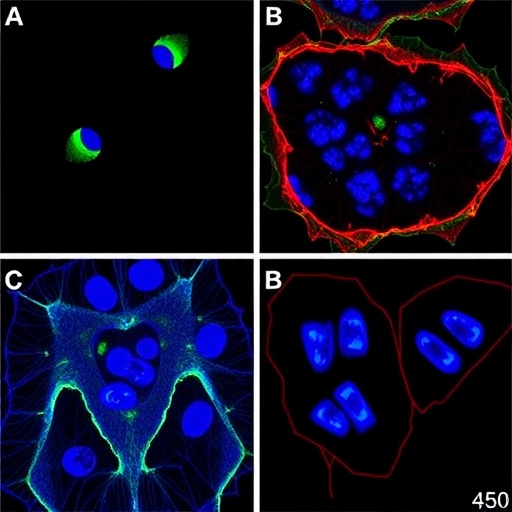
Meticulous in vitro assays revealed that RP-1664 treatment induces pronounced mitotic defects, including centrosome amplification and aberrant spindle formation, culminating in mitotic catastrophe and apoptotic cell death. Unlike prior PLK4 inhibitors with limited clinical success due to off-target effects and suboptimal potency, RP-1664 displayed exquisite specificity and nanomolar-range potency, abrogating PLK4 activity effectively. These pharmacodynamic properties were corroborated by dose-response curves delineating a significant reduction in cell viability across a broad panel of neuroblastoma cell lines, independent of MYCN amplification status.
Delving deeper into the mechanistic underpinnings, the research illuminated a dual pathway through which RP-1664 exerts its anti-neuroblastoma effects. First, by impeding centriole duplication, RP-1664 disrupts centrosome homeostasis, provoking chromosomal instability that exceeds a tolerable threshold and triggers intrinsic apoptotic programs. Secondly, the compound elicits a DNA damage response signature, manifesting in heightened γH2AX foci and activation of ATR/CHK1 checkpoints. This dual stress induction synergistically compromises tumor cell survival, illustrating an innovative therapeutic paradigm where mitotic failure and genomic stress converge.
The translational relevance of RP-1664 was further substantiated in robust in vivo models. Patient-derived xenografts (PDXs) and genetically engineered mouse models of neuroblastoma exhibited significant tumor regression following systemic administration of RP-1664. Notably, treated animals demonstrated prolonged survival without overt toxicity or adverse hematological effects, underscoring the inhibitor’s therapeutic window. Pharmacokinetic analyses confirmed favorable bioavailability and sustained plasma concentrations, reinforcing RP-1664’s potential viability for clinical development.
Crucial to the clinical translatability of these findings was the identification of biomarkers predictive of RP-1664 sensitivity. Through integrative genomic profiling, the investigators distinguished a subset of neuroblastoma tumors exhibiting elevated expression of DNA repair genes and mitotic checkpoints that portended heightened susceptibility to PLK4 inhibition. This stratification approach lays the groundwork for precision medicine applications, enabling patient selection to maximize therapeutic response.
The study’s revelation of RP-1664’s dual mechanism of action is particularly compelling given the complexity of neuroblastoma pathogenesis. By targeting both the structural integrity of mitotic machinery and the fidelity of DNA repair systems, RP-1664 effectively undermines tumor cell survival pathways that are often co-opted to evade mono-mechanistic therapies. This multi-faceted disruption may also forestall the development of resistance, a pervasive challenge in pediatric oncology.
Beyond efficacy, the researchers conducted exhaustive transcriptomic and proteomic analyses post-RP-1664 treatment, unveiling adaptive cellular responses and signaling cascades perturbed by PLK4 inhibition. Alterations in the expression of genes involved in oxidative stress, apoptosis modulation, and immune recognition were observed, suggesting potential combinatorial strategies to enhance anti-tumor immunity or sensitize cells to adjunct therapies such as DNA-damaging agents.
In light of these promising results, the team advocates for accelerated clinical translation of RP-1664, proposing early-phase trials to evaluate safety, pharmacodynamics, and efficacy in pediatric neuroblastoma patients. The favorable therapeutic index and the robust mechanistic rationale position RP-1664 as a first-in-class candidate with the potential to transform neuroblastoma treatment paradigms, particularly for patients refractory to current standards of care.
Importantly, the elucidation of PLK4 as a critical node in neuroblastoma biology reinvigorates interest in mitotic kinases as viable drug targets within pediatric oncology. The study sets a precedent for leveraging detailed mechanistic insights to engineer agents that precisely disrupt tumor-specific vulnerabilities, minimizing collateral damage to normal tissues.
Looking ahead, the integration of RP-1664 with existing chemotherapeutic regimens or emerging immunotherapies may yield synergistic benefits. Preliminary combinatorial studies indicate enhanced tumoricidal effects when RP-1664 is paired with DNA strand break-inducing drugs, warranting further exploration of such regimens. Additionally, the prospect of circumventing tumor heterogeneity and intratumoral resistance hinges on rational design of multimodal treatment approaches incorporating PLK4 inhibition.
The comprehensive nature of this research—spanning molecular pharmacology, cell biology, genomics, and in vivo validation—underscores the critical importance of interdisciplinary frameworks in contemporary cancer drug discovery. The collaborative endeavor uniting basic scientists and clinical researchers accelerates the pathway from bench to bedside, potentially improving survival outcomes in neuroblastoma, a landscape where urgent therapeutic innovation is needed.
As the scientific community continues to unravel the intricacies of tumor biology, the advent of agents like RP-1664 embodies a new era of targeted cancer therapy grounded in mechanistic precision and translational promise. The implications extend beyond neuroblastoma, suggesting that exploiting vulnerabilities in centriole biogenesis and mitotic control may have broad applicability across diverse malignancies characterized by genomic instability.
In conclusion, the remarkable efficacy and mechanistic clarity demonstrated by RP-1664 herald a seminal advancement in pediatric oncology therapeutics. By striking at the heart of neuroblastoma’s mitotic and genomic stress dependencies, this novel PLK4 inhibitor offers hope for more effective, durable, and less toxic treatment options, with the potential to transform the clinical trajectory of a devastating childhood cancer.
Subject of Research: The study investigates the efficacy and mechanistic action of the PLK4 inhibitor RP-1664 in neuroblastoma preclinical models.
Article Title: The PLK4 inhibitor RP-1664 demonstrates potent efficacy in neuroblastoma preclinical models through a dual mechanism of sensitivity.
Article References:
Soria-Bretones, I., Casás-Selves, M., Samanta, M. et al. The PLK4 inhibitor RP-1664 demonstrates potent efficacy in neuroblastoma preclinical models through a dual mechanism of sensitivity. Nat Commun (2026). https://doi.org/10.1038/s41467-026-74061-5
Image Credits: AI Generated
Tags: centrosome amplification cancergenomic instability neuroblastomamitotic defects in neuroblastomaneuroblastoma cell cycle dysregulationneuroblastoma preclinical studiespediatric neuroblastoma drug developmentPLK4 inhibition tumor suppressionPLK4 inhibitor neuroblastoma treatmentPolo-like kinase 4 cancer therapyRP-1664 dual mechanism actionRP-1664 molecular targetingtargeted therapy for childhood cancers