• HOME
  • NEWS
  • EXPLORE
    • CAREER
      • Companies
      • Jobs
    • EVENTS
    • iGEM
      • News
      • Team
    • PHOTOS
    • VIDEO
    • WIKI
  • BLOG
  • COMMUNITY
    • FACEBOOK
    • INSTAGRAM
    • TWITTER
Friday, April 10, 2026
BIOENGINEER.ORG
No Result
View All Result
  • Login
  • HOME
  • NEWS
  • EXPLORE
    • CAREER
      • Companies
      • Jobs
        • Lecturer
        • PhD Studentship
        • Postdoc
        • Research Assistant
    • EVENTS
    • iGEM
      • News
      • Team
    • PHOTOS
    • VIDEO
    • WIKI
  • BLOG
  • COMMUNITY
    • FACEBOOK
    • INSTAGRAM
    • TWITTER
  • HOME
  • NEWS
  • EXPLORE
    • CAREER
      • Companies
      • Jobs
        • Lecturer
        • PhD Studentship
        • Postdoc
        • Research Assistant
    • EVENTS
    • iGEM
      • News
      • Team
    • PHOTOS
    • VIDEO
    • WIKI
  • BLOG
  • COMMUNITY
    • FACEBOOK
    • INSTAGRAM
    • TWITTER
No Result
View All Result
Bioengineer.org
No Result
View All Result
Home NEWS Science News

Plasmonic biosensors enable development of new easy-to-use health tests

Bioengineer by Bioengineer
December 13, 2017
in Science News
Reading Time: 2 mins read
0
Share on FacebookShare on TwitterShare on LinkedinShare on RedditShare on Telegram
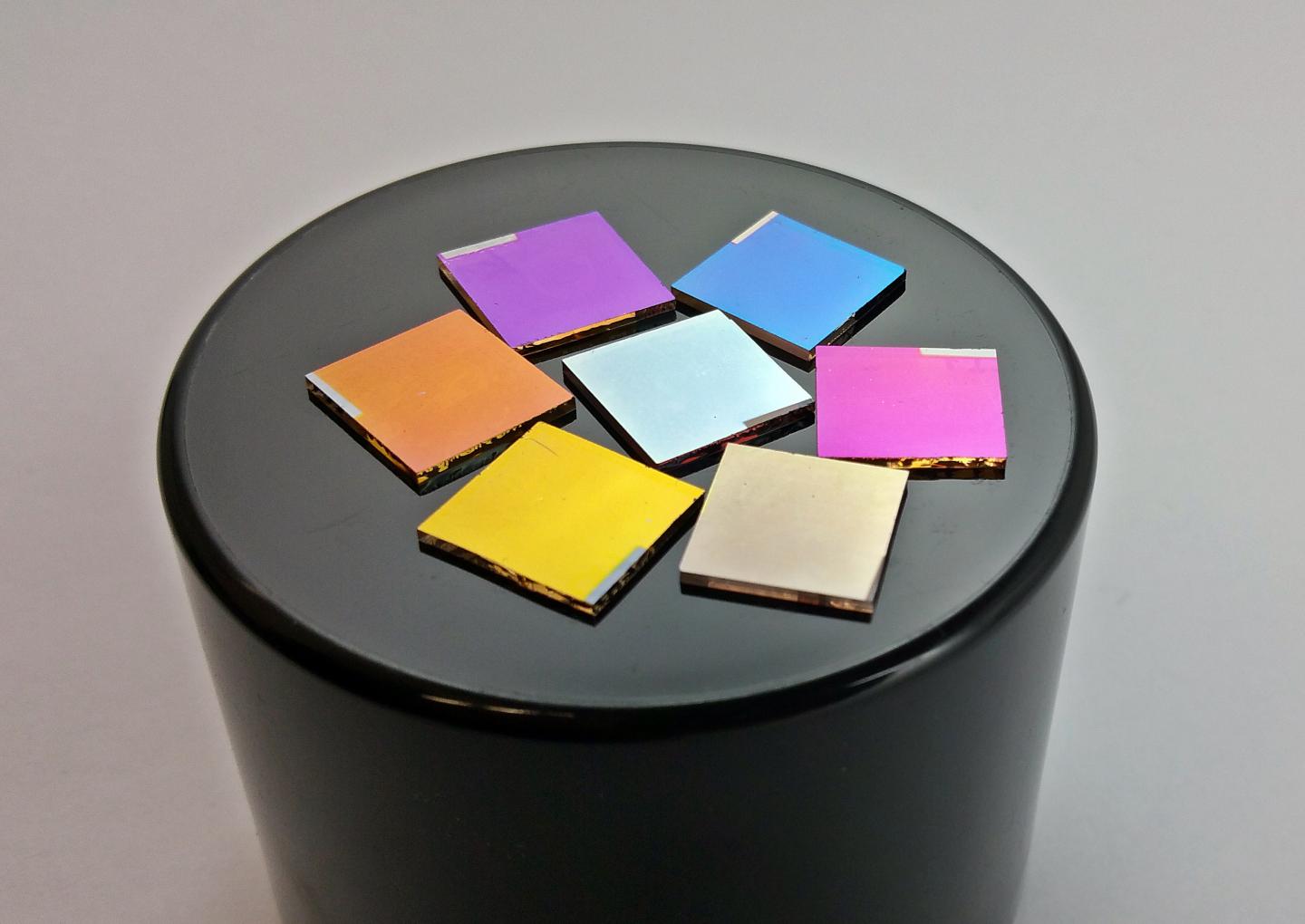
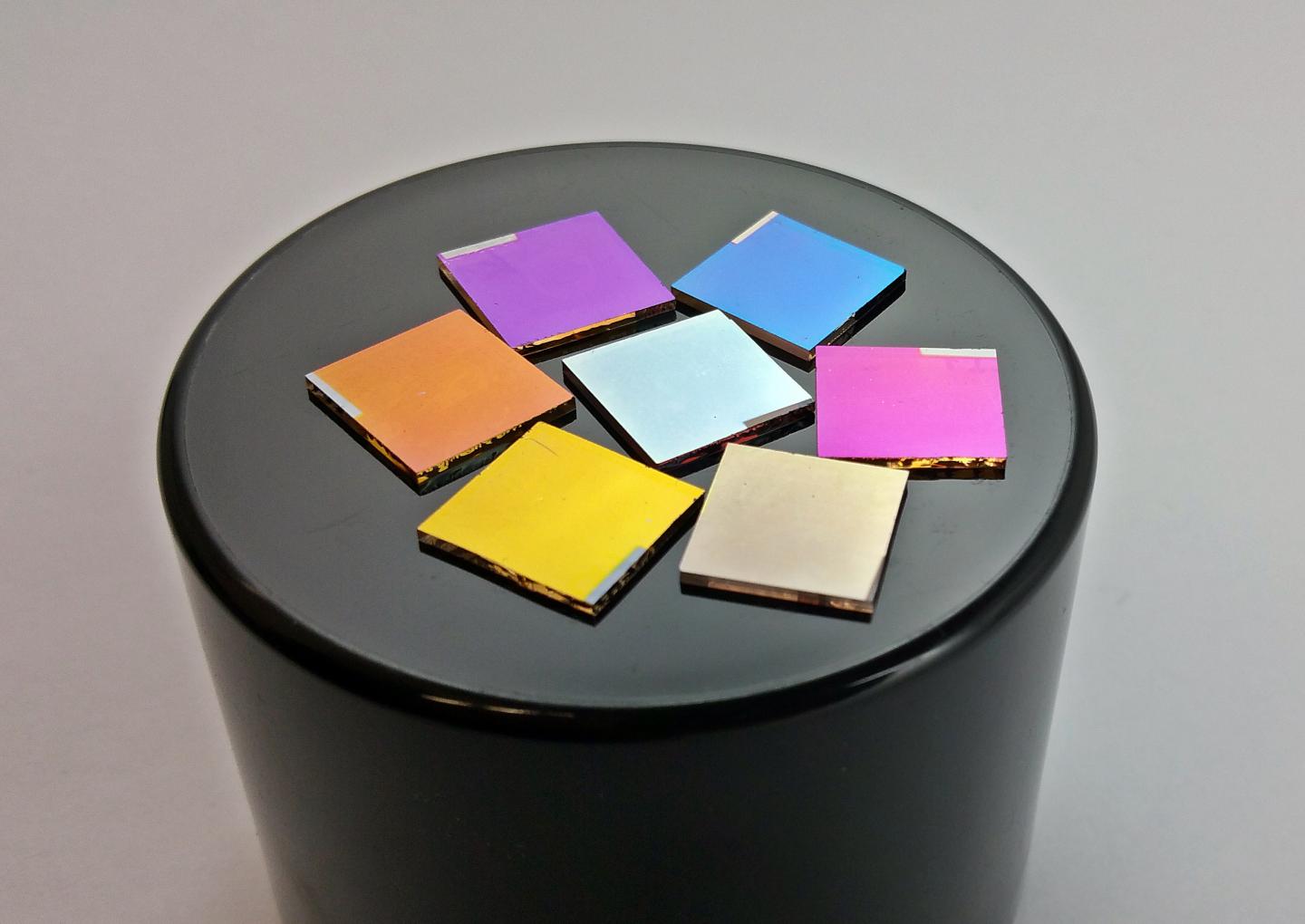
IMAGE

Credit: Aalto University

Researchers at Aalto University, Finland, have developed a biosensor that enables creating a range of new easy-to-use health tests similar to home pregnancy tests. The plasmonic biosensor can detect diseased exosomes even by the naked eye. Exosomes, important indicators of health conditions, are cell-derived vesicles that are present in blood and urine.

A rapid analysis by biosensors helps recognize inflammatory bowel diseases, cancer and other diseases rapidly and start relevant treatments in time. In addition to using discovery in biomedicine, industry may use advanced applications in energy.

Researchers created a new biosensor by depositing plasmonic metaparticles on a black, physical body that absorbs all incident electromagnetic radiation. A plasmon is a quantum of plasma oscillation. Plasmonic materials have been used for making objects invisible in scientific tests. They efficiently reflect and absorb light. Plasmonic materials are based on the effective polarizabilities of metallic nanostructures.

"It is extraordinary that we can detect diseased exosomes by the naked eye. The conventional plasmonic biosensors are able to detect analytes solely at a molecular level. So far, the naked-eye detection of biosamples has been either rarely considered or unsuccessful", says Professor Mady Elbahri from Aalto University.

Plasmonic dipoles are famous for their strong scattering and absorption. Dr. Shahin Homaeigohar and Moheb Abdealziz from Aalto University explain that the research group has succeeded in demonstrating the as-yet unknown specular reflection and the Brewster effect of ultrafine plasmonic dipoles on a black body host.

"We exploited it as the basis of new design rules to differentiate diseased human serum exosomes from healthy ones in a simple manner with no need to any specialized equipment", says Dr. Abdou Elsharawy from the University of Kiel.

The novel approach enables a simple and cost-effective design of a perfect colored absorber and creation of vivid interference plasmonic colors.

According to Elbahri, there is no need to use of sophisticated fabrication and patterning methods. It enables naked-eye environmental and bulk biodetection of samples with a very minor change of molecular polarizability of even 0.001%.

###

The study was published in Advanced Materials.

Media Contact

Mady Elbahri
[email protected]
358-504-648-990
@aaltouniversity

http://www.aalto.fi/en/

Original Source

http://www.aalto.fi/en/current/news/2017-12-13/ http://dx.doi.org/10.1002/adma.201704442

Share12Tweet8Share2ShareShareShare2

Related Posts

Cancer drug shows promise in boosting IVF success for women with low ovarian reserve

April 10, 2026
Brain-Inspired Artificial Intelligence Controllers Poised to Strengthen the Power Grid

Brain-Inspired Artificial Intelligence Controllers Poised to Strengthen the Power Grid

April 10, 2026

Breakthrough Discoveries in Focal Adhesion Kinase Pave the Way for Advanced Cancer Treatments

April 10, 2026

Noninvasive Oxygen Monitoring Validated for PPHN Care

April 10, 2026
Please login to join discussion

POPULAR NEWS

  • Boosting Breast Cancer Risk Prediction with Genetics

    47 shares
    Share 19 Tweet 12
  • Popular Anti-Aging Compound Linked to Damage in Corpus Callosum, Study Finds

    44 shares
    Share 18 Tweet 11
  • Imagine a Social Media Feed That Challenges Your Views Instead of Reinforcing Them

    1012 shares
    Share 400 Tweet 250
  • Revolutionary Theory Transforms Quantum Perspective on the Big Bang

    41 shares
    Share 16 Tweet 10

About

We bring you the latest biotechnology news from best research centers and universities around the world. Check our website.

Follow us

Recent News

Cancer drug shows promise in boosting IVF success for women with low ovarian reserve

Brain-Inspired Artificial Intelligence Controllers Poised to Strengthen the Power Grid

Breakthrough Discoveries in Focal Adhesion Kinase Pave the Way for Advanced Cancer Treatments

Subscribe to Blog via Email

Enter your email address to subscribe to this blog and receive notifications of new posts by email.

Join 78 other subscribers
  • Contact Us

Bioengineer.org © Copyright 2023 All Rights Reserved.

Welcome Back!

Login to your account below

Forgotten Password?

Retrieve your password

Please enter your username or email address to reset your password.

Log In
No Result
View All Result
  • Homepages
    • Home Page 1
    • Home Page 2
  • News
  • National
  • Business
  • Health
  • Lifestyle
  • Science

Bioengineer.org © Copyright 2023 All Rights Reserved.