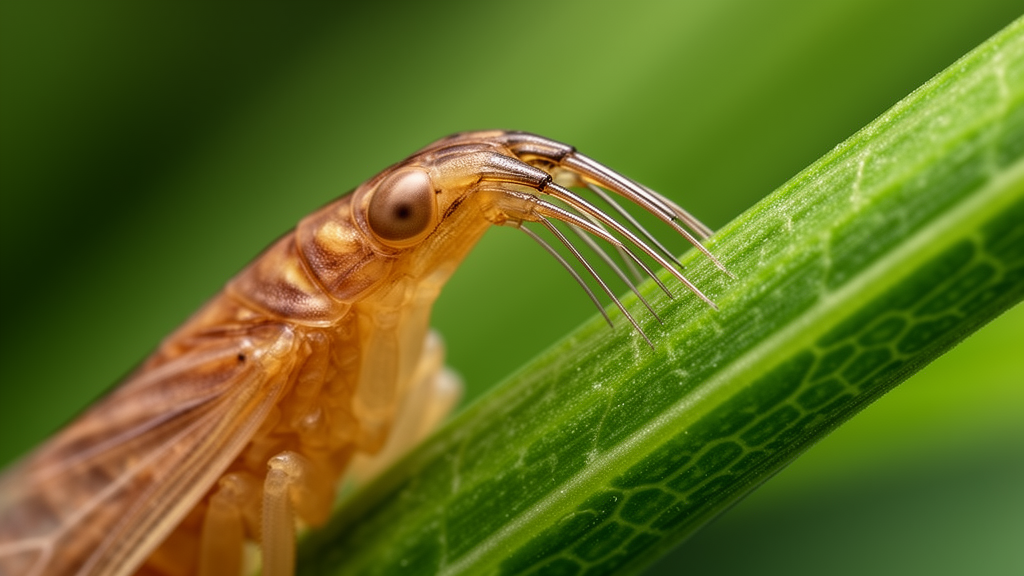
Planthopper mouthparts unite deep structural stability with localized mechanical innovations that evolved repeatedly across unrelated lineages, according to a comparative study published in Zoological Letters. Within Hemiptera, the planthopper labium represents one of the most structurally conservative yet mechanically adaptable feeding structures.
To analyze the feeding apparatus across evolutionary history, the authors examined representatives from 15 extant families and four fossil families. Using scanning electron microscopy and light microscopy, the team evaluated the structural organization of the labium across these taxa. All examined groups exhibit a stable three-segmented organization, demonstrating the retention of an ancestral hemipteran condition despite secondary modifications in the structural organization of the labium.
Structural disparity among the examined planthoppers is predominantly expressed in the ventral wall of the first labial segment rather than throughout the entire organ. Variable patterns of membranization within this localized area define three principal structural configurations. These configurations, which are unevenly distributed among families, illustrate an evolutionary continuum of mechanical strategies balancing rigidity and flexibility.
The three identified configurations represent distinct anatomical solutions within the ventral wall of the first segment. The first configuration features uniform ventrodistal sclerotization forming a continuous rigid wall. The second configuration exhibits partial ventrodistal membranization that introduces localized flexion zones. The third configuration displays proximo-distal pseudosegmentation with paired sclerotized plates separated by membranes.
The researchers determined that no consistent phylogenetic signal emerges from this morphological disparity. Instead, the diverse configurations reflect recurrent, functionally equivalent solutions that evolved in parallel across unrelated planthopper lineages. Through this coexistence of deep structural stability and localized mechanical innovation, the planthopper labium has preserved its functional design across more than 315 million years of hemipteran evolution.
Subject of Research: Evolutionary morphology and mechanical diversification of planthopper labial architecture
Article Title: Stability versus evolutionary diversification of labial morphology in planthoppers (Hemiptera: Fulgoromorpha) in a phylogenetic context
Article References: Brożek, J., Bourgoin, T., Szwedo, J., & Stroiński, A. (2026). Stability versus evolutionary diversification of labial morphology in planthoppers (Hemiptera: Fulgoromorpha) in a phylogenetic context. Zoological Letters. https://doi.org/10.1186/s40851-026-00277-4
Image Credits: AI Generated
DOI: 10.1186/s40851-026-00277-4
Keywords: Planthoppers, Fulgoromorpha, Hemiptera, Labial morphology, Feeding structures, Scanning electron microscopy, Light microscopy, Fossil insects, Sclerotization, Membranization, Pseudosegmentation, Parallel evolution, Phylogenetics, Morphological disparity, Evolutionary morphology, Zoological Letters
News Source: Gavin Prescott. (November 24, 2026). Planthopper Mouthparts Combine Ancient Structural Stability With Parallel Mechanical Innovations. Scienmag.