• HOME
  • NEWS
  • EXPLORE
    • CAREER
      • Companies
      • Jobs
    • EVENTS
    • iGEM
      • News
      • Team
    • PHOTOS
    • VIDEO
    • WIKI
  • BLOG
  • COMMUNITY
    • FACEBOOK
    • INSTAGRAM
    • TWITTER
Sunday, May 10, 2026
BIOENGINEER.ORG
No Result
View All Result
  • Login
  • HOME
  • NEWS
  • EXPLORE
    • CAREER
      • Companies
      • Jobs
        • Lecturer
        • PhD Studentship
        • Postdoc
        • Research Assistant
    • EVENTS
    • iGEM
      • News
      • Team
    • PHOTOS
    • VIDEO
    • WIKI
  • BLOG
  • COMMUNITY
    • FACEBOOK
    • INSTAGRAM
    • TWITTER
  • HOME
  • NEWS
  • EXPLORE
    • CAREER
      • Companies
      • Jobs
        • Lecturer
        • PhD Studentship
        • Postdoc
        • Research Assistant
    • EVENTS
    • iGEM
      • News
      • Team
    • PHOTOS
    • VIDEO
    • WIKI
  • BLOG
  • COMMUNITY
    • FACEBOOK
    • INSTAGRAM
    • TWITTER
No Result
View All Result
Bioengineer.org
No Result
View All Result
Home NEWS Science News Biology

Plant seed research provides basis for sustainable alternatives to chemical fertilizers

Bioengineer by Bioengineer
March 25, 2019
in Biology
Reading Time: 2 mins read
0
IMAGE
Share on FacebookShare on TwitterShare on LinkedinShare on RedditShare on Telegram

IMAGE

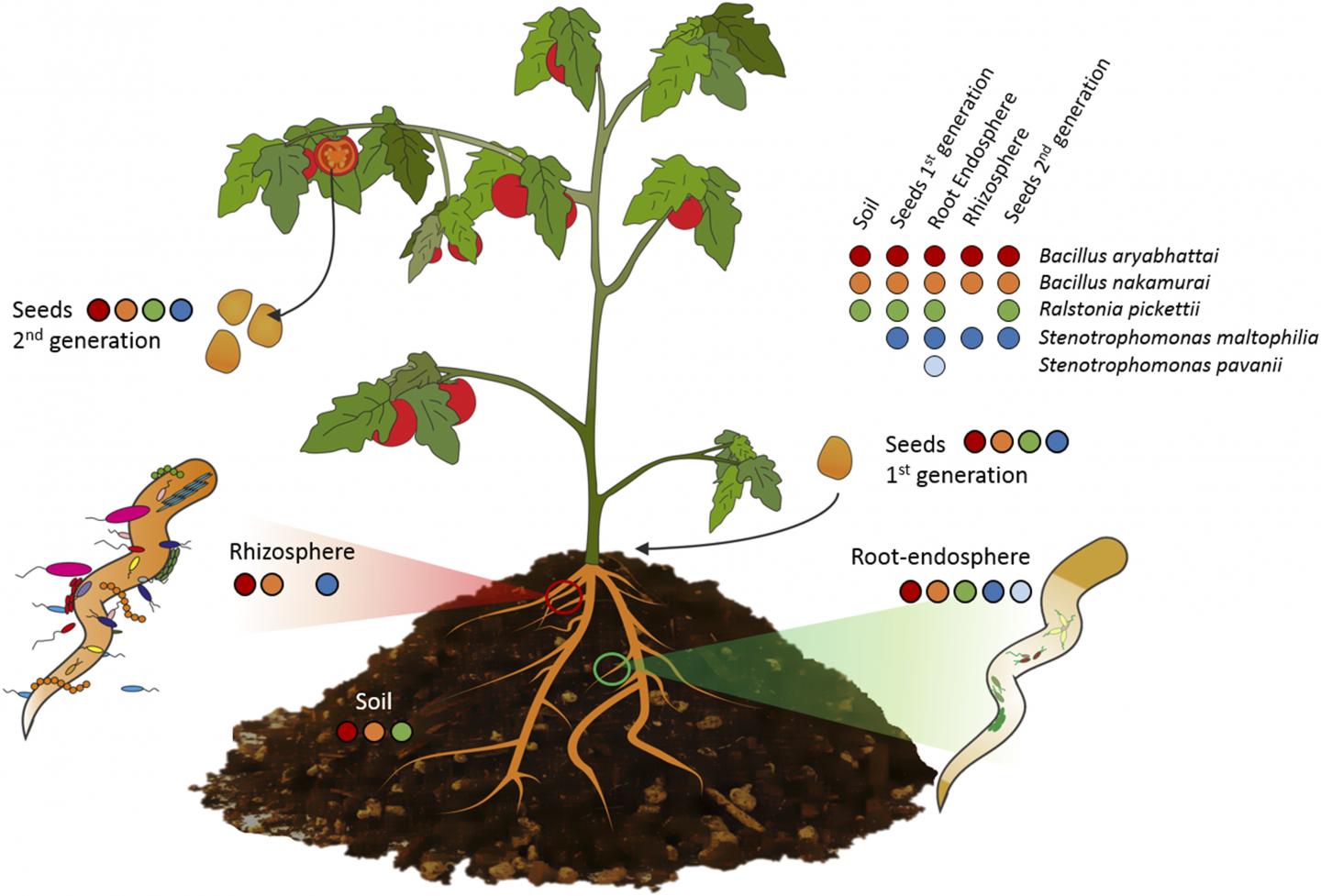
Credit: Alessandro Bergna, Tomislav Cernava, Manuela Rändler, Rita Grosch, Christin Zachow, and Gabriele Berg

St. Paul, MN (March 2019)–Recent advances in next-generation sequencing technologies have allowed scientists to access and assess previously undetectable plant microorganisms. Scientists have long known that various plant-associated microorganisms contribute to plant health and productivity but were unable to analyze them in plant seeds due to technical restrictions. Thanks to the enhanced development of high-throughput sequencing methods, plant seed microbiomes have been increasingly studied.

In a study published in the fully open access Phytobiomes Journal, a group of scientists led by Tomislav Cernava utilized this new technology and were the first to assess the seed microbiomes of two successive plant generations of tomato plants, selected due to its importance to the human diet. The team identified and characterized microbial communities in different compartments of the tomato.

The research showed that seed endophytes (microorganisms found in inner seed tissues) have distinct compositions and harbor different beneficial bacteria. The team also found that plant seeds were an important vector for the transmission of beneficial microorganisms across generations. Notably, they found that the seed is an important vehicle of plant growth-promoting bacteria.

This novel discovery has an impact for the design of seed treatment. Cernava explains: “These findings provide a basis to further explore how plant seeds can be specifically equipped with beneficial microorganisms and provide the basis to develop sustainable alternative to chemical inputs, such as fertilizers and pesticides, in agriculture.”

More details about this study can be found in Tomato Seeds Preferably Transmit Plant Beneficial Endophytes published March 6, 2019 in Phytobiomes Journal Volume 2, Number 4.

###

Media Contact
Ashley Bergman Carlin
[email protected]

Related Journal Article

http://dx.doi.org/10.1094/PBIOMES-06-18-0029-R

Tags: Agricultural Production/EconomicsAgricultureBacteriologyFertilizers/Pest ManagementFood/Food ScienceGeology/SoilMicrobiologyMolecular BiologyPlant Sciences
Share12Tweet8Share2ShareShareShare2

Related Posts

Ancient Plant Populations Reveal Fresh Insights into Climate Resilience — Biology

Ancient Plant Populations Reveal Fresh Insights into Climate Resilience

May 8, 2026
Rare Brain Disorders in Children Linked to Mutations in Lesser-Known Protein Complex — Biology

Rare Brain Disorders in Children Linked to Mutations in Lesser-Known Protein Complex

May 8, 2026

From Odd Insect to Underwater Predator: The Remarkable Evolution of a Bloodthirsty Fruit Fly

May 8, 2026

SNU Professor Sangwoo Seo’s Team Develops Next-Generation CRISPR Biocontainment Technology to Control Microbial Survival Without DNA Cleavage

May 8, 2026
Please login to join discussion

POPULAR NEWS

  • Research Indicates Potential Connection Between Prenatal Medication Exposure and Elevated Autism Risk

    840 shares
    Share 336 Tweet 210
  • New Study Reveals Plants Can Detect the Sound of Rain

    727 shares
    Share 290 Tweet 181
  • Scientists Investigate Possible Connection Between COVID-19 and Increased Lung Cancer Risk

    68 shares
    Share 27 Tweet 17
  • Salmonella Haem Blocks Macrophages, Boosts Infection

    61 shares
    Share 24 Tweet 15

About

We bring you the latest biotechnology news from best research centers and universities around the world. Check our website.

Follow us

Recent News

Evaluating Digoxin Use in Patients with Symptomatic Rheumatic Heart Disease

Evaluating the Effectiveness and Safety of Digitalis Glycosides in Treating Heart Failure

Urdu Fall Risk Questionnaire Adapted for Elderly

Subscribe to Blog via Email

Success! An email was just sent to confirm your subscription. Please find the email now and click 'Confirm' to start subscribing.

Join 82 other subscribers
  • Contact Us

Bioengineer.org © Copyright 2023 All Rights Reserved.

Welcome Back!

Login to your account below

Forgotten Password?

Retrieve your password

Please enter your username or email address to reset your password.

Log In
No Result
View All Result
  • Homepages
    • Home Page 1
    • Home Page 2
  • News
  • National
  • Business
  • Health
  • Lifestyle
  • Science

Bioengineer.org © Copyright 2023 All Rights Reserved.