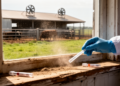
Japanese scientists have developed a method to isolate and identify active compounds in plant medicines, which accurately accounts for drug behavior in the body. Using the technique, they have identified several active compounds from Drynaria Rhizome, a traditional plant medicine, which improve memory and reduce disease characteristics in a mouse model of Alzheimer's disease.
Traditional plant medicines have been used by humans for a long time, and these therapies are still popular in many countries. Plants typically contain a huge variety of compounds, many of which have no effect in the body, and some which can have significant effects. If a plant medicine shows a therapeutic effect, scientists are interested in isolating and identifying the compounds that cause the effect to see if they can be used as new drugs.
In many cases, scientists repeatedly screen crude plant medicines in lab experiments to see if any compounds show a particular effect in cells grown in a dish or in cell-free assays. If a compound shows a positive effect in cells or test tubes, it could potentially be used as a drug, and the scientists go on to test it in animals. However, this process is a lot of work and doesn't account for changes that can happen to drugs when they enter the body – enzymes in the blood and liver can metabolize drugs into various forms called metabolites. In addition, some areas of the body, such as the brain, are difficult to access for many drugs, and only certain drugs or their metabolites will enter these tissues.
"The candidate compounds identified in traditional benchtop drug screens of plant medicines are not always true active compounds, because these assays ignore bio-metabolism and tissue distribution," explains Chihiro Tohda, senior author on the recent study published in Frontiers in Pharmacology. "So, we aimed to develop more efficient methods to identify authentic active compounds that take these factors into account."
The scientists were interested in finding active compounds for Alzheimer's disease in Drynaria Rhizome, a traditional plant medicine. They used mice with a genetic mutation as a model for Alzheimer's disease. This mutation gives the mice some characteristics of Alzheimer's disease, including reduced memory and a buildup of specific proteins in the brain, called amyloid and tau proteins. This means that the mice are a useful tool to test potential Alzheimer's disease treatments.
Initially, the researchers mashed the plant up and treated the mice orally using this crude plant extract. They found that the plant treatment reduced memory impairments and levels of amyloid and tau proteins in their brains. In a key step, the team then examined the mouse brain tissue, where the treatment is needed, 5 hours after they treated the mice with the extract. They found that three compounds from the plant had made it into the brain – these were a compound called naringenin and two naringenin metabolites.
The researchers then treated the mice with pure naringenin and noticed the same improvements in memory deficits and reductions in amyloid and tau proteins, meaning that naringenin and its metabolites were likely the active compounds in the plant. They found a protein called CRMP2 that naringenin binds to in neurons, which causes them to grow, suggesting that this could be the mechanism by which naringenin can improve Alzheimer's disease symptoms.
The team hope that the technique can be used to identify other treatments. "We are applying this method to discover new drugs for other diseases such as spinal cord injury, depression and sarcopenia," explains Tohda.
###
Media Contact
Melissa Cochrane
[email protected]
41-787-246-393
@frontiersin
http://www.frontiersin.org
http://dx.doi.org/10.3389/fphar.2017.00340
############
Story Source: Materials provided by Scienmag