

• HOME
  • NEWS
  • EXPLORE
    • CAREER
      • Companies
      • Jobs
    • EVENTS
    • iGEM
      • News
      • Team
    • PHOTOS
    • VIDEO
    • WIKI
  • BLOG
  • COMMUNITY
    • FACEBOOK
    • INSTAGRAM
    • TWITTER
Saturday, February 7, 2026
BIOENGINEER.ORG
No Result
View All Result
  • Login
  • HOME
  • NEWS
  • EXPLORE
    • CAREER
      • Companies
      • Jobs
        • Lecturer
        • PhD Studentship
        • Postdoc
        • Research Assistant
    • EVENTS
    • iGEM
      • News
      • Team
    • PHOTOS
    • VIDEO
    • WIKI
  • BLOG
  • COMMUNITY
    • FACEBOOK
    • INSTAGRAM
    • TWITTER
  • HOME
  • NEWS
  • EXPLORE
    • CAREER
      • Companies
      • Jobs
        • Lecturer
        • PhD Studentship
        • Postdoc
        • Research Assistant
    • EVENTS
    • iGEM
      • News
      • Team
    • PHOTOS
    • VIDEO
    • WIKI
  • BLOG
  • COMMUNITY
    • FACEBOOK
    • INSTAGRAM
    • TWITTER
No Result
View All Result
Bioengineer.org
No Result
View All Result
Home NEWS Science News Biology

Plant parasite dodder transmits signals among different hosts

Bioengineer by Bioengineer
February 12, 2018
in Biology
Reading Time: 2 mins read
0
Share on FacebookShare on TwitterShare on LinkedinShare on RedditShare on Telegram
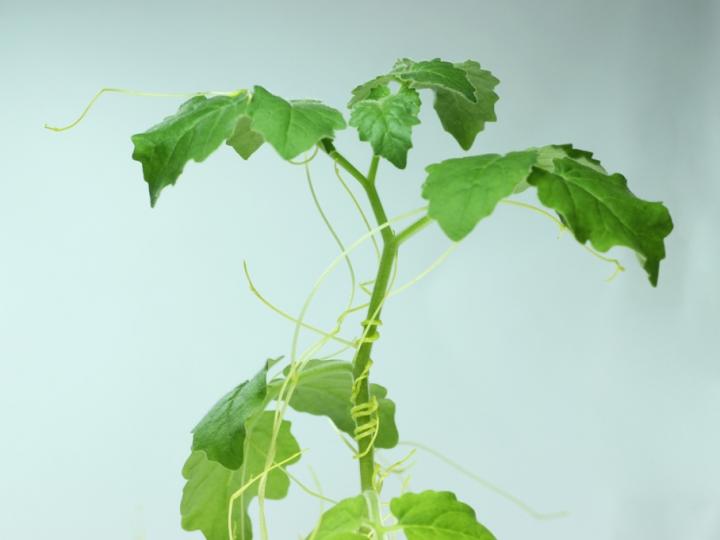
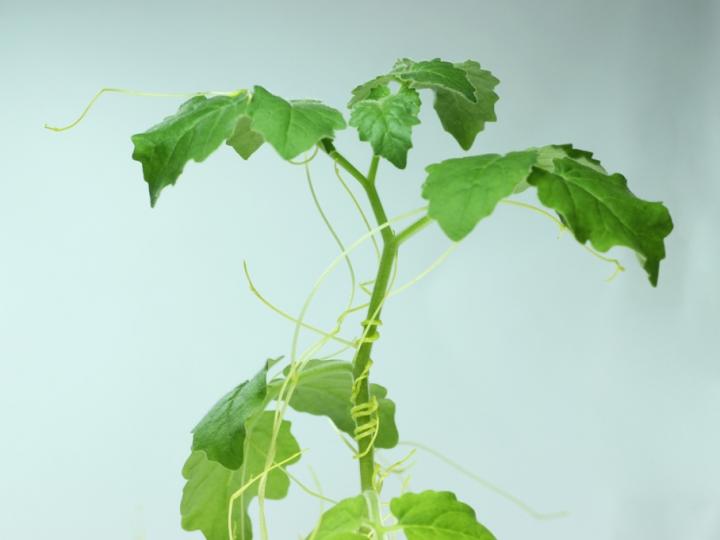
IMAGE

Credit: ZHANG Jingxiong

Around 1% of flowering plants are parasites. Some of these parasites can survive without host plants while others cannot. The former are called facultative parasites and the latter obligate parasites.

Based on their photosynthetic capability, parasites can be classified as either hemiparasites (those that perform photosynthesis) or holoparasites (those that do not).

Compared with normal autotrophic plants, plant parasites have unique physiological and ecological characteristics, as well as unique evolutionary histories. Many holoparasites exhibit special morphologies. For example, the root parasites Orobanche spp. (broomrapes) have no leaves and lack chlorophyll.

Although the morphology of parasitic plants varies, they all use a special organ, the haustorium, to attach to hosts, penetrate host tissues, and extract water and nutrients. Cuscuta spp. (dodder) is a plant parasite that connects to the vasculature of host plants to extract water, nutrients, and even macromolecules.

It is the only parasitic plant in the family Convolvulaceae, and is closely related to the morning glory and sweet potato. Dodders are leafless and rootless throughout their lifecycle, totally depending on host plants to survive. Whether hosts and dodders have any exchange of signaling molecules was previously unknown.

Like other parasites, it is generally believed that dodders are harmful to hosts. A research team led by Prof. WU Jianqiang, a scientist at the Kunming Institute of Botany of the Chinese Academy of Sciences (KIB/CAS) and the Max Planck Institute for Chemical Ecology in Germany, discovered that when a host plant is attacked by insects, dodders can transmit signals to other dodder-connected hosts, which then activate defense responses.

As a result of the induced defense responses in these dodder-connected host plants, insects grew smaller than on hosts whose dodder-connected neighboring plants were not attacked by insects.

Importantly, the researchers also revealed that mobile signals transmitted by dodders are ancient and well conserved. Jasmonic acid (a plant hormone) plays an important role in generating these signals; such signals are produced very rapidly and can travel through a dodder network at least one meter long.

This is the first time that dodders have been found to transmit inter-plant signaling. This discovery shows that, in addition to damaging hosts, dodders also transmit ecologically meaningful information among host plants.

This research has been published in PNAS online in an article entitled "Stem parasitic plant Cuscuta australis (dodder) transfers herbivory-induced signals among plants".

###

This work was primarily supported by the Strategic Priority Research Program of the Chinese Academy of Sciences, the Max Planck Partner Group Program, and the National Natural Science Foundation of China.

Media Contact

WU Jianqiang
[email protected]

http://english.cas.cn/

Original Source

http://english.cas.cn/newsroom/research_news/201707/t20170725_181186.shtml http://dx.doi.org/10.1073/pnas.1704536114


Share12Tweet8Share2ShareShareShare2

Related Posts

New Study Uncovers Mechanism Behind Burn Pit Particulate Matter–Induced Lung Inflammation

New Study Uncovers Mechanism Behind Burn Pit Particulate Matter–Induced Lung Inflammation

February 6, 2026

DeepBlastoid: Advancing Automated and Efficient Evaluation of Human Blastoids with Deep Learning

February 6, 2026

Navigating the Gut: The Role of Formic Acid in the Microbiome

February 6, 2026

AI-Enhanced Optical Coherence Photoacoustic Microscopy Revolutionizes 3D Cancer Model Imaging

February 6, 2026
Please login to join discussion

POPULAR NEWS

  • Robotic Ureteral Reconstruction: A Novel Approach

    Robotic Ureteral Reconstruction: A Novel Approach

    82 shares
    Share 33 Tweet 21
  • Digital Privacy: Health Data Control in Incarceration

    63 shares
    Share 25 Tweet 16
  • Study Reveals Lipid Accumulation in ME/CFS Cells

    57 shares
    Share 23 Tweet 14
  • Breakthrough in RNA Research Accelerates Medical Innovations Timeline

    53 shares
    Share 21 Tweet 13

About

We bring you the latest biotechnology news from best research centers and universities around the world. Check our website.

Follow us

Recent News

Palmitoylation of Tfr1 Drives Platelet Ferroptosis and Exacerbates Liver Damage in Heat Stroke

Oxygen-Enhanced Dual-Section Microneedle Patch Improves Drug Delivery and Boosts Photodynamic and Anti-Inflammatory Treatment for Psoriasis

Scientists Identify SARS-CoV-2 PLpro and RIPK1 Inhibitors Showing Potent Synergistic Antiviral Effects in Mouse COVID-19 Model

Subscribe to Blog via Email

Enter your email address to subscribe to this blog and receive notifications of new posts by email.

Join 73 other subscribers
  • Contact Us

Bioengineer.org © Copyright 2023 All Rights Reserved.

Welcome Back!

Login to your account below

Forgotten Password?

Retrieve your password

Please enter your username or email address to reset your password.

Log In
No Result
View All Result
  • Homepages
    • Home Page 1
    • Home Page 2
  • News
  • National
  • Business
  • Health
  • Lifestyle
  • Science

Bioengineer.org © Copyright 2023 All Rights Reserved.
