Credit: University of Bristol
A low-cost chip that enables batteries in sensors to last longer, in some cases by over ten times, has been developed by engineers from the University of Bristol.
Dr Bernard Stark and colleagues in the Bristol Electrical Energy Management Research Group based in the Merchant Venturers School of Engineering, have developed a voltage detector chip that requires only a few trillionths of a watt (picowatts) to activate other circuits. The research group are providing samples of their chip to companies to use, which will enable engineers to design sensors that continuously listen, without using power from a battery or mains.
The result is smaller batteries, or a battery life that is extended, in some cases by years. The voltage detector can also eliminate standby power, for example the team have demonstrated a TV with no continuous draw of power during standby, by using a voltage detector that is powered up at a distance, directly from the infrared signal of a standard TV controller.
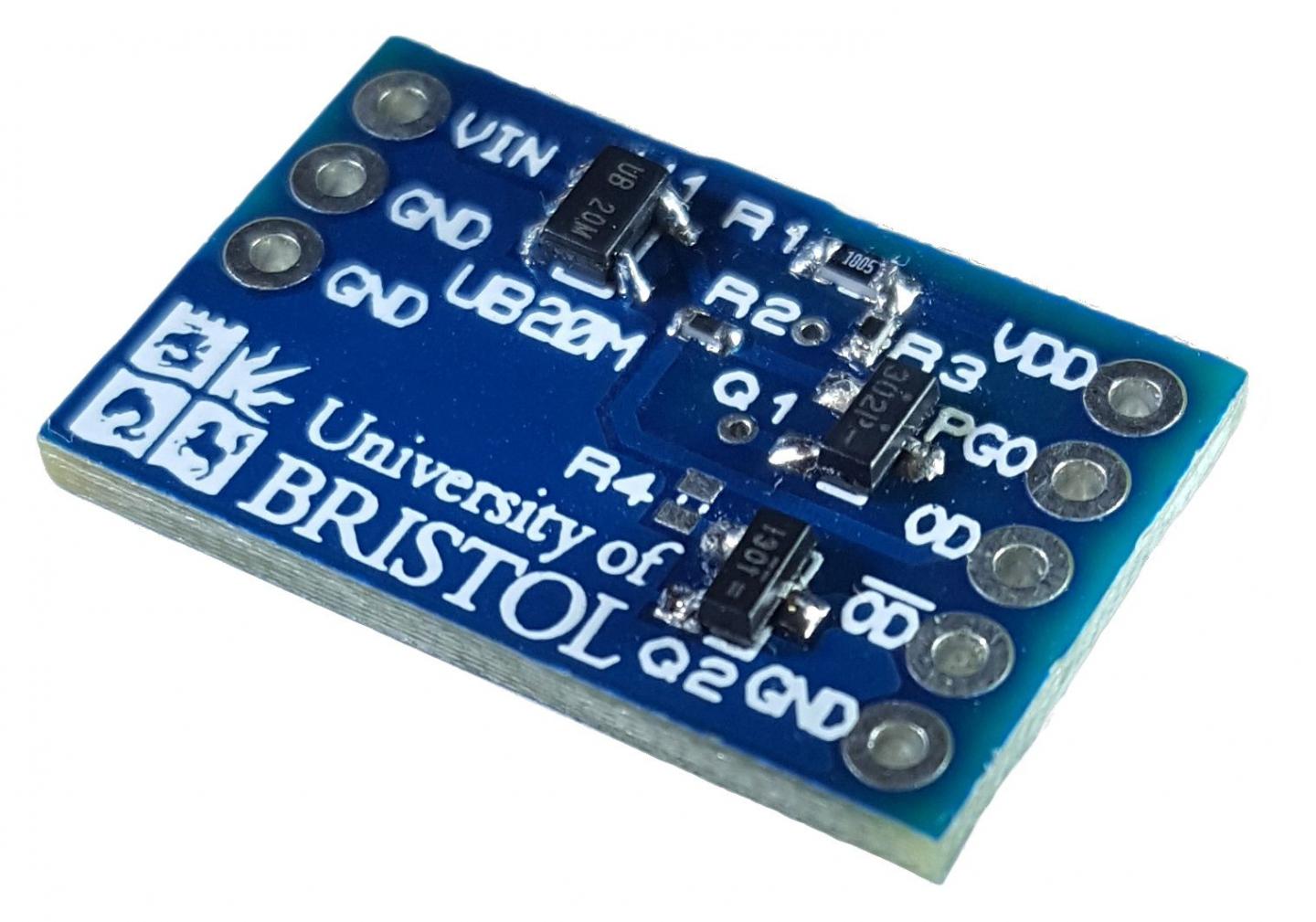
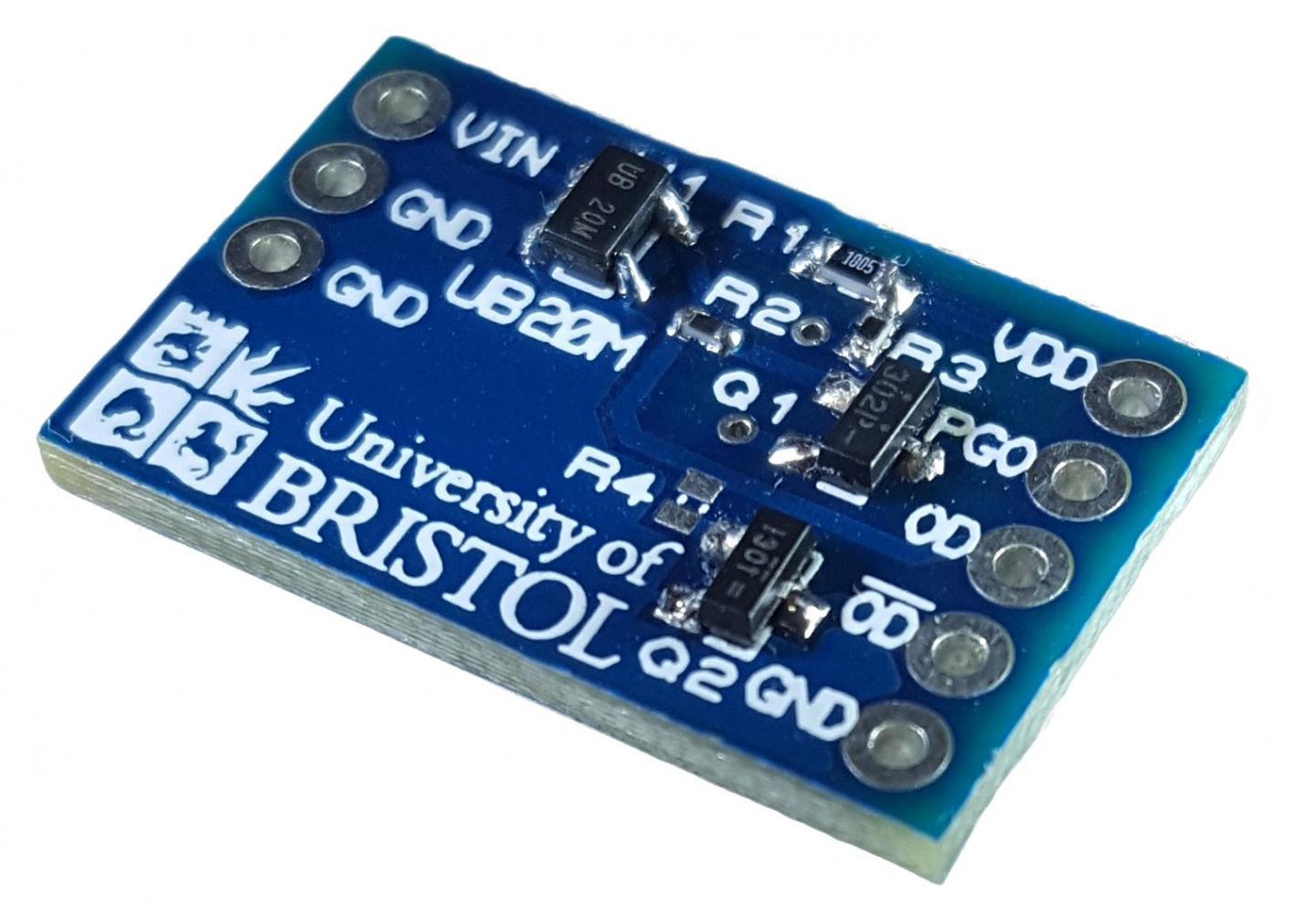
The patent pending UB20M voltage detector, or keep-alive device, is a chip that, when combined with a suitable sensor, eliminates standby power by enabling zero-power sensing and listening. It allows circuit designers to develop circuits that perform continuous monitoring without using battery power, and to implement wireless wake-up with zero receiver power. The chip is a sensor-driven circuit that requires no power supply, instead it uses a fraction of the power contained in the output signal of the sensor.
Dr Stark, Reader in Electrical & Electronic Engineering in the Department of Electrical & Electronic Engineering, said: "The ultra-low power UB20M voltage detector provides sensing that is continuous and free. This is because it is able to respond to minute quantities of power from unpowered sensors. No battery or other power is needed for the device to stay alive and listening, and battery maintenance is therefore reduced or not needed. We are now actively seeking commercial partners to use the voltage detector chip in their product, and would welcome companies to get in touch."
An electronic sensing device uses power to both listen and react. In sensors such as a security alarms, activity monitors, and other Internet of Things devices, the energy to keep the device alive and listening, can far outweigh the energy used to react. In these cases, it is especially important to eliminate listening power in order to increase battery life and make a system that is less environmentally wasteful.
In response to this challenge, the research team, with Government support, have developed a method of eliminating the power drain used to listen, by using minute, insignificant quantities of energy, from the event that the device is waiting for, such as movement of an asset tracker, or infrared light from a TV controller. This energy switches on mains- or battery-powered devices, exactly when needed. The voltage detector chip is also small enough to fit into many autonomous electronic devices.
The voltage detector chip uses over a thousand times less energy than existing detectors to create a turn-on signal, merely five picojoules of energy and only around half a volt. Many sensors can provide this without requiring a power supply, therefore making listening effectively free.
There are a number of areas, where it would be beneficial to reduce the listening power to zero, including:
- Mains-powered equipment, where savings for consumers and the environment are made;
- Battery-driven sensors and monitoring systems, where the long-term reliability and battery life are increased, and size decreased;
- Remotely-powered sensors, as these can be made smaller, by reducing battery capacity. It also reduces the power needed to remotely control these devices;
- The sensitivity of the voltage detector chip also allows the elimination of mechanical switches;
- It can also be used to generate sensing data only when useful data is available, which saves processing power.
###
If you are interested in finding out more about the ultra-low power UB20M voltage detector, please visit http://www.bristol.ac.uk/engineering/research/em/research/zero-standby-power/, where you can find contact details, and datasheets for the chip and its evaluation board.
Media Contact
Joanne Fryer
[email protected]
44-011-733-17276
@BristolUni
http://www.bristol.ac.uk
############
Story Source: Materials provided by Scienmag